Beat Isolation in Private Practice by Joining Our Online Group
The hardest part of private practice isn't the clinical work; it's the weight of the silence when the door closes behind your last client. You spend your day holding space for others, but your own business worries or that nagging decision fatigue usually happen in a total vacuum. It's a common struggle to feel "othered" by friends who don't understand the secret-keeping burden we carry. You deserve a safe space to be a human, not just a therapist. You can beat isolation in private practice by joining our online group, moving from professional loneliness to a connected, thriving practice.
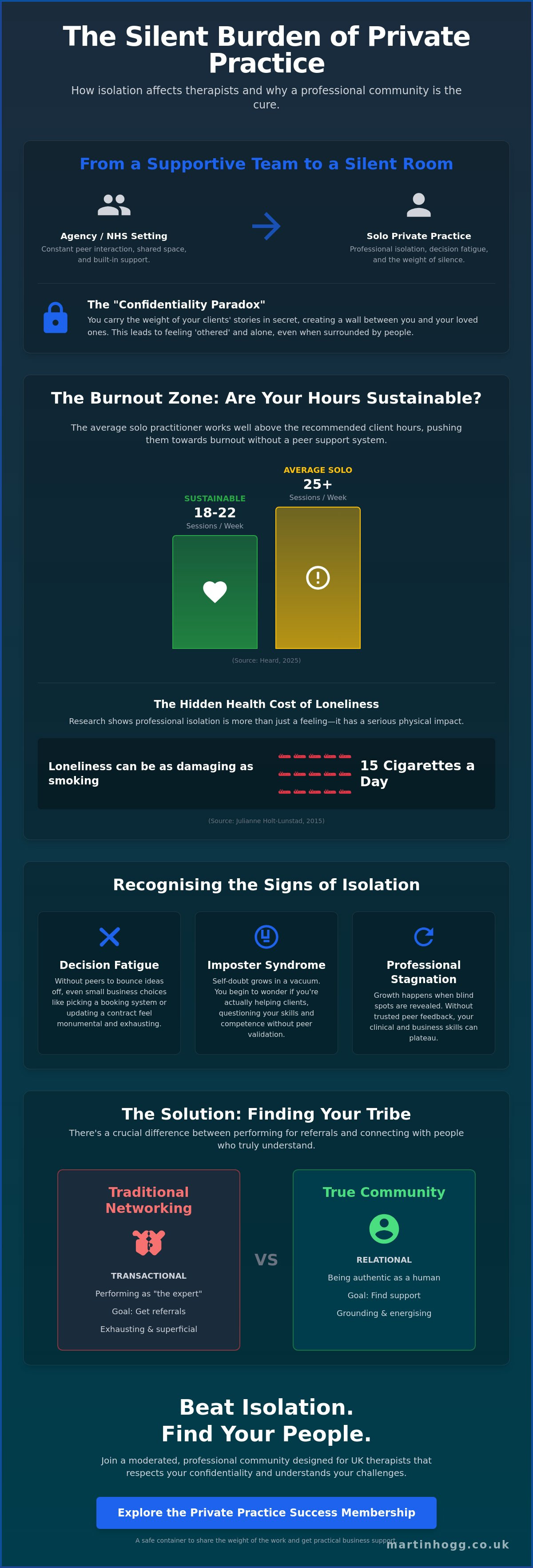
I know that finding professional peers to bounce ideas off is vital for your well-being. Shared experience is the best way to reduce burnout, especially when the average solo practitioner is seeing clients for 25 hours a week. This is well above the sustainable 18 to 22 sessions recommended by industry experts like Heard in 2025. In this article, I'll share how a peer community provides the practical business support and emotional grounding you need to get your life back on track. We'll look at how connecting with people who truly "get it" can transform your daily work from a lonely slog into a supported career.
Key Takeaways
- Understand why the transition from a busy agency or NHS setting to solo practice creates a unique form of professional loneliness that clinical work alone cannot satisfy.
- Recognise the subtle ways that working in a vacuum can impact your clinical confidence and how consistent peer support protects your long-term mental well-being.
- Discover how you can beat isolation in private practice by joining our online group, specifically designed to respect the unique nuances of BACP and UKCP standards.
- Learn why a dedicated, professional community offers more practical, high-quality support for your business than the often overwhelming noise of free social media groups.
- Explore how a ready-made network provides the human connection and business mentorship needed to move your practice from a place of struggle to one of steady growth.
The Silent Burden: Why Private Practice Feels So Lonely
If you've moved from a busy NHS department or a local agency into your own room, you'll know the silence can be deafening. In an agency, you had a staff room. You had colleagues to catch your eye after a heavy session or someone to grab a tea with between appointments. Now, it's just you and the four walls. Professional isolation isn't just about being physically alone; it's the absence of peer connection that matches the deep, often draining intensity of the work we do every day. When you spend your hours holding space for others, you need a space that holds you too.
The "Confidentiality Paradox" makes this even harder. You might have a supportive partner or wonderful friends, but you can't tell them the things that actually kept you awake at 2 am. You carry the weight of your clients' traumas in secret. This creates a wall between you and the people you love, leaving you feeling "othered" and alone in your own home. You can beat isolation in private practice by joining our online group, where you finally have a space to speak the same language as those around you without breaking the trust of your clients.
The Difference Between Networking and Community
Most of us have tried traditional networking. You stand in a room, hand out business cards, and try to look like a successful, "sorted" expert to get referrals. It's exhausting because you're still performing. True community is different because it's relational, not transactional. It's a place where you can take off the professional mask and admit when a session was tough or when you're feeling overwhelmed. You don't have to be the expert there. You just have to be a person who understands what it's like to sit in the therapist's chair.
Recognising the Signs of Practitioner Isolation
Isolation often creeps in through decision fatigue. When you work in a vacuum, even small business choices like picking a booking system or updating a contract feel monumental. You lose perspective. Without peers, it's easy to believe your struggles with client retention or self-doubt are unique to you, rather than a normal part of the journey. A shared space like the Private Practice Success Membership helps you realise that you aren't failing; you're just human. Seeing that others face the same hurdles is often the quickest way to get your professional confidence back on track.
The Hidden Cost of Working in a Professional Vacuum
Working alone doesn't just feel quiet; it can actively eat away at your clinical confidence. When you have nobody to check your work against, that small voice of self-doubt starts to grow. You begin to wonder if you're actually helping your clients or if you've just been lucky so far. This is where imposter syndrome takes root. Without a peer to say, "I've been there too," you can quickly spiral into a professional vacuum that makes every session feel like a test you're failing. It's a heavy price to pay for independence.
This isolation has a real impact on your physical and mental health too. Research from Julianne Holt-Lunstad in 2015 suggests that loneliness can be as damaging to our health as smoking 15 cigarettes a day. For the self-employed therapist, staying connected is a vital form of business self-care. It protects your practice's longevity by ensuring you don't reach a point of exhaustion. If you're already feeling the strain, I've put together a practical guide to recovery from therapist burnout that might help you find your footing again. You can beat isolation in private practice by joining our online group, where we focus on keeping you grounded and supported.
Stagnation vs Growth: The Value of Peer Feedback
Growth happens when we have our blind spots pointed out by people we trust. In our community, we use collective wisdom to solve common hurdles, from managing tricky cancellations to refining your marketing. You don't have to figure everything out by yourself. Often, a ten-minute conversation with a peer who understands the UK healthcare market can save you weeks of overthinking and costly mistakes.
Confidentiality and the Online Group Format
I know confidentiality is your top priority. That's why our group is a moderated, professional space with clear ethical frameworks. It's a safe container designed specifically for therapists, not a public forum or a chaotic social media thread. We focus on the "weight" of the work and the practicalities of running a business, ensuring you have a private network that respects your professional obligations. If you're ready to find that balance, come and see how we support each other in the Private Practice Success Membership.
Finding Your Tribe: What to Look for in a Therapist Community
Choosing the right community is about more than just finding people who do the same job. You need a space that understands the specific nuances of the UK healthcare landscape. A group that doesn't know the difference between BACP and UKCP ethical frameworks, or the reality of working with local GP surgeries, won't be able to offer the practical support you need. You can beat isolation in private practice by joining our online group, where the advice is grounded in the reality of counselling private practice in the UK rather than generic, overseas business models.
I often see counsellors get lost in free social media groups. While these can be useful for quick questions, they are frequently unmoderated and can feel quite noisy or even competitive. A paid membership usually provides a higher quality of interaction because everyone there is invested in their growth and the well-being of the group. It's about finding a lead mentor who has walked the path before you and can help you avoid the common pitfalls of solo practice. You want a mix of practical business training and genuine, heart-to-heart peer support.
Vetting an Online Group: A Practitioner's Checklist
Before you commit your time and energy, ask yourself a few questions about the community. Does the space feel encouraging, or is there an underlying sense of "performing" for others? Look for a group that prioritises ethical practice and professional standards over quick wins. It's also vital to have regular "live" touchpoints. These face-to-face digital meetings are where real relationships are built, helping you feel like part of a team again.
Avoiding the 'Hustle Culture' Trap
Be wary of groups that promise "six figures in six weeks" or use aggressive marketing tactics. That kind of pressure is the last thing an overwhelmed therapist needs. Instead, look for a community that values slow, sustainable growth. Your business should support your life, not consume it. A healthy group understands that therapist well-being is the foundation of a successful practice. If you are ready to find a supportive, no-nonsense environment, you can learn more about our community here.
Moving Forward Together in the Private Practice Success Membership
I created the Private Practice Success Membership because I saw too many brilliant therapists struggling in silence. It's a solution designed specifically for UK counsellors who want to reclaim that sense of belonging they lost when they left the agency world. Think of this community as your digital staff room. It's a place where you can share a win, ask a difficult question, or simply feel the presence of others who understand the unique rhythm of this career. You can beat isolation in private practice by joining our online group, where we focus on both the person and the professional.
We provide a practical balance that most other groups miss. While we offer deep emotional peer support, we also give you a clear map for growth through our Practice Visibility Blueprint. This ensures you aren't just feeling better; you're actually building a sustainable business. It takes real courage to step out of your vacuum and join a group, but it's the most effective way to protect your practice from the burnout we discussed earlier. You don't have to carry the weight of solo practice alone anymore.
What Happens Inside the Membership?
Our community is active and practical. We hold regular live training sessions where we tackle everything from marketing hurdles to ethical dilemmas. There's also a supportive forum available 24/7 for those moments when you need a quick second opinion. We also place a high value on CPD for counsellors, ensuring your professional growth happens within a community context rather than another lonely webinar.
Your Invitation to Connect
You've spent a long time figuring things out on your own. You've managed the self-doubt, the decision fatigue, and the secret-keeping. Now, it's time to see what's possible when you have a team behind you. I invite you to look at the membership details and see if the vibe feels right for you. There's no pressure and no hype; just a group of peers waiting to welcome you in and help you get your practice back on track.
Step Out of the Vacuum and Into Community
We've looked at how professional isolation isn't just a personal feeling; it's a structural hurdle that can erode your clinical confidence and well-being. By recognising the signs of decision fatigue and understanding the weight of the "Confidentiality Paradox," you've already taken the first step toward a more sustainable way of working. You can beat isolation in private practice by joining our online group, where we prioritise genuine peer support over aggressive marketing tactics.
I've spent over 20 years in the UK therapy sector and I know that our work is most effective when we feel supported and connected. This membership is specifically designed for BACP, UKCP, and NCS members who want practical tools to grow without losing their human touch. You don't have to figure out every business challenge or carry every clinical burden on your own. It's time to find the staff room you've been missing.
Discover a community that understands you—Join the Private Practice Success Membership
You have the skills to help your clients thrive. Now, let's make sure you have the community you need to thrive too. I look forward to seeing you inside.
Frequently Asked Questions
Is an online group as effective as meeting peers in person?
Online groups are often more effective because they remove the logistical barriers of travel and fixed scheduling that often prevent in-person meetings. While a face-to-face coffee morning is lovely, our digital space provides immediate support when you actually need it. You can connect with peers between sessions or from the comfort of your own office, making professional connection a consistent part of your week rather than a rare event.
How much time do I need to commit to a therapist community to see results?
You don't need to spend hours online to feel the benefits of being part of a team. Most of our members find that engaging for just 60 to 90 minutes a week is enough to reduce that sense of working in a vacuum. Whether you drop into a live session or check the forum during a lunch break, it's about the quality of the interaction rather than the quantity of time spent on the platform.
Will I have to share confidential client information in the group?
You will never be asked to share identifiable client details in our community. We focus entirely on your experience as a practitioner and the practicalities of running your business. The group acts as a safe container where you can discuss the "weight" of the work and your own professional journey while remaining strictly within the ethical boundaries set by bodies like the BACP or UKCP.
What if I'm a naturally introverted therapist? Will an online group be overwhelming?
Online communities are often a perfect fit for introverted therapists because they allow for quiet observation and thoughtful participation. You can contribute at your own pace without the sensory drain of a crowded networking room. It's a gentle way to beat isolation in private practice by joining our online group, as it gives you the freedom to engage whenever you feel ready, without any pressure to "perform" as an expert.
How does joining a group help me get more clients for my UK practice?
Joining a community helps you grow by providing practical, UK-specific feedback on your marketing and visibility. Instead of guessing what works, you can learn from the collective wisdom of peers who are successfully navigating the same local market. This shared knowledge helps you avoid costly mistakes and implement strategies that actually result in a steady stream of enquiries, helping you get your practice back on track.

Article by
Martin Hogg
I help Private Practice counsellors in the UK set up and grow an ethical Private Practice they love, work with their ideal clients, and earn the income they deserve. All without guesswork and burnout. I have been a private practice counsellor myself for over 20 years, specialising in anger management. I set up a not-for-profit social enterprise, Citizen Coaching and Counselling, which delivers thousands of counselling sessions a year to adults and young people in Birmingham. I am a registered BACP Counsellor and the author of three books, My Anger Coach, My Anxiety Coach and My Relationship Coach. These are available on Amazon.
Disclaimer
The information provided on this blog is for general informational purposes only and is not intended to be a substitute for professional medical or mental health advice, diagnosis, or treatment. Reading this content does not create a therapist-client relationship.


