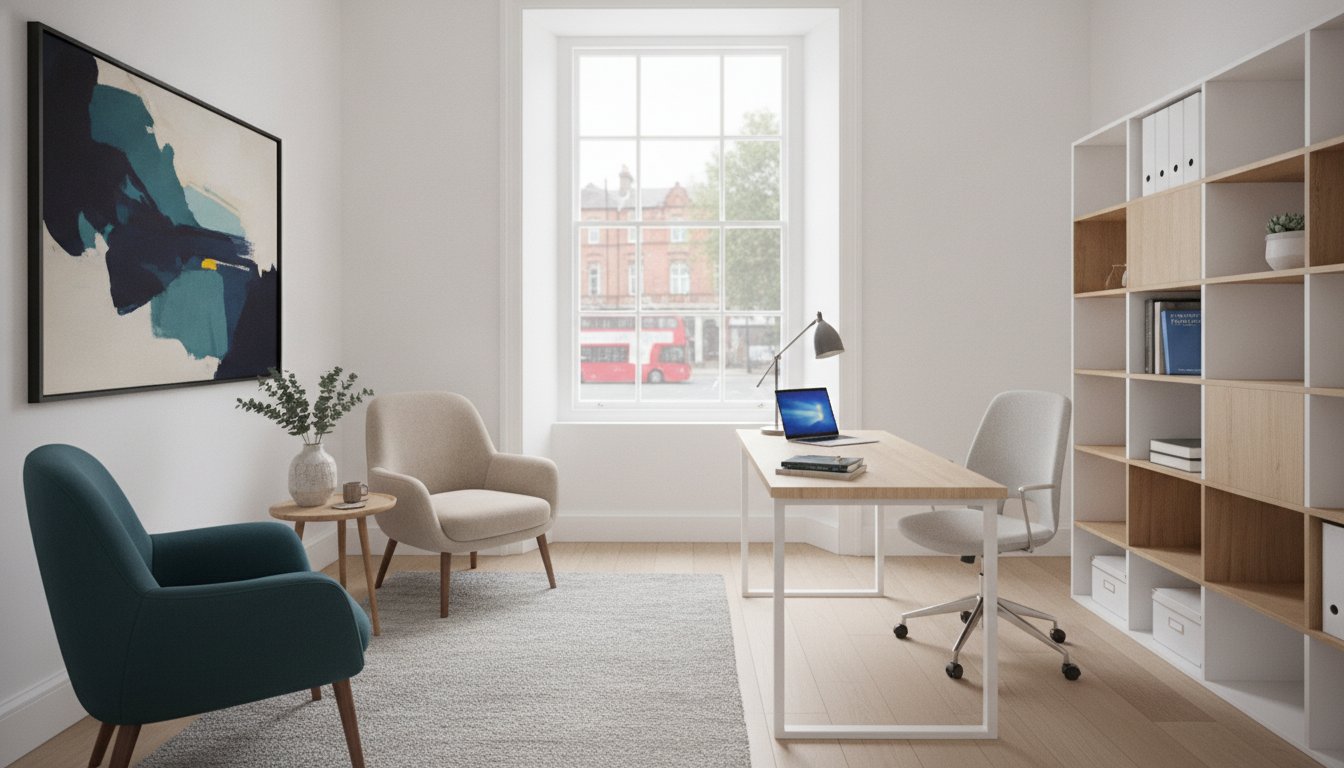
Best Practice for Your Counselling Room and Workspace

Article by
Martin Hogg
I help Private Practice counsellors in the UK set up and grow an ethical Private Practice they love, work with their ideal clients, and earn the income they deserve. All without guesswork and burnout. I have been a private practice counsellor myself for over 20 years, specialising in anger management. I set up a not-for-profit social enterprise, Citizen Coaching and Counselling, which delivers thousands of counselling sessions a year to adults and young people in Birmingham. I am a registered BACP Counsellor and the author of three books, My Anger Coach, My Anxiety Coach and My Relationship Coach. These are available on Amazon.
You don't need a designer sofa or a soundproofed basement that costs more than your car to be a "real" therapist. Most of us spend way too long worrying about the exact shade of "calm" green for the walls while completely ignoring how we're going to actually file our notes or keep the neighbours from hearing a breakthrough. You're likely asking, "What is the best practise for a Counselling room and workspace" because you want to get it right from day one without breaching BACP ethics or your own sanity.
I know how it feels to be stuck in analysis paralysis over furniture while the "business" side of things feels like a mounting shadow. It's completely normal to worry about confidentiality in a home office or feel overwhelmed by the admin setup. I'm going to show you how to create a professional, BACP-compliant therapy space and a highly efficient business workspace without overspending or overthinking the decor. We'll stick to what actually matters for your clients and your productivity.
In this guide, I'll give you a clear checklist for clinical safety and a workspace layout that makes your paperwork feel easy. By the end, you'll have the confidence to stop faffing with cushions and start seeing your first clients immediately.
Key Takeaways
- Understand what is the best practise for a Counselling room and workspace by balancing BACP-compliant safety with the practical need for a professional "holding" environment.
- Protect your mental energy by physically separating your clinical chair from your admin desk, ensuring your business tasks don't bleed into your therapeutic presence.
- Avoid the perfectionism trap of waiting for the "perfect" decor before you start marketing; rough and ready usually beats a polished but empty room.
- Keep your space professional by removing personal items like family photos that can blur boundaries and distract from the client's process.
- Use the "skateboard model" to scale, starting with flexible hourly room rentals before committing to the heavy overhead of a full-time lease.
What is Best Practice for a Counselling Room?
When you're trying to figure out what is the best practise for a Counselling room and workspace, it's easy to get distracted by interior design trends. True best practice has nothing to do with expensive rugs or "calming" art. Instead, it’s a grounded balance of ethical safety, professional boundaries, and therapeutic holding. I often talk about this in the Practice Visibility Blueprint, because your physical setup is part of your professional brand. The physical room acts as a container, a reliable boundary that signals to the client’s nervous system that they are safe to explore difficult emotions without interruption.
I always suggest using the BACP Ethical Framework as your primary guide for space assessment. If a room doesn't protect the client's privacy or provide a stable environment, it doesn't matter how nice the cushions are. I view the room through three main pillars: Confidentiality, Consistency, and Comfort. This creates a solid therapeutic frame that allows you to focus on the person sitting across from you rather than worrying about the postman seeing through the window.
The Essentials of Confidentiality and Privacy
Confidentiality is the one thing we can't compromise on. If a client thinks they can be heard through the door, they won't go deep. You don't need professional soundproofing that costs thousands, but you do need common sense. A white noise machine placed outside the door or a simple door snake can work wonders for privacy. Check your visual privacy too. Position your chairs so there's no glare on your face from the window and ensure passers-by can't peer in. If you're working from home, try to create a separate entrance feel. Even a dedicated path or a specific way you greet them at the door helps maintain that professional distance.
Consistency and Physical Comfort
Consistency is about the room being the same every time. Clients find comfort in the predictable. You don't need high-end furniture; in fact, "rough and ready" pieces often feel more accessible and less intimidating. The psychology of where you sit matters too. I recommend a 45-degree angle for chairs rather than sitting directly face-to-face, which can feel like a bit of an interrogation. Swap out harsh overhead lights for warm, adjustable lamps. It makes the space feel grounded and professional without looking like a clinical exam room.
Designing Your Business Workspace for Efficiency
Most guides focus entirely on the client's experience. They talk about the cushions and the tea, but they ignore the fact that you'll spend about half your working life doing admin, marketing, and notes. When people ask what is the best practise for a Counselling room and workspace, they often forget that the "workspace" part is what keeps the business alive. If you try to write your blog posts or manage your accounts from the same chair where you hold deep emotional space, you're on a fast track to burnout. You need a physical and mental gear shift.
I recommend a "One-Page Practice" desk setup. This means keeping only the essentials within reach: your laptop, a physical diary if you use one, and a notebook for those "brief and focused" clinical notes. This simplicity is backed by research on human behavior and design principles, which suggests that a cluttered environment leads to a cluttered mind. Invest in a proper office chair too. Your clinical chair might be comfy for an hour, but an eight-hour stretch of admin requires actual lumbar support. It's a non-negotiable investment in your longevity.
Integrating Digital Tools into Your Workflow
Your digital desk should be just as tidy as your physical one. I teach the "skateboard model" for a reason. You don't need a complex website to start. A simple Squarespace site that handles enquiries is plenty. Use tools like Canva for your social media content so you can stay in your "creative flow" without getting bogged down in design theory. I also swear by Calendly. It automates the "invisible" work of booking sessions, which stops those endless back-and-forth emails. If you want to see how this fits into a larger growth strategy, take a look at the Practice Visibility Blueprint.
Managing Clinical Records and GDPR
Efficiency also means staying safe with your data. Whether you prefer physical or digital storage, best practice is about being "brief and focused." Don't write a novel. Keep your notes professional and secure. If you share your office or work from home, adopt a "Clear Desk" policy. At the end of the day, everything goes into a locked drawer or an encrypted drive. This is especially vital if your workspace is also where you take secure video calls. Ensure your background is neutral and your connection is private so you can maintain that professional boundary even through a screen.
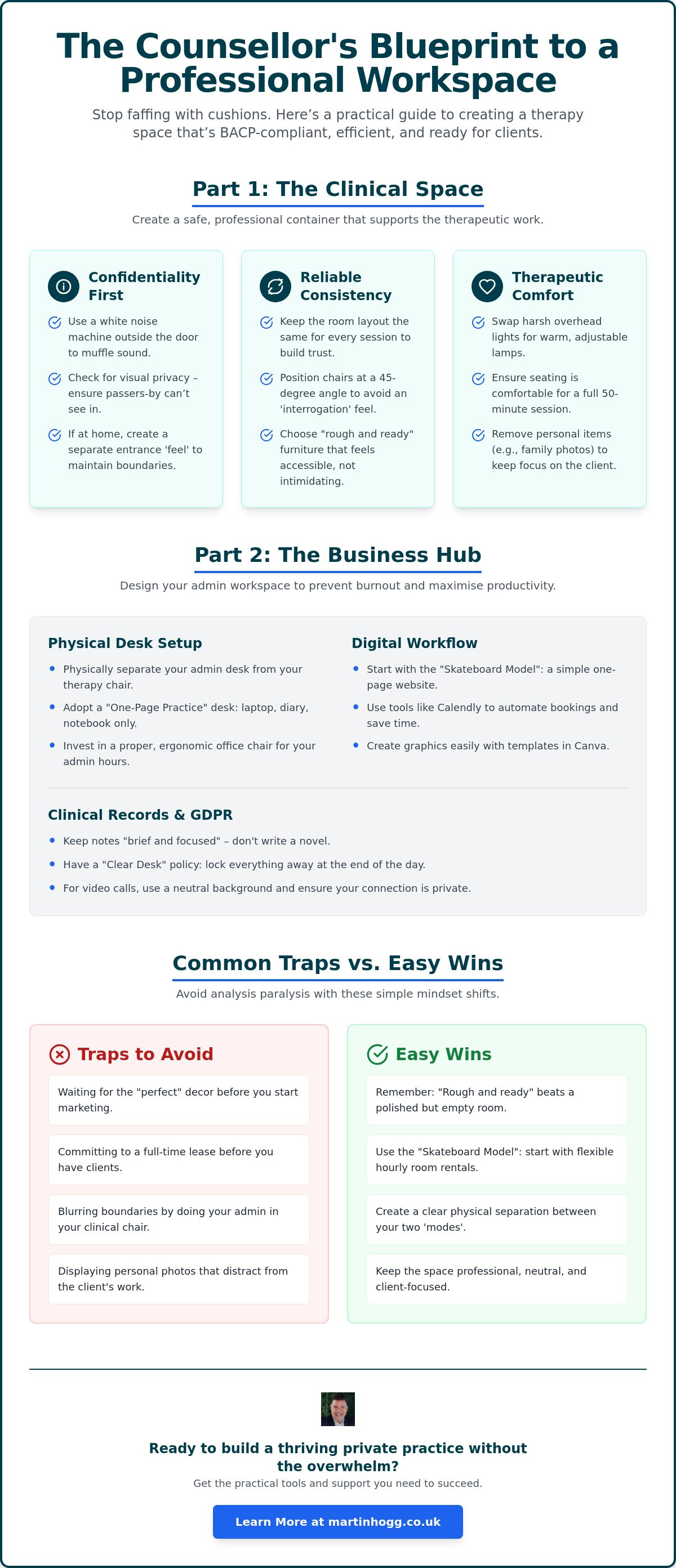
Common Setup Mistakes and Easy Wins
When you're trying to figure out what is the best practise for a Counselling room and workspace, the biggest hurdle isn't usually your budget. It's perfectionism. I see so many talented therapists waiting for the "perfect" room, the perfect lighting, or the perfect ergonomic chair before they even think about launching their marketing. Here's a reality check: rough and ready content beats a polished but empty practice every single time. Your clients don't need a designer showroom; they need a safe, consistent space where they can do the work.
Another common pitfall is over-personalisation. While your office is your second home, your family photos, marathon medals, or quirky hobby gear should stay out of the client’s direct line of sight. These items can act as "visual noise" that distracts from their own process. According to research-based design insights, a space that feels too domestic or cluttered can actually make it harder for a client to process their own internal clutter. You want the room to feel like a neutral canvas for their story, not a gallery of yours.
The Top 3 Easy Wins for a Professional Feel
You can transform the feel of a room with very little effort. First, add a single, healthy green plant. It softens the clinical edges and brings a bit of life into the space. Second, get a simple, professional clock. Position it so you can see it clearly without checking your watch or phone, but keep it out of the client's direct eyeline so they don't feel "on the clock." Finally, create a transition ritual. This could be as simple as making a fresh cup of tea or taking three deep breaths when moving from your admin desk to your therapy chair. It helps you leave the "business" brain behind and step into your clinical presence.
Avoiding the "Salesperson" Vibe
You want to show you're qualified without looking like you're bragging. Displaying your BACP or professional certificates is essential for trust, but don't turn your wall into a trophy cabinet. One or two neatly framed certificates near the entrance or behind your desk is plenty. This is part of your wider Marketing for Therapists in the UK strategy. Your room should reflect your "one-sentence offer" and your specific niche. If you work with corporate stress, a minimalist, sharp look works well. If you work with children, you'll need a different set of tools entirely.
If you're feeling stuck on how to pull all this together while growing your client list, come and join us in the Private Practice Success Membership where we break these steps down into easy wins.
Scaling Your Space: The Skateboard Model
I’m a big fan of the skateboard model. If you want to get from A to B, you don’t start by building a Ferrari; you start with a skateboard. It’s the same with your room. When you're first considering what is the best practise for a Counselling room and workspace, don't feel you have to sign a three-year lease on a suite in the city centre. Renting by the hour from an established practice or a community centre is the ultimate easy win. It keeps your overheads low while you build your caseload and your confidence.
There usually comes a point where working from a spare bedroom or a rented hourly slot starts to feel a bit cramped. Moving from a home office to a dedicated professional centre is a significant milestone. It marks your transition from being a "solo practitioner" to the "CEO" of your own business. This shift is a key part of Scaling a Therapy Practice. You’ll find your workspace needs change as you grow. You might need more storage for files or a better area for your growing admin tasks, but the core principles of confidentiality and comfort remain exactly the same.
Building Your Visibility from Your Workspace
Your workspace isn't just for seeing clients; it's your marketing hub. I encourage you to dedicate just 30 minutes a day at your desk to "Practice Visibility" tasks. This is where you update your Counselling Directory profile or tweak your Squarespace site. Remember, people connect with people. Use your therapy room as a backdrop for short, helpful videos. You don't need a film crew. A "rough and ready" video shot on your phone in your actual workspace builds far more trust than a polished, stock-image advert ever could. It shows potential clients exactly where they’ll be sitting and who they’ll be talking to. It removes the mystery and replaces it with a human connection.
If you want to see how other therapists have set up their rooms and get feedback on your own workspace ideas, come and join the Private Practice Success Membership. It's a supportive community where we share what's actually working on the ground in the UK right now, so you can stop faffing with the details and start growing your practice.
Ready to Set Up Your Professional Space?
You don't need a massive budget or a degree in interior design to get this right. We've looked at how true best practice is really about creating a safe, consistent container for your clients while giving yourself a functional spot to handle the business side. Remember to keep your admin desk separate from your therapy chair and don't let the perfectionism trap stop you from starting. It's the human connection that matters most, not the price of your rug.
When you're figuring out what is the best practise for a Counselling room and workspace, it's often the small, practical shifts that make the biggest difference. Whether you're starting with the skateboard model of hourly rentals or moving into your own dedicated centre, keep it simple and focused. I've spent over 15 years helping UK counsellors grow through practical, jargon-free coaching. As a BACP-endorsed workshop provider, I've seen first-hand how the right environment supports both you and your clients.
If you're ready to stop overthinking and start seeing more clients, Join the Private Practice Success Membership today. You've got everything you need to build a space that feels professional and sustainable. Let's get started.
Frequently Asked Questions
Do I need a separate entrance for a home-based counselling room?
You don't strictly need a separate entrance to be BACP-compliant, but you do need a clear plan for how clients enter your home. If they have to walk past your kitchen or your family's laundry, it blurs the professional boundary. I suggest keeping the path to the room as neutral as possible. If a separate side door is an option, it's a massive win for your privacy and theirs.
What are the BACP requirements for a therapy room?
The BACP doesn't give you a rigid shopping list for furniture, but they do require you to provide a safe, private, and professional environment. This means the room must be soundproof enough that conversations aren't overheard and accessible enough for your specific client group. When people ask what is the best practise for a Counselling room and workspace, I always point them back to the Ethical Framework's focus on client safety and trust rather than specific decor choices.
How can I soundproof my counselling room on a budget?
You don't need to spend thousands on professional acoustic foam to get results. A simple white noise machine placed just outside the door can mask voices effectively for a very small investment. Adding a heavy door snake to block the gap at the bottom of the door and hanging thick, floor-to-length curtains can also dampen sound. It’s about creating enough of a barrier that the client feels their words aren't travelling through the walls.
Is it better to rent a room or work from home when starting out?
Renting a room by the hour is usually the best way to start because it removes the pressure of high overheads while you're still building a caseload. Working from home is great for profit margins, but it can feel isolating and sometimes compromises your personal privacy. If you use the skateboard model and rent as you go, you can grow your practice without the stress of a full-time lease. It also gives you a professional address to put on your Counselling Directory profile from day one.
What furniture is essential for a new private practice?
You only need a few basics to get started: two comfortable, sturdy chairs and a small side table for water and tissues. Don't forget a clear, silent clock that you can see easily without checking your phone. For the "workspace" side of things, a proper desk and an ergonomic chair are vital for your admin days. Understanding what is the best practise for a Counselling room and workspace means prioritising your own physical health just as much as the client's comfort.
Disclaimer
The information provided on this blog is for general informational purposes only and is not intended to be a substitute for professional medical or mental health advice, diagnosis, or treatment. Reading this content does not create a therapist-client relationship.


