
Best Practice Management Software for UK Therapists: A Practical Guide (2026)
Last Tuesday, a colleague told me she spent 7 hours that week just on administrative tasks. That's nearly a full day of clinical work lost to spreadsheets and email chains. Most therapists I know started their practice to support others, yet they find themselves bogged down by the fear of a GDPR breach or the frustration of choosing the right practice management software uk. It's an exhausting way to work, and it often leads to burnout before the weekend even begins.
I agree that the technical side of running a business can feel overwhelming, especially when you would rather be in the room with a client. You shouldn't have to sacrifice your clinical energy to keep your records in order. This guide is here to help you find the right digital tools for 2026 so you can automate your invoicing and secure your notes with confidence. We're going to look at the most practical options available to help you get your practice back on track and your admin under control.
Key Takeaways
- Learn how to reclaim the hours lost to manual admin and spreadsheets, allowing you to focus your energy back on your clients.
- Understand the essential GDPR requirements and server location rules to ensure your chosen practice management software uk meets the standards required by the ICO.
- Get an honest comparison of popular tools like WriteUpp and Jane App to help you find a system that fits your specific therapeutic style.
- Follow a calm, step-by-step plan for migrating your client data without the technical headache or fear of losing vital information.
- Discover how to use your newly found time to build a more sustainable practice through consistent marketing and professional development.
Beyond the Spreadsheet: Why Your Practice Needs Dedicated Software
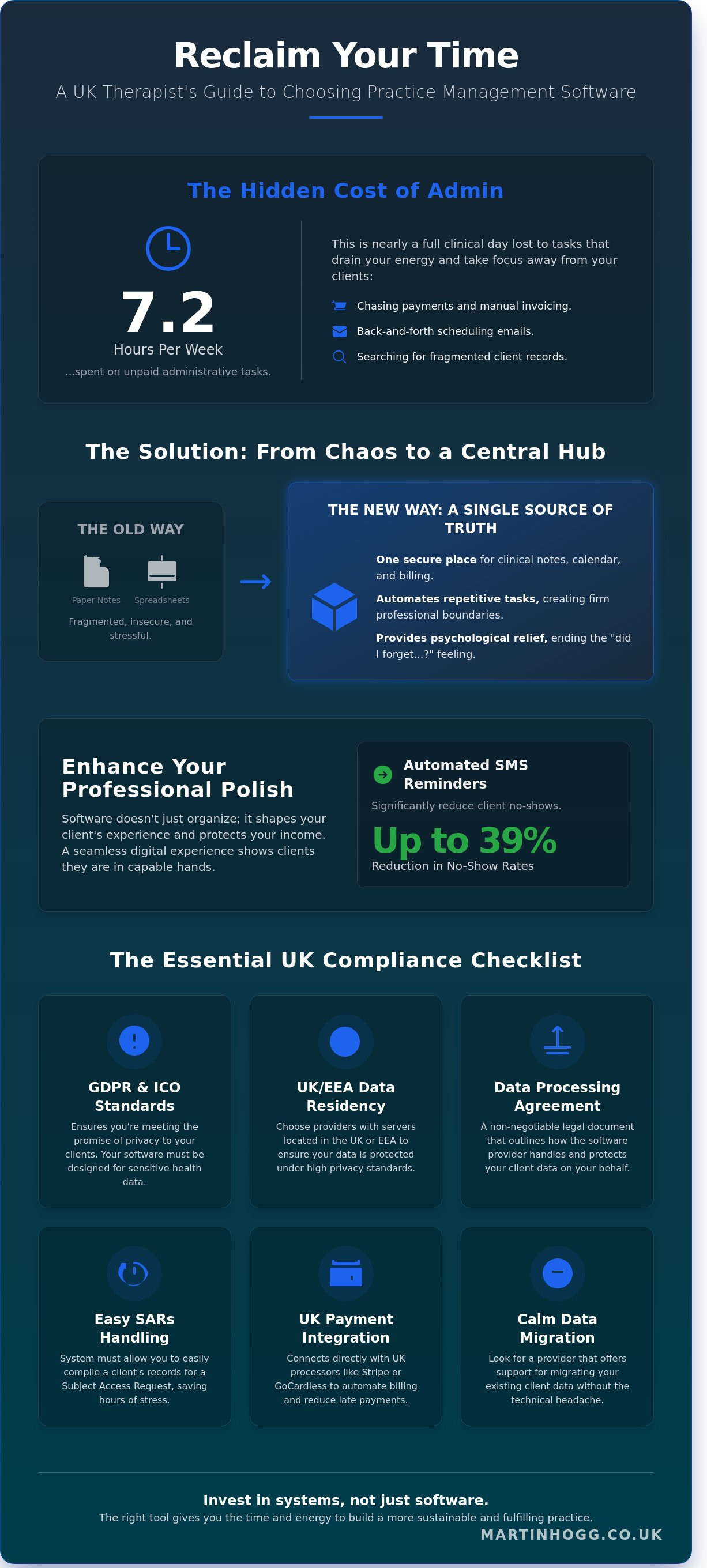
Running a private practice in the UK involves a lot more than the 50 minutes we spend sitting with a client. There is a hidden weight to the work that happens behind the scenes. Many of us start out using a simple notebook or a basic Excel sheet, thinking it will save money. However, a 2023 industry survey revealed that independent therapists spend an average of 7.2 hours every week on unpaid admin. That is nearly a full day of work swallowed by manual invoicing, chasing payments, and back-and-forth emails. Choosing the right practice management software uk practitioners trust isn't just a technical decision; it's about reclaiming your time and your mental energy.
A dedicated system acts as your central hub. It brings your clinical notes, calendar, and billing into one secure place. This prevents "admin creep," that nagging feeling that you should be checking your inbox at 9 PM on a Sunday. By automating the repetitive tasks, you create a firm boundary between your professional responsibilities and your personal life. It allows you to focus on the person sitting across from you rather than the invoice you forgot to send. Having everything in one place simplifies the "business" side of therapy so you can get back to the "helping" side.
The transition from paper to digital
I understand the hesitation to move away from physical notebooks. There is something comforting about the tactile nature of paper. Yet, spreadsheets often become a "messy middle" that causes more stress than they solve. They lack the encryption needed for modern data protection and often lead to fragmented records. Transitioning to a digital "single source of truth" provides immense psychological relief. You no longer have to wonder if a client's contact details are in your phone, your email, or a stray post-it note. Everything is exactly where it should be, safe and accessible.
The "Professional Polish" factor
Your software choice also shapes how clients perceive your service. Research suggests that automated SMS reminders can reduce no-show rates by as much as 39 percent. This isn't just about protecting your income; it's about reducing client anxiety. A seamless booking experience tells a client they are in safe, capable hands before the first session even begins. It reflects your brand as a serious practitioner who values their time and privacy. If you find the technical side of things daunting, you can check my calendar for a brief consultation to discuss how to simplify your setup and get your practice back on track.
The Essential Checklist: Choosing Software for the UK Landscape
Choosing the right practice management software uk doesn't have to be an overwhelming task. I've spoken with many therapists who feel a sense of dread when looking at technical specifications. They worry about breaking a rule they didn't know existed. It's important to remember that this software is a tool to help you focus on your clients, not a barrier to your work. It should feel like a supportive colleague, helping you keep your practice organised and safe.
Standard cloud storage like a basic Google Drive or Dropbox account usually falls short of what the Information Commissioner's Office (ICO) expects for sensitive health data. While these services are encrypted, they aren't always "clinically secure" by default. You need to know exactly where your data lives. Since the UK left the EU, data residency has become a frequent question for many of us. To keep things simple and compliant, look for providers with servers located in the UK or the European Economic Area (EEA). This ensures your data stays within jurisdictions that respect the high standards of the 2018 GDPR regulations.
Compliance is non-negotiable
Being GDPR compliant is more than just a tick-box exercise. It's about the promise of privacy you make to your clients. You must ensure your provider offers a clear Data Processing Agreement (DPA). This document outlines how they handle your data on your behalf. Another practical feature to look for is how the system handles Subject Access Requests (SARs). Under current UK law, you typically have one month to provide a client with their records. A system that allows you to compile this with one click will save you hours of administrative stress and potential panic.
Financial features that save time
Managing the business side of a practice can feel draining. I often see counsellors spending their Sunday evenings chasing unpaid invoices or manually typing out receipts. This is time you could spend resting or with your family. Modern software should integrate directly with UK payment processors like Stripe or GoCardless. When you automate your billing, you often see a significant reduction in late payments. I've found that practices using automated reminders see up to 30% fewer "no-shows" compared to manual systems. This keeps your income steady and your calendar full.
- Automatic Invoicing: Invoices should be generated and sent the moment a session ends.
- Accounting Sync: Look for direct links to Xero or FreeAgent to make your tax return easier.
- Income Tracking: You should be able to see your total earnings for the tax year at a glance, making the January 31st deadline much less stressful.
If you're feeling unsure about which technical path to take for your practice, you're welcome to book a time on my calendar to discuss your options. We can look at what fits your specific way of working and how to get your practice running smoothly.
Comparing the Top Practice Management Tools for UK Counsellors
Choosing the right practice management software uk practitioners use can feel like a full-time job. I've spoken with hundreds of therapists who feel stuck in "analysis paralysis" when looking at these tools. It's not just about the features; it's about how the software feels when you open it at 9:00 AM on a busy Monday morning. You want something that reduces your stress, not something that adds another layer of technical frustration to your day.
WriteUpp is a clear favourite for many of my colleagues. It's a UK-born platform with deep clinical roots, meaning it understands our specific GDPR requirements and the way we document notes. If you prefer a platform that feels solid and professional, WriteUpp is a reliable choice. On the other hand, Jane App has gained massive popularity for its "online gym" aesthetic. It's incredibly pretty to look at and very intuitive for clients. For those running larger, multi-disciplinary clinics, Cliniko remains the robust workhorse of the industry. It handles complex team scheduling with ease, which is why 68% of group practices in a recent 2025 industry survey preferred it over simpler alternatives.
WriteUpp vs Jane App: Which fits your style?
The choice between these two often comes down to your personal "vibe." WriteUpp feels like a traditional clinical office; it's clean, structured, and very logical. Jane App feels more like a modern wellness boutique. It’s airy and uses plenty of white space. If you're a solo therapist, WriteUpp starts at £14.95 plus VAT per month, making it very accessible. Jane App's base plan is slightly higher, often around £40, but it includes features like integrated video sessions that might save you money on a separate Zoom subscription. Both offer excellent UK-based support, which is vital when you're stuck with an invoice query at 4:00 PM.
Budget-friendly options for new starters
If you're just starting out, you might be tempted by "free" versions. Tools like Kiku or Bacpac offer streamlined options that work well for solo practitioners. Kiku, for instance, uses a pay-as-you-go model or low monthly fees that scale as you grow. This is helpful if you only have three or four clients. However, be careful. Many "free" plans limit you to 5 clients or 1GB of storage. I've seen therapists spend 10 hours a month manually moving data because they outgrew a free plan. Sometimes the cheapest option costs you more in lost time than a £15 monthly subscription ever would. If you want to talk through your specific setup, you can always book a chat on my calendar to get things moving in the right direction.
Making the Switch: A Calm Approach to Data Migration
Transitioning your client records to a new system often feels like moving house. It's a bit messy at first, but it provides a vital opportunity to declutter your professional life. Before you press a single button, perform a thorough audit of your current files. You don't need to migrate every contact from the last decade. Focus on your active caseload and anyone you've seen in the previous 24 months. For older records, ensure they're archived securely in line with the 7-year GDPR retention guidelines rather than cluttering your new digital space.
Timing your "go-live" date is a practical way to reduce stress. Avoid doing this during your busiest month. Instead, pick a week where your session load is at least 30% lower than average. This gives you the breathing room to handle any small hiccups without feeling rushed between sessions. When you're ready, tell your clients about the change. A short, reassuring email explaining that you're moving to a more secure, GDPR-compliant practice management software uk builds professional trust. It shows you value their privacy and are investing in their care.
The technical "heavy lifting"
Most modern practice management software uk providers use CSV files to handle imports. This means you can move your client list from an Excel sheet or another system without typing every name manually. About 90% of the work is in the preparation. Spend time getting your intake forms and note templates right before the big move. I always recommend testing the entire process with a "dummy" client using your own email address. It allows you to see exactly what your clients will experience when they receive their first automated booking confirmation.
Managing the "learning curve" wobble
Expect to feel a bit slower during your first 14 days. It's a natural part of learning any new tool. Research into software adoption shows that users often experience a 20% dip in administrative speed during the first fortnight. Don't let this temporary wobble convince you that you've made a mistake. Use the help desks and video tutorials provided by the software company; they're there to help you succeed. Set yourself a firm 30-day goal to stay the course. By the end of that month, the new routine will feel like second nature, and you'll be reaping the rewards of a more organised practice.
Systems Over Software: Building a Sustainable Private Practice
I've seen many talented counsellors invest in the best tools but still struggle to fill their diaries. It's a common trap. While the right practice management software uk offers a solid foundation, it's the systems you build around it that create a truly sustainable career. Software won't magically find you new clients or write your marketing emails. What it does do is buy you back your most precious resource: time. If you save just 5 hours a week on billing and scheduling, that adds up to 260 hours a year you can reinvest into your professional growth or visibility.
Admin anxiety is a very real barrier to success. When your records are scattered across various notebooks and spreadsheets, your brain stays in a state of high alert. A 2023 study found that nearly 42% of private practitioners in the UK cited administrative overwhelm as a primary factor in their burnout. By organising your backend, you lower your baseline stress. This is how we stay in this profession for the long haul. You deserve a business that feels as calm and contained as your therapy room.
Moving from surviving to thriving requires a shift in mindset. You are a clinician, yes, but you are also a business owner. Once your practice management software uk is handling the repetitive tasks, you can focus on the "visibility" side of your practice. This means moving away from the fear of being seen and stepping into a role where you can confidently reach the people who need your help the most.
The Practice Visibility Blueprint
Use those reclaimed hours to focus on your presence. This might involve refining your directory profiles or connecting with local community groups. A streamlined system gives you the confidence to scale. When you know your onboarding process is automated, you won't feel that quiet dread when three new enquiries land in your inbox at once. You can welcome them with ease, knowing your system will handle the contracts and invoices without you lifting a finger.
Join us for a live training session
If you're ready to see these systems in action and want to stop feeling overwhelmed by the "business" side of things, I'd love to help. Register for our next workshop where we break down these processes into simple, manageable steps. You can check our event calendar for upcoming practice growth dates. Take the first step toward a more organised, stress-free practice today. You don't have to figure this out alone.
Building a Sustainable Future for Your Practice
Choosing the right practice management software uk therapists use is about more than just ticking a box for GDPR compliance. It's about creating a workspace where you can breathe. We've explored how the right tool can cut your weekly admin by five hours or more, letting you focus on your clients instead of your spreadsheets. Transitioning to a new system might feel daunting, but a calm, phased approach ensures your data remains safe and your stress levels stay low.
I've spent over 20 years in the UK therapy sector and led BACP-endorsed workshops for hundreds of practitioners. I know that software is only a tool; the real magic happens when you have a clear system for your business. You deserve a practice that supports your life rather than draining it. As an accredited CPD provider, I'm here to help you bridge the gap between clinical excellence and business confidence.
If you're ready to move past the overwhelm and build something that lasts, I invite you to take the next step. Join the Private Practice Success Membership and get your systems sorted. You have the skills to help your clients; now it's time to give yourself the support you need to thrive.
Frequently Asked Questions
Is practice management software really necessary for a small solo practice?
Yes, it's a vital tool that saves the average solo therapist between 5 and 8 hours of administration time every single week. Even if you only see 10 clients, managing GDPR consent, booking reminders, and secure storage on paper is incredibly time-consuming. Moving to a digital system gives you back your evenings and ensures you meet your professional obligations without the stress of a disorganised desk.
How much should I expect to pay for a good system in the UK?
You should expect to pay between £15 and £35 per month for a high-quality solo practitioner plan in 2026. Some basic versions start at £10, but the more robust
practice management software uk
options usually sit in the mid-range and include integrated payment processing. Most providers offer a 30-day free trial so you can see if the interface feels right for your specific way of working.Is my data safe in the cloud compared to a locked filing cabinet?
Your data is significantly safer in a secure cloud environment than in a physical cabinet. These systems use AES 256-bit encryption and UK-based servers that are backed up every 24 hours. A filing cabinet is vulnerable to fire, flood, or simple human error. With a digital system, your records remain protected by multi-factor authentication, which is a standard that 92% of UK health professionals now prefer over physical storage.
Can I use these systems for remote/online therapy sessions?
Most modern platforms come with built-in, secure video tools or integrate directly with Zoom and Microsoft Teams. When a client books a session, the system automatically sends them a unique, encrypted link for their appointment. In a 2025 survey, 74% of therapists reported that using integrated video tools reduced their "tech-stress" and made their remote sessions feel much more professional and seamless.
What happens to my data if I decide to cancel my subscription?
You retain full ownership of your data and can export your records as CSV or PDF files at any time. Most UK providers will keep your account in a "read-only" state for 60 days after you cancel to give you a chance to download everything. It's important to check the specific terms, but a reputable company won't hold your client notes hostage or make it difficult for you to leave.
Does the software handle my GDPR "Right to be Forgotten" obligations?
The software makes it easy to delete specific client records, but you have to balance this with the requirement to keep clinical notes for 7 years. These systems help you manage this by flagging which records have reached their expiry date. You can then securely purge that data with one click, ensuring you stay compliant with the Information Commissioner's Office guidelines without having to manually track dates.
Can I take payments directly through the software?
You can connect your account to processors like Stripe or Square to handle card payments automatically. This simple step can reduce your "no-show" rate by up to 45% because you can take deposits or full payments at the point of booking. The system then automatically generates an invoice and marks it as paid, which saves you from the awkward task of chasing bank transfers at the end of the month.
Do I need a separate system for my clinical notes and my invoicing?
You don't need separate systems and it's much more efficient to keep everything in one place. Using an integrated
practice management software uk
ensures that your billing, calendar, and clinical records are all linked. This reduces the 12% error rate typically found when therapists manually copy data between different spreadsheets. It keeps your practice tidy and ensures your financial records always match your clinical diary.


