
Building a Referral Network for Therapists: A Practical Guide to Growing Your Practice
Most of us trained as counsellors to help people get their lives back on track, not to spend our afternoons worrying about marketing funnels. It's a common struggle; a 2023 survey by the British Association for Counselling and Psychotherapy (BACP) found that more than 33% of therapists in private practice feel professionally isolated. You likely feel that same anxiety about "selling" yourself or worry that building a referral network for therapists feels a bit too much like a corporate sales pitch. I understand that hesitation because I've felt it too.
The good news is that growing your practice is actually about human connection, not cold promotion. It's about making sure that when a local GP or a fellow practitioner meets someone in need, they know exactly why you're the right person to help. I'll show you how to create a reliable stream of "right-fit" clients through genuine, ethical relationships that respect our professional boundaries. We're going to look at practical ways to strengthen your local ties so your practice grows through trust and reputation rather than just expensive adverts.
Key Takeaways
- Learn why word-of-mouth recommendations lead to a better clinical fit and a more sustainable practice than chasing cold leads.
- Discover the practical steps for building a referral network for therapists by identifying local partners who already support your ideal clients.
- Understand how to stay aligned with BACP and UKCP ethical guidelines by focusing on reciprocal support instead of referral fees.
- Follow a simple, human-centred process to connect with local health professionals through low-pressure, personalised outreach.
- Find out how to nurture these professional relationships over time to ensure your practice continues to grow at a steady, manageable pace.
Why a Referral Network is Essential for a Sustainable Therapy Practice
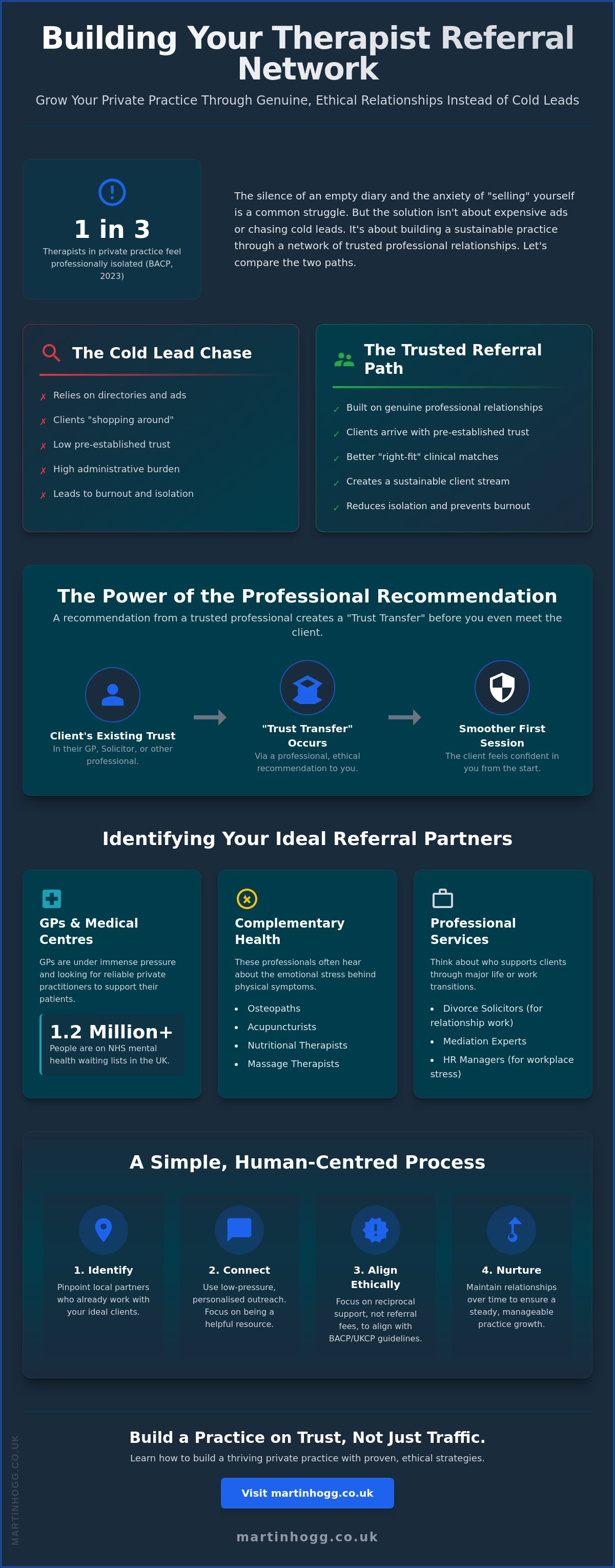
When you first start out in private practice, the silence of an empty diary can feel heavy. You might find yourself spending hours tweaking your website or worrying about Google rankings. While those things matter, the real heart of a long-term practice lies in the relationships you build with other professionals. A referral network is simply a group of trusted colleagues who understand your specific expertise and feel confident recommending you to their own clients or contacts. It is about moving away from the "cold lead" culture of the internet and toward a model built on genuine human connection.
There is a significant difference in quality when a client comes to you via a recommendation. Cold leads from directory sites often involve a lot of "shopping around," where potential clients might contact five different therapists at once. In contrast, word-of-mouth referrals come with a pre-established layer of trust. Because a professional they already respect has vouched for you, the "fit" is usually much better from the very first session. This reduces the administrative burden of chasing enquiries that lead nowhere and allows you to focus on the clinical work you're trained to do.
Many of us feel a sense of "salesy" dread when we think about networking. We worry it feels pushy or corporate. I want you to shift that perspective. Building a referral network for therapists isn't about selling a product; it's about ensuring clients get the best possible care. If you meet a client who isn't the right fit for your skills, having a network means you can pass them to someone who can truly help. It's an act of professional integrity. It also solves the problem of isolation. Solo practice can be incredibly lonely, and having a circle of peers to talk to is a practical way to prevent therapist burnout.
The Power of the Professional Recommendation
When a GP, a fellow counsellor, or a local solicitor recommends you, a "trust transfer" occurs. The client’s existing confidence in that professional is partially handed over to you before you've even met. This makes the initial consultation much smoother. You can find more about the foundations of this in my guide on marketing for therapists uk, which helps set the stage for these connections. Understanding Referral marketing strategies is useful here because it shows that recommendations aren't just happy accidents; they are the result of consistent, professional visibility.
Overcoming the Fear of Visibility
It’s common to feel a bit of "imposter syndrome" when stepping into the role of a business owner. You might worry about being seen as "too much" or feel anxious about reaching out to others. Try to remember that you are actually helping other professionals solve a problem. When a GP has a patient they can't support, or another therapist has a full waiting list, they are looking for a reliable person to help. By being visible, you are providing a solution for them. A referral network is a professional safety net for your practice.
Identifying Your Ideal Referral Partners in the UK
When you begin building a referral network for therapists, the first step is to consider who your ideal client meets before they ever reach your door. People rarely decide to see a counsellor out of the blue. Usually, they have tried to manage their struggles elsewhere first. Complementary health practitioners like osteopaths, acupuncturists, and nutritional therapists are excellent partners. These professionals often spend significant time with their clients, often hearing about the emotional weight or stress that sits behind a physical symptom like back pain or digestive issues.
You should also look beyond the traditional health sector. If you specialise in relationship work, local divorce solicitors or mediation experts are natural allies. For those focusing on workplace stress or burnout, HR managers in local businesses are often looking for reliable private practitioners to support their staff. Learning how to market your private practice effectively involves seeing these professionals as collaborators in a person's journey toward getting their life back on track.
Working with GPs and Medical Centres
The reality of the UK healthcare system is that the NHS mental health backlog is significant. With over 1.2 million people currently on waiting lists, GPs are under immense pressure to find support for their patients. You can help by being a clear, professional alternative. When approaching a local surgery, avoid being a nuisance. Don't just drop off a stack of flyers. Instead, provide a concise "one-pager" that outlines your specialisms, your qualifications, and your current availability. A clear, professional business card that a GP can hand over during a ten minute consultation is a practical tool that solves a problem for them and the patient.
Building Peer-to-Peer Referral Loops
Some of your most consistent referrals will come from other therapists. It is a common mistake to see other counsellors as competition. In reality, many successful therapists have full caseloads and need somewhere safe to send new enquiries. Connect with peers who work in different modalities or with different age groups. If you develop a reputation for a specific niche, such as working with men in therapy, other practitioners who don't feel equipped for that work will gladly refer to you. You can find these peers through local CPD events or by reaching out to people on online directories whose practice values align with your own.
Building these connections takes a bit of courage and consistency, but it is the most sustainable way to grow a practice that feels grounded in your local community. If you are feeling a bit stuck on how to start these conversations, you might find it helpful to look at my available session times for a quick mentoring chat.
The Ethics and Mechanics of Professional Referrals
When you focus on building a referral network for therapists, you aren't just looking for new business. You're creating a safety net for clients who need specific expertise that you might not provide. This process must be handled with care to maintain professional integrity and protect the people seeking help. In our field, the clinical need must always come before any professional relationship or personal gain.
Navigating Referral Fees and Incentives
In the UK, ethical bodies like the BACP and UKCP are very clear about financial incentives. The BACP Ethical Framework (2018) specifically prohibits practitioners from offering or accepting any payment or "kickback" for a referral. Ethical practice means no money changes hands when you recommend a colleague. If a client feels they've been passed to a therapist because of a financial deal rather than clinical suitability, the trust is broken before the first session even begins.
The real value exchange is professional reliability. You provide a safe, competent place for their clients to find help when they are outside your own area of expertise. It's about ensuring the client's interest remains the absolute priority. When I refer a client to a specialist in eating disorders or a child psychologist, I do it because I know that person is the right fit for the client's recovery, not because of a fee.
Creating a Simple Referral Agreement
For most solo practitioners, referral arrangements stay informal. You get to know a few trusted colleagues and agree to pass names along when appropriate. However, if you are considering scaling a therapy practice or hiring associates, you might need a more formal written agreement. This helps clarify expectations around how enquiries are handled and how client data is protected under GDPR.
- Confidentiality: Only share the bare minimum of information required for the initial contact. Never pass on clinical notes without explicit, written consent from the client.
- The "Bad Fit" Handover: If a referral doesn't work out, be honest with your colleague. A quick, respectful message explaining that the client needs a different modality keeps the relationship strong.
- Tracking Results: Use a simple spreadsheet or a practice management tool like Cliniko to record where your clients come from. This helps you see which relationships are most productive.
Setting these boundaries early prevents the awkwardness that can arise from misunderstood expectations. It allows you to build a network based on mutual respect and shared clinical standards, which is the only sustainable way to grow a practice in the long term.
How to Reach Out and Build Connections (The Human Way)
Building a referral network for therapists doesn't require a hard sell or a corporate mindset. It's about finding other professionals who care about people as much as you do. When we approach networking as a way to provide better care for our clients, the anxiety often fades away. You aren't asking for a favour; you're offering a professional resource.
Start by curating a shortlist of 10 local professionals. Look for people whose work sits alongside yours, such as GPs, family law solicitors, osteopaths, or even other counsellors with different specialisms. Once you have your list, follow these five steps to grow your practice naturally.
- Step 1: Research their work to ensure their values align with your own.
- Step 2: Send a short, personalised email that acknowledges their expertise.
- Step 3: Arrange a 20 minute "coffee meeting" focused entirely on their service.
- Step 4: Follow up within 24 hours with a specific resource or a simple thank you.
- Step 5: Maintain the connection with a brief check-in every three months.
The "Initial Coffee" Script
Your first email should be brief and respectful of their time. Avoid the mistake of asking for referrals in the first five minutes of meeting. Instead, focus on learning. A simple template might look like this:
"Hi [Name], I’m a counsellor in Birmingham specialising in [Your Niche]. I’ve heard great things about your work with [Specific Group], and I’d love to learn more about what you do so I can refer clients to you when appropriate. Do you have 20 minutes for a quick coffee next week?"
During the meeting, ask: "What does a great referral look like for you?" This shows you're interested in helping them succeed, which naturally makes them want to return the gesture. It's a practical way of building trust without feeling like a "salesperson."
Following Up Without Feeling Pushy
After your meeting, send a note that reinforces your niche without being overbearing. If you discussed a specific struggle their clients face, send over a helpful article or a grounding exercise they can share. This keeps you top-of-mind as a useful expert rather than a name on a business card. If you're feeling unsure about the social side of business, you can check the Martin Hogg calendar for workshops that focus on confident professional networking.
Consistency is more important than intensity. A quick email every few months to share a success story or a new service you're offering is often enough to keep those referrals flowing. It’s about being a reliable part of the local professional community.
If you're ready to take the next step in growing your professional presence, you can find more support and training through Citizen Coaching’s upcoming events.
Nurturing Your Network for Long-Term Growth
Think of building a referral network for therapists as tending to a garden rather than making a one-off transaction. You cannot simply plant a seed and walk away expecting a harvest. It requires regular attention, a bit of patience, and a genuine desire to see the whole ecosystem thrive. When you approach networking with a spirit of generosity, you move away from the "salesy" feeling that many counsellors dread and into a space of professional connection.
The moment you receive your first referral is a critical turning point. This is your opportunity to demonstrate that you are reliable and professional. If a local GP or a fellow therapist sends a client your way, they are putting their own reputation on the line. By handling that referral with care, you reassure them that they made the right choice. Even if the client decides not to book a session after the initial enquiry, the fact that you responded promptly and professionally matters immensely to the person who recommended you.
Giving back to your network is what keeps the relationship alive. This could involve sharing useful resources, cross-promoting a colleague's workshop, or even organising a small, informal CPD event. When you share knowledge, you naturally position yourself as an authority in your local professional community. You don't need to be the loudest person in the room to be seen as an expert. Being the person who consistently provides value and support makes you the first name that comes to mind when a referral opportunity arises.
Managing the Referral Feedback Loop
Closing the loop is a vital part of maintaining a healthy counselling private practice uk. With the client’s explicit consent, send a brief note to the referrer to let them know the client has started therapy. If the client didn't book, a simple "thank you for the referral" still goes a long way. It acknowledges their effort and keeps the lines of communication open. This simple habit separates the hobbyists from the professionals who are serious about building a sustainable practice.
Next Steps: Joining a Supportive Community
Many therapists struggle with a "fear of being seen," which can make building a referral network for therapists feel daunting. You might worry about sounding pushy or feel like an impostor when talking to other professionals. I've seen how peer support can change this. Within the Practice Visibility Blueprint, we help you automate your visibility so you can focus on the clinical work you love. If you're ready to move past the overwhelm and grow your practice with a clear, calm strategy, I invite you to explore the Private Practice Success Membership. You can book a time to chat about your goals on my calendar and let's get your practice on the right track together.
Taking the Next Step Toward a Sustainable Practice
Growing your practice doesn't have to feel like an uphill struggle against a quiet phone. When you focus on building a referral network for therapists, you're really just creating a community of like-minded professionals who want the best for their clients. It's about moving away from the isolation of private practice and finding your feet among local GPs, fellow counsellors, and community leaders. By focusing on human connection rather than clinical jargon, you create a professional safety net that benefits everyone involved.
I've spent over 15 years coaching UK therapists, and I know that the most successful practices aren't built on flashy ads or empty promises. They're built on trust and practical, no-nonsense strategies that actually work in the real world. As a BACP-endorsed training provider, I've seen how a few right connections can replace the anxiety of an empty diary with a steady stream of the right clients. You already have the skills to help people; now it's just about making sure the right people can find you.
If you're ready to move past the self-doubt and get your practice back on track, I'm here to guide you through it. Join the Practice Visibility Blueprint and start growing your network today. Let's make your professional growth feel as natural and grounded as the work you do in the therapy room.
Frequently Asked Questions
Is it ethical to pay for referrals in a UK therapy practice?
No, paying for referrals is considered unethical and is strictly prohibited by major UK professional bodies. The BACP Ethical Framework, specifically point 43, states that practitioners must not offer or accept any financial inducements for referrals. It's vital to keep the client's best interests at heart. If money changes hands, it clouds your clinical judgement; stick to building relationships based on trust and competence instead.
How do I ask a GP to refer clients to my private practice?
Start by sending a brief, physical letter to the Practice Manager or a specific GP at the surgery. Mention two or three specific areas where you can help, such as anxiety or bereavement, to make their job easier. GPs often have 10 minute appointments and are under huge pressure. If you can show you're a reliable local resource who can take the weight off their shoulders, they'll be much more likely to remember you.
What should I do if a referral source sends me a "bad fit" client?
You should always prioritise the client's needs by referring them elsewhere if you aren't the right fit for their specific struggle. It's best to have a quick, honest conversation with your referral source. Explain that the client's needs fall outside your current scope of practice. Providing them with two alternative names helps the source feel supported and ensures the client gets the right help without you feeling overwhelmed by an unsuitable case.
Do I need a formal contract for a referral partnership?
You don't need a formal legal contract for most peer to peer referral relationships. However, writing a simple working agreement can prevent future misunderstandings. This document should outline how you'll handle data protection and client confidentiality. While 0% of my early partnerships had contracts, I now suggest a basic one page summary for any multi disciplinary work to keep everyone on the same page and protect your professional reputation.
How many people should be in my therapist referral network?
Aim to have 5 to 8 active, reliable contacts in your core network. It's much better to have a small group of people who truly understand your work than a list of 50 strangers. When building a referral network for therapists, focus on quality over quantity. If each of those 8 people sends you just 2 clients a year, you've already filled 16 slots in your diary with very little effort.
Can I build a referral network if I only work online?
You can absolutely build a thriving network while working entirely online. Geography matters less than it used to, as 45% of therapists now offer some form of remote work according to recent industry surveys. Join online supervision groups or therapist forums on platforms like LinkedIn. Focus on connecting with people who have complementary niches. If you specialise in trauma and they focus on couples, you can support each other regardless of where your desks are.
How long does it take to see results from networking?
It typically takes 3 to 6 months of consistent effort before you see a steady stream of clients. Networking is about planting seeds, not an instant harvest. You might have 3 coffee meetings before the first referral lands in your inbox. Be patient with the process. In my experience, those who check in with their contacts every 8 weeks see much better long term results than those who only reach out when their diary is empty.
What is the best way to track where my referrals come from?
The most effective way to track your referrals is to ask every new enquiry a simple question: "How did you hear about me?" Record this in a basic spreadsheet or your practice management software. By tracking this data for 12 months, you'll see exactly which relationships are working. This allows you to spend more time nurturing the 20% of sources that likely provide 80% of your new business, helping you focus your energy where it counts.


