
Business Coach for Therapists UK: Building a Practice That Actually Works

Article by
Martin Hogg
I help Private Practice counsellors in the UK set up and grow an ethical Private Practice they love, work with their ideal clients, and earn the income they deserve. All without guesswork and burnout. I have been a private practice counsellor myself for over 20 years, specialising in anger management. I set up a not-for-profit social enterprise, Citizen Coaching and Counselling, which delivers thousands of counselling sessions a year to adults and young people in Birmingham. I am a registered BACP Counsellor and the author of three books, My Anger Coach, My Anxiety Coach and My Relationship Coach. These are available on Amazon.
The Counselling Directory is not a business plan, yet most of us start there and hope for the best. You've spent years honing your clinical skills, only to find yourself staring at a quiet inbox and wondering why the "build it and they will come" approach isn't working. If you're looking for a business coach for therapists uk based, it's likely because you're tired of the "lonely" feeling of solo practice and the technical headache of trying to figure out SEO on your own. You want to help people, not spend your weekends wrestling with website plugins or feeling like a pushy salesperson.
I know how it feels to worry that being "business-minded" somehow compromises your integrity as a healer. It doesn't. In fact, a stable, profitable practice is what allows you to do your best work without burning out. This article will show you how to bridge the gap between your clinical excellence and actual business success using practical, ethical strategies designed specifically for the UK landscape. We'll explore how to create a simple, repeatable marketing system, find confidence in your niche, and move beyond the "rough and ready" stage to a practice that actually works.
Key Takeaways
- Understand why clinical excellence isn't enough to fill your diary and how to bridge the gap without feeling like a pushy salesperson.
- Learn how to use the "skateboard model" to build a simple, effective website that starts working before you spend a fortune on branding.
- Discover what to look for in a business coach for therapists uk to ensure they respect BACP ethics and understand the practicalities of HMRC.
- Identify the small, practical tweaks that make your Counselling Directory and Psychology Today profiles actually stand out to potential clients.
- Find out how to set boundaries that protect your energy as you move from being a solo practitioner to running a sustainable, successful business.
Why Every UK Therapist Needs a Business Strategy (Not Just Clinical Skills)
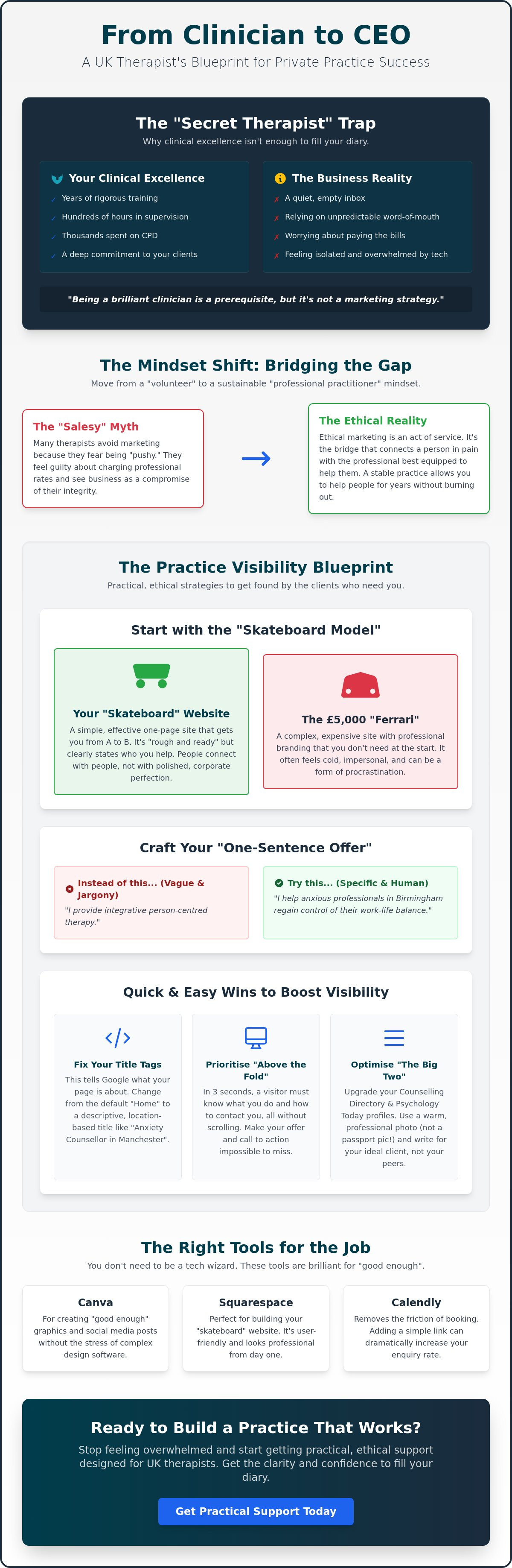
Most of us fell into the "Secret Therapist" trap early on. We spent years in training, hundreds of hours in supervision, and thousands of pounds on CPD. We became truly excellent at what we do. Then, we opened a private practice and waited. The problem is that being a brilliant clinician is a prerequisite, but it isn't a marketing strategy. If you want to fill your diary, you need to be visible. Relying solely on word of mouth is like waiting for rain during a drought. It is slow, unpredictable, and frankly, a bit stressful when the mortgage is due.
This is where a business coach for therapists uk comes in. Unlike a clinical supervisor who focuses on client safety and therapeutic process, a business mentor focuses on your sustainability. You need someone who understands the BACP Ethical Framework just as well as they understand an HMRC tax return. While generic business coaching can be helpful, therapists have unique ethical boundaries that most "hustle" coaches simply don't get. If you want to find that balance, joining the Private Practice Success Membership can provide the structure you need.
Bridging the Gap Between Training and Trading
Counselling training schools are wonderful at teaching empathy and theory, but they often fail to mention that you're also becoming a small business owner. Many counsellors carry a "volunteer mindset" into their private work, feeling guilty about charging a professional rate. Moving to a professional practitioner mindset isn't about becoming greedy. It is about ensuring your practice survives so you can keep helping people for the next twenty years without burning out.
The Ethical Sales Myth
Many therapists avoid marketing because they don't want to be "salesy." I get it. But if someone is in distress and they can't find you because your website is buried on page ten of Google, that isn't ethical; it is a missed opportunity for healing. Ethical marketing is the intentional bridge that connects a person in pain with the professional best equipped to help them. When you view it as an act of service, the fear of being seen starts to fade.
The Practice Visibility Blueprint: How to Get Found in the UK
Marketing doesn't have to mean becoming a TikTok star. If you've been searching for a business coach for therapists uk, you've likely realised that the usual advice to "just post on social media" doesn't quite fit the ethical reality of our work. My approach is the "Skateboard Model." You don't need a Ferrari of a website with professional branding and a £5,000 price tag to get started. You need a skateboard; something simple that gets you from A to B. A "rough and ready" one-page site that clearly states who you help is often more effective than a polished, corporate site that feels cold.
People connect with people. When someone lands on your site, they aren't looking for academic jargon or a list of your degrees. They want to know if you "get" them. This is where your "one-sentence offer" comes in. Instead of saying you provide "integrative person-centred therapy," try saying: "I help anxious professionals in Birmingham regain control of their work-life balance." It's direct, human, and tells them they're in the right place.
Technical Easy Wins for Your Practice Website
You don't need to be a tech wizard to get the basics right. Start with your title and description tags. These are the signposts that tell Google what your page is about. If your title tag just says "Home," you're effectively invisible. It should say something like "Counsellor in Manchester" or "Anxiety Therapy London." Finding a business coach for therapists uk who understands these technical nuances can save you months of trial and error.
Ensure your most important information is "above the fold." This is the part of the screen people see before they have to scroll. Within three seconds, a visitor should know what you do and how to contact you. You can Attract more clients with the Practice Visibility Blueprint by focusing on these high-impact, simple changes.
Content That Beats Polished Marketing
Optimising the "Big Two"—Counselling Directory and Psychology Today—is often your quickest win. Stop using a passport photo and start writing for the client, not your peers. Stripping away the therapist clichés that make every profile look the same is the first step toward a full diary. If you focus on clear, empathetic communication, you'll stand out from the sea of generalists.
Tools like Canva and Squarespace are brilliant for creating "good enough" assets without the stress. While you should look at official government guidance on business plans to get your financial forecasts straight, your daily marketing should stay simple. Adding a Calendly link to your site can double your enquiry rate simply because it removes the friction of back-and-forth emails. The Private Practice Success Membership provides the community and tools to implement these steps without the overwhelm.
What to Look for in a Business Coach for Therapists
Finding a business coach for therapists uk can feel a bit like finding a therapist; the relationship matters, but their specific expertise matters even more. You've likely seen the adverts for high-energy coaches promising you the world with "six figures in six weeks" and "passive income" dreams. The reality of building a UK therapy practice is different. It requires a mentor who understands that we aren't just selling a product. We are providing a professional, ethical service within a regulated framework.
One of the first things I would check is whether they actually understand the UK landscape. Do they know the difference between being a Sole Trader and a Limited Company? Are they familiar with the £52 ICO registration fee or the specific BACP requirements for professional development? If a coach is using Americanised, "hypey" sales tactics, they probably don't understand the nuance of the British therapy market. We need a strategy that feels comfortable and honest, not something that makes us want to hide under the desk.
Red Flags to Avoid in Practice Coaching
If you see a coach using words like "unlock" or "elevate" while promising overnight success, be careful. These are often signs of a generic business coach who doesn't understand therapist boundaries or self-disclosure rules. We cannot use the same aggressive marketing tactics as a gym or a digital agency. You need practical steps, like the Skateboard Model we discussed earlier, rather than just "mindset vibes" that leave you with no idea how to actually set up a Calendly link or write a compelling directory profile.
The Value of a Supportive Community
Isolation is one of the biggest challenges in private work. While 1:1 coaching is excellent for tailored growth, being part of a group of peers who are in the same boat is invaluable. You want a coach who fosters connection rather than competition. If you're ready to move forward with a group that understands the clinical and business balance, you can Join the Private Practice Success community to get started.
Scaling Your Practice Without Losing Your Soul (or Your Sanity)
Scaling is a word that often makes therapists cringe. It sounds corporate, like something involving spreadsheets and cold boardrooms. But in reality, scaling just means building a practice that doesn't rely entirely on you being in the chair for every single hour of income. If you're consistently booked up and turning people away, you've hit a ceiling. This is the point where a business coach for therapists uk becomes a vital sounding board. Moving from "Solo Practitioner" to "CEO" of your own small practice is a big shift, and it requires setting boundaries that protect your clinical work while you manage the growth.
One of the smartest ways to scale without simply working more hours is through specialising. Generalists often struggle to justify higher rates, but specialists don't. Investing in specific CPD, such as an Anger Management CPD for Professionals or a Working with Men CPD Course, allows you to carve out a niche where you are the expert. When you're the go-to person for a specific issue, your marketing becomes much simpler and more effective. You can find more detail on this transition in my guide to scaling your therapy practice.
Managing the "Practice Growth" Overwhelm
As your visibility increases, so does that nagging feeling of imposter syndrome. You might worry about being "found out" or judged by peers for being successful. It's a common struggle, but don't let it stall your progress. A practical next step you can take right now is to audit your current directory profiles. Are they still reflecting the specialist therapist you've become, or are they three years out of date? Keeping your "rough and ready" content updated is an easy win that keeps the enquiries flowing.
One-to-One vs. Group Support
Not everyone needs bespoke 1:1 coaching immediately. For many, using the Practice Visibility Blueprint serves as a perfect self-paced roadmap to get your foundations solid. However, if you're looking for significant growth, such as hiring your first associate or moving into group work, 1:1 support provides the tailored advice needed to avoid expensive mistakes. Whether you prefer a community or a private conversation, the goal is the same: a practice that supports your life rather than draining it.
Your Path to a Sustainable Private Practice
Building a practice that actually works doesn't require you to become a marketing expert overnight. It starts with a shift in perspective; moving away from the "Secret Therapist" trap and toward a visibility system that respects your ethics. By focusing on the Skateboard Model for your website and refining your directory profiles, you can create a steady stream of the right clients. Remember that your business should serve your life, not the other way around. Specialising in a niche is often the key to protecting your energy while increasing your impact.
If you're feeling overwhelmed by the technical side or the "lonely" feeling of solo work, finding a business coach for therapists uk who understands our professional boundaries is a sensible next step. I've built my BACP-endorsed workshops and accredited CPD training on over 20 years of UK private practice experience to help you avoid common pitfalls. You don't have to figure this out by yourself.
Stop waiting for the "right time" to get your marketing sorted. You can Get the Practice Visibility Blueprint and start growing your practice today. It's time to turn your clinical excellence into a thriving, sustainable business that supports both you and your clients. You've got this.
Frequently Asked Questions
Do I really need a business coach if I just want a few more clients?
You don't always need a coach for a small boost, but it helps stop you from wasting money on things that don't work. If you're spending money on directories like Psychology Today without seeing a return, a business coach for therapists uk can help you spot the "easy wins" you're missing. It is about getting the basics right so you don't have to guess.
Is business coaching for therapists tax-deductible in the UK?
Yes, business coaching is generally considered a "wholly and exclusively" business expense by HMRC. Because it is designed to help you grow your practice and increase your income, you can usually offset the cost against your tax bill. Always check with your accountant, but for most sole traders, it is a legitimate professional development cost that helps your bottom line.
How long does it take to see results from practice coaching?
You can often see small changes, like better enquiry rates from a directory profile, within a few weeks. However, building a sustainable system takes longer. Most therapists I work with start feeling more confident and see a steadier flow of clients after three to six months of consistent effort. It isn't magic; it is about putting the right foundations in place for long-term success.
Will a business coach tell me to do things that are clinically unethical?
A good business coach for therapists uk will never ask you to compromise your clinical ethics. We understand the BACP and UKCP frameworks just as well as you do. The goal is to find ways to be visible that feel honest and respectful. If a coach pushes you toward aggressive tactics that feel wrong, they aren't the right fit for our profession.
What is the "Skateboard Model" in therapist marketing?
The Skateboard Model is about building the simplest version of your practice visibility first. Instead of waiting months for a perfect, expensive website, you start with a "rough and ready" one-page site that works. It gets you moving today. You can add the bells and whistles later, but the priority is getting you in front of clients as quickly and ethically as possible.
Disclaimer
The information provided on this blog is for general informational purposes only and is not intended to be a substitute for professional medical or mental health advice, diagnosis, or treatment. Reading this content does not create a therapist-client relationship.


