
Choose holiday breaks and arrange practice cover

Article by
Martin Hogg
I help Private Practice counsellors in the UK set up and grow an ethical Private Practice they love, work with their ideal clients, and earn the income they deserve. All without guesswork and burnout. I have been a private practice counsellor myself for over 20 years, specialising in anger management. I set up a not-for-profit social enterprise, Citizen Coaching and Counselling, which delivers thousands of counselling sessions a year to adults and young people in Birmingham. I am a registered BACP Counsellor and the author of three books, My Anger Coach, My Anxiety Coach and My Relationship Coach. These are available on Amazon.
A holiday doesn’t have to wait until your practice is quiet. I’d choose dates around family commitments and quieter periods in your caseload, then decide whether a long weekend or a longer break feels manageable. Put possible dates in your calendar early, before work and life fill every gap.
Taking time off can feel difficult when clients rely on you and there’s no colleague nearby to pick things up. If this is your first break, I’d start small and plan cover and client communications before you go. A bit of preparation can make it easier to step away without taking your inbox on holiday too.
I’ll cover how to choose your dates and trip length, arrange cover, and manage results and messages while you’re away. I’ll also look at family events and changes in practice demand, so your time off fits real life as well as your diary.
Key Takeaways
- I’d choose holiday dates around your family commitments and quieter periods in your practice, then decide whether a short break or longer trip suits you.
- I’d plan cover before you leave, with clear information about urgent cases and what your covering colleague may need to manage.
- I’d set expectations with clients about your absence, who they can contact, and when you’ll be back.
- I’d make a simple return plan so you can review what happened and pick up client work without trying to do everything at once.
1. Choosing between shorter breaks and a longer trip
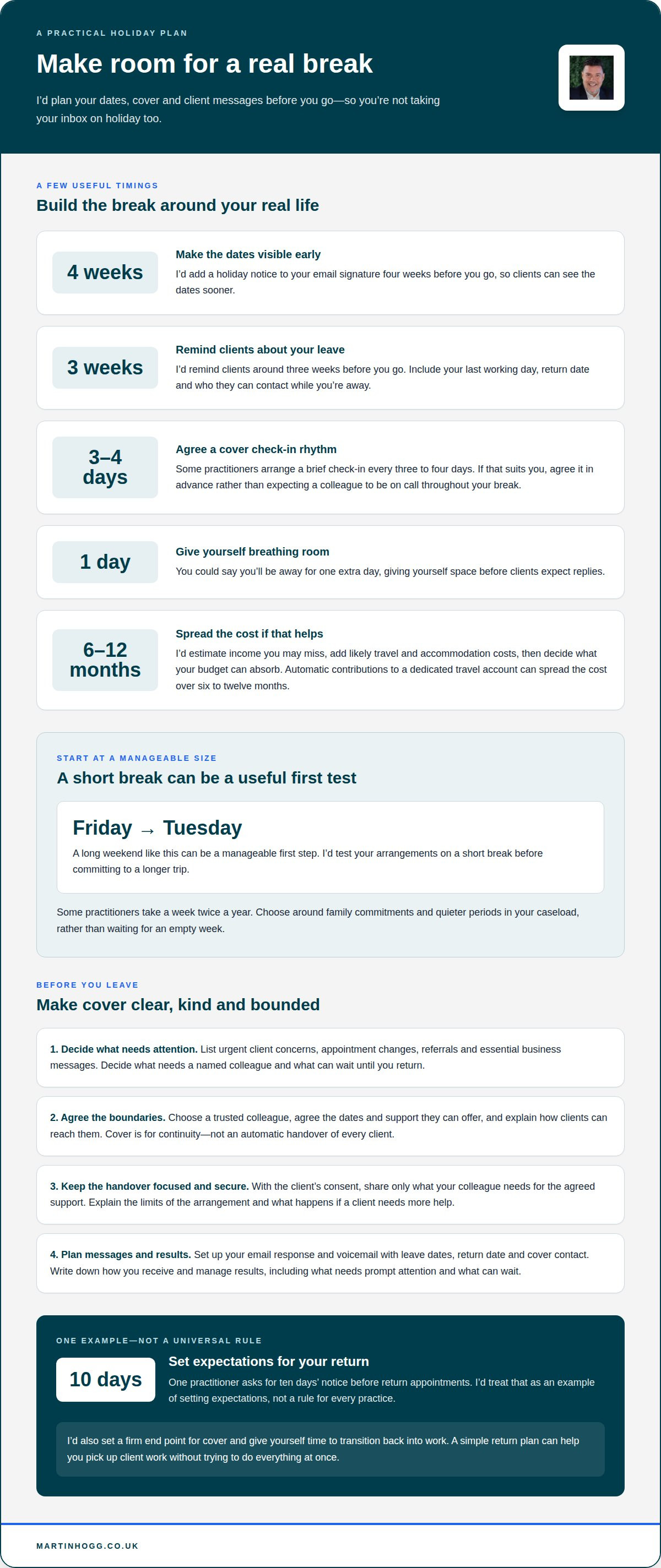
I’d choose your first break by looking at your caseload, energy and diary, rather than waiting for an empty week. A long weekend, such as Friday to Tuesday, can be a manageable first step. Some practitioners take a week twice a year. Whichever you choose, I’d test your arrangements on a short break before committing to a longer trip.
I’d pick a destination and holiday type that suit the time you have. A nearby city break, a walking holiday or a few quiet days by the coast each involve different travel and planning. For a long weekend, straightforward transport may leave you more time to rest than a packed itinerary.
For your first solo trip, I’d choose somewhere manageable, with a clear route and activities you can enjoy alone. Plan one or two anchors, such as a museum visit or coastal walk, and leave space around them. An independent trip, an organised tour or a mix of both can work, depending on your confidence and interests.
People travel solo for different reasons: work schedules may not match, family commitments can shape dates, or they may simply prefer their own pace. Your destination doesn’t need to justify the trip. I’d choose what you want, whether that’s a quiet weekend or a longer journey.
A holiday doesn’t pause your usual tax or National Insurance arrangements. I’d set aside money for expected payments and plan around their usual deadlines, including VAT or payroll dates if they apply to your practice.
As a sole trader, I’d plan for unpaid time away from your practice. Employee holiday entitlement is an employment arrangement, not paid leave a sole trader claims for themselves.
There’s no single savings figure that suits every practice. I’d estimate the income you may miss, add likely travel and accommodation costs, then decide what your budget can absorb. Automatic contributions to a dedicated travel account, started six to twelve months ahead, can spread the cost.
Before leaving, I’d review your professional indemnity policy and business continuity arrangements. Make sure you understand how your cover applies during an absence, and arrange a trusted colleague as an emergency contact if clients need support.
2. Arranging locum or colleague cover
I would treat cover as a way to maintain continuity, not as an automatic handover of every client. List what might need attention while you’re away: urgent client concerns, appointment changes, referrals and essential business messages. Then decide which tasks need a named colleague and which can wait until you return. Clear boundaries help your cover person understand what they’re taking on.
I would choose a trusted counsellor or colleague who understands your practice and can respond appropriately. Agree the dates, the support they can offer and how clients can reach them. Some practitioners arrange a brief check-in every three to four days. If that suits your arrangement, agree the rhythm in advance rather than expecting your colleague to be on call throughout your holiday.
I would keep the handover focused and secure. With the client’s consent, share only what your colleague needs to provide the agreed support. Note the client’s immediate concern, any agreed next step and how to contact you if the plan needs review. Don’t assume a colleague can take over therapy. Explain the limits of the arrangement and what happens if a client needs more support.
I would tell clients about your absence well ahead of time. Explain your leave dates, whether sessions will pause and who they can contact if they need help before you return. If a client would rather not speak with your colleague, clarify the available options together. Clear choices are more helpful than a vague out-of-office message.
I would agree practical details too, including access to necessary records, confidentiality and how urgent messages will be passed on. Set a firm end point for cover, then give yourself time to transition back into work. One practitioner asks for ten days’ notice before return appointments. That’s an example of setting expectations, not a universal rule.
If you want space to think through boundaries and the culture of running your practice, I’d suggest the Private Practice Success community as a useful place to start. It’s easier to protect a holiday when your cover plan is agreed before you’re choosing between a client call and dinner.
3. Managing results and communications while away
I’d give clients clear notice of your leave dates, who they can contact and when you’ll return. Remind them around three weeks before you go; adding a holiday notice to your email signature four weeks ahead can make the dates visible sooner. A straightforward message is enough. Include your last working day and when you expect to resume appointments.
I’d plan for results too. Write down how you receive and manage them, including what needs prompt attention and what can wait. If a colleague is covering, make sure they understand your system before you leave. Clear, thorough client notes provide relevant context without relying on hurried messages or memory.
For urgent enquiries, I’d name a trusted colleague as the contact during your absence and explain their role to clients in advance. Agree how they’ll assess messages, pass on urgent concerns and reach you if an agreed escalation point arises. It’s easier to leave your inbox behind when someone knows what counts as urgent and what can wait.
I’d set up your email response and voicemail with your leave dates, return date and cover contact’s details. You could state that you’ll be away for one extra day, giving yourself breathing room before clients expect replies. Keep the message consistent across your email signature, automatic reply and phone greeting.
How much notice should you give clients? I’d aim to remind them around three weeks before you go, then repeat the dates closer to departure if useful. Give each client enough information to plan appointments and know who to contact during the break.
I’d decide before leaving whether you’ll check messages. If checking work helps settle your mind, set a specific time each day rather than dipping into email constantly. Otherwise, ask your agreed cover person to screen urgent enquiries and keep your holiday time for rest.
On your return, I’d review what arrived and follow up with clients of concern. A short handover from your colleague can flag actions that need attention, helping you prioritise calmly instead of treating every message as urgent.
4. Planning holiday dates around family events and practice demand
Put possible leave dates in your calendar early. Add family events, school commitments and important personal occasions first, then compare them with your appointment diary and known practice deadlines. Planning for holidays as a solo practitioner means balancing those priorities rather than letting client work quietly claim every available week.
Look for quieter periods and avoid taking leave during a clear peak. Review your diary across the year: note when enquiries rise, when regular clients tend to book and when planned work needs your attention. Past patterns can help you choose less disruptive dates, though each year may have its own rhythm.
Family dates and practice demand won’t always line up neatly. If an important event falls during a busy period, consider whether a shorter break either side would work better. Put both options in your calendar and compare their impact on appointments, deadlines and preparation time. Seeing the choices clearly can help you decide instead of postponing your holiday indefinitely.
Before ruling out a month, consider which tasks are genuinely urgent. For example, a client’s tax return issue with a deadline of 31 January the following year may not need action during an August holiday. I’d focus on whether a task falls due while you’re away, rather than whether it simply appears in your current workload.
Mark relevant VAT or payroll deadlines alongside family plans and client appointments. If one week looks crowded, move your dates or consider a shorter absence. Once you’ve chosen, block the time in your calendar and leave space on your return day to review messages and settle back into work. That buffer can make your first day back feel less like a sprint.
The takeaway is simple: weigh family dates, actual deadlines and practice demand, then protect your chosen dates early. Let your diary support the decision rather than make it for you.
Private Practice Success with Me
I help counsellors build and develop a more sustainable private practice. If holiday planning raises concerns about workload, visibility or keeping income steady, consider the wider shape of your practice, not just the dates in your diary.
I offer the Practice Visibility Blueprint and One-to-One Practice Growth Coaching to help you work through practical parts of running your practice and decide what needs attention first. That might mean making your services clearer to potential clients or developing a steadier approach to growth, so planned time off feels more manageable.
You don’t need to have everything figured out before seeking support. Get in touch with me to discuss how I could help you develop your practice.
Make time off part of the practice you’re building
I see planning holidays as a solo practitioner as more than a diary exercise. It’s a chance to build a practice that leaves room for the rest of your life, rather than treating personal time as something to squeeze in after work.
I’d start with one small step: put a provisional break in your calendar, decide what would make it feel manageable, or notice which parts of your practice make time away difficult. You don’t need to solve everything at once. A clearer direction can make the next decision easier.
If you’d value ongoing ideas and connection with others building private practices, I’d invite you to explore the Private Practice Success Membership.
I believe your practice can grow without taking every available hour. Make space for the life you’re building alongside it.
Frequently Asked Questions
How can a UK sole trader plan annual leave and holidays?
I’d plan time off as a business decision, not as employee-style paid leave. Choose dates that work with your personal commitments, then map their effect on income and regular outgoings. For example, if you pay monthly room rental, include that continuing cost in your holiday budget. I’d keep a separate record of holiday savings and expected bills so you can see what your practice needs to cover while you’re away.
How can a solo practitioner arrange client cover and manage deadlines before taking leave?
I’d separate work that needs attention during your absence from work that can wait. For example, flag a client appointment request for your covering colleague, but schedule routine website updates for your return. Give your colleague a concise handover and clear limits on what they can handle. I’d keep a deadline list showing each task, due date and next action, so nothing important gets buried in a busy inbox.
How do solo practitioners compare taking one long holiday with several shorter breaks?
I’d compare your options by looking at travel time, the kind of rest you need and the disruption each break creates. A longer trip may suit a distant destination, while shorter breaks can fit around family plans or a busy diary. Consider the return, too: one longer absence may need a fuller catch-up, while several short breaks mean repeating the preparation more often.
Disclaimer
The information provided on this blog is for general informational purposes only. It is also not intended to be a substitute for professional medical or mental health advice, diagnosis, or treatment. Reading this content does not create a therapist-client relationship.


