Confidence in Marketing: A Practical Guide for UK Counsellors and Therapists
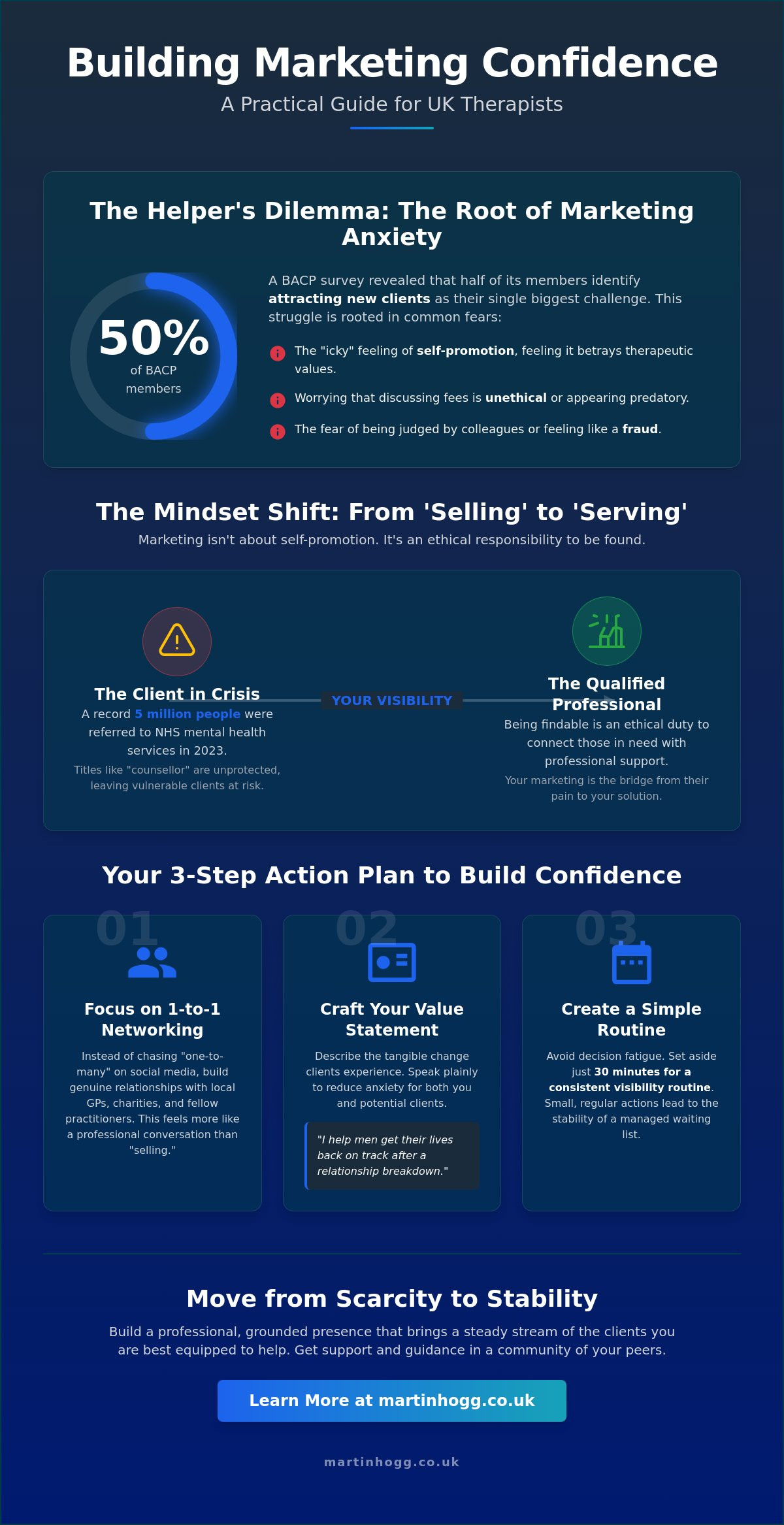
A BACP survey revealed that 50% of its members identify attracting new clients as the single biggest challenge in their private practice. It's a struggle I hear about often. You've spent years training to help people, yet the moment you try to find confidence in marketing your services, that "icky" feeling of self-promotion takes over. You might even worry that talking about your fees feels unethical or that you're acting like a fraud.
I believe that being visible is actually an ethical responsibility. If the record five million people referred to NHS mental health services in 2023 are to find the support they need, private practitioners must be reachable. This guide will show you how to move past technical jargon to create a professional, grounded presence. You'll learn how to build a simple routine that brings in a steady stream of clients while staying fully compliant with the new Therapeutic and Health Advertising Code coming into effect on 1 July 2026.
Key Takeaways
- Understand why the 'helper’s dilemma' makes self-promotion feel uncomfortable and how to move past the fear of judgment from your peers.
- Discover why being visible is an ethical responsibility to ensure clients in crisis can find the professional support they need.
- Build genuine confidence in marketing by focusing on simple, one-to-one networking rather than the overwhelm of social media.
- Learn how to create a grounded value statement that describes your practice clearly and honestly without using pushy sales tactics.
- Develop a repeatable routine that helps you move from a mindset of scarcity to the stability of a managed waiting list.
Why Therapists Struggle with Confidence in Marketing
Most of us didn't enter this profession to become marketers. We trained because we care about people, and there's often a deep-seated "Helper’s Dilemma" that makes self-promotion feel like a betrayal of our values. You might feel that charging a fair fee or talking about your successes is somehow "un-therapeutic." This internal conflict is usually the root of marketing anxiety. It isn't just about the technology; it's about the fear of being judged by colleagues or appearing predatory to vulnerable clients.
In a clinical context, understanding self-confidence isn't about arrogance. It's about self-efficacy. It is the quiet, steady belief that the service you provide has genuine value and can help someone get their life back on track. When you lack confidence in marketing, you aren't just protecting your reputation; you're unintentionally staying hidden from the very people who need you most. Marketing isn't about "selling" a product. It's about ensuring you are found by those currently in crisis.
The Myth of the 'Salesy' Therapist
We often carry a mental image of marketing as something loud, pushy, and Americanised. Because of this, many UK practitioners fall into the trap of the "quiet professional," relying solely on word of mouth. While that sounds noble, it's often a symptom of fear rather than a deliberate strategy. With the BACP reporting that 50% of members struggle to attract new clients, waiting for referrals is no longer enough to sustain a practice. True professionalism involves being clear, reachable, and honest about how you can help. Real marketing is simply a bridge between a person in pain and the solution you offer.
Building confidence in marketing starts with accepting that your work is valuable. You are not "bothering" people by being visible. You are providing a map to someone who is currently lost. When you shift your perspective from your own anxiety to the client's need, the "icky" feeling begins to fade.
Reframing Marketing as a Professional Responsibility
We often get stuck in our own heads when we think about marketing. We worry about how we look or whether we're being too loud. But true confidence in marketing comes when you stop looking at your practice and start looking at the client's pain. Your visibility is not an ego trip; it's a beacon for someone who is currently struggling to find a way forward.
Think about the ethics of being found. As of May 2026, the titles "counsellor" and "psychotherapist" remain legally unprotected in the UK. This means that when someone searches for help, they might find an untrained individual instead of a qualified professional like you. If you stay hidden because of marketing anxiety, you're leaving that person at risk. You can create a marketing plan that focuses on clinical empathy rather than sales tactics. This shift is a vital part of starting and growing a private practice ethically.
Your therapeutic skills are actually your best marketing tools. You already know how to listen and understand deep emotional needs. When you write a blog post or a directory profile, use that empathy. Speak directly to the person who feels overwhelmed or stuck. It's about showing them that there is a path to getting their life back on track. If you're looking for a supportive community to help you find this voice, the Private Practice Success Membership offers a safe space to grow.
Visibility vs. Self-Promotion
Sharing your expertise is an act of generosity. When you explain how anxiety works or offer a grounding technique, you're helping people before they even enter the room. This isn't self-promotion; it's public service. Having a clear niche, such as working with men or anger management, makes this even easier. When you know exactly who you're talking to, your message becomes simpler. Your confidence in marketing grows naturally because you aren't trying to please everyone; you're just trying to help the right person.
Practical Steps to Build Your Marketing Confidence
Building confidence in marketing doesn't require you to become a social media influencer overnight. In fact, for most UK counsellors, a "one-to-one" approach is far more effective than trying to reach "one-to-many" on noisy platforms. It's about building real relationships with local GPs, charities, or fellow practitioners. This grounded method feels less like "selling" and more like a professional conversation. You can adapt various small business marketing strategies to fit your local community without losing your therapeutic identity.
A practical first step is drafting a "Value Statement" that feels honest. Instead of using abstract clinical terms, describe the tangible change your clients experience. For instance, if you work with men, you might say, "I help men get their lives back on track after a relationship breakdown." This clarity removes the guesswork for potential clients and reduces your own anxiety about being "found." When you speak plainly, you sound like a human being rather than a distant medical professional.
To stay consistent, you need a simple visibility routine. Decision fatigue is a real hurdle in private practice. Set aside just 30 minutes a week to update your directory profile or reach out to a potential referral partner. You don't need to be everywhere at once. If you focus on doing one thing well, the technical overwhelm starts to lift. It's about taking small, deliberate actions that build momentum over time.
Action Over Overthinking
Perfectionism is often just procrastination in a fancy suit. Your website copy doesn't need to be perfect to be effective; it just needs to be human. Waiting until every comma is in place often means you're missing out on helping people who are searching for you right now. You can find more tips on how to get counselling clients UK by focusing on these manageable steps. Building a practice can feel lonely, so don't do it in isolation. Connecting with peers who understand the balance of ethics and growth is essential. If you want a structured way to build your visibility, come and join us in the Private Practice Success Membership.
Creating a Sustainable System for Practice Growth
Building confidence in marketing is much easier when you stop guessing and start following a system. Many practitioners treat visibility as a series of random acts. You might post on social media once a month or update your directory listing only when your client numbers drop. This ad-hoc approach fuels anxiety because the results are unpredictable. A structured system removes the guesswork, allowing you to focus on the clinical work you love.
Measuring success is about more than "likes" or "clicks." These are vanity metrics that don't reflect the health of a private practice. Instead, focus on the "right fit." If you receive three inquiries a week and two of them are exactly the kind of clients you're trained to help, your system is working. Learning the business side of practice is a form of self-care. It prevents burnout. It creates a stable "waiting list" mindset rather than a "scarcity" mindset where every empty slot feels like a crisis.
The Practice Visibility Blueprint
A structured approach helps you stay compliant with regulations like the new Therapeutic and Health Advertising Code coming into effect on 1 July 2026. My Practice Visibility Blueprint is designed to help you be seen by the right people without the need for pushy sales tactics. It’s about being professional, grounded, and clear about the support you offer. You don't have to do this alone. Joining the Private Practice Success Membership provides you with a community of peers who are all working toward the same goal.
You have the skills to change lives. Don't let a fear of visibility keep those skills hidden from the people who need them. With a simple, repeatable routine, you can build a practice that is both ethically sound and financially sustainable. It is time to get your practice and your life back on track.
Step Into Your Professional Visibility
Building a sustainable practice is about more than just clinical skill; it's about being reachable to those who need you. We've explored how shifting your focus from self-promotion to client service can transform your confidence in marketing. By starting with simple networking and a grounded value statement, you can bypass the technical overwhelm that often leads to procrastination. These small, deliberate steps ensure that you remain professional while staying true to your therapeutic values.
I've spent over 20 years in UK private practice, and I know that the "icky" feeling fades when you have a clear, repeatable system. My approach is rooted in social enterprise-led coaching and BACP-endorsed workshops, ensuring that growth always stays ethical and professional. You don't have to build your business in isolation or wait for referrals that may never come. Practical action is the best remedy for the self-doubt that keeps many talented therapists hidden.
Ready to grow? Check my upcoming training calendar for the next Practice Visibility workshop. It's time to move from a mindset of scarcity to the stability of a managed waiting list. You have the tools to help people get their lives back on track. Now it's just about making sure they can find you.
Common Questions About Marketing Your Practice
How do I stop feeling like a fraud when I talk about my therapy fees?
Focus on the value of the outcome rather than the cost of the hour. When you charge a fair fee, you ensure your practice remains sustainable for the next person who needs to get their life back on track. A BACP survey shows that 50% of members find attracting clients their biggest challenge. Setting clear fees is a professional boundary that allows you to provide high quality care without the distraction of financial stress.
Is it ethical to use marketing techniques in a counselling practice?
Marketing is ethical when it is transparent and adheres to the CAP Code and the new ASA Therapeutic and Health Advertising Code effective 1 July 2026. Ethical marketing is simply about being findable. If you don't share what you do, people in pain might end up with someone unqualified. Your confidence in marketing grows when you realise that being visible is a way of protecting the public from harm.
What is the most effective way to start marketing if I'm an introvert?
Focus on one-to-one networking and high quality written content like blogging or a directory profile. You don't need to be loud or performative to be successful. Many introverted therapists build thriving practices by connecting deeply with local GPs or writing helpful articles that address specific client pains. This approach plays to your natural strengths of empathy and listening rather than forcing you into a salesperson role.
How long does it take to build confidence in marketing my practice?
Most therapists begin to feel a genuine shift within 90 days of starting a consistent visibility routine. Building confidence in marketing is a gradual process that happens through small actions rather than abstract theory. As you see the first few clients find you through your own efforts, the "icky" feeling starts to disappear. By 6 months of steady activity, most practitioners find their routine becomes a natural part of their professional life.
Do I need to be on social media to have a successful private practice in the UK?
You absolutely do not need to be on social media to have a full diary. While some find it useful, many successful UK therapists focus on their Google Business Profile or building local referral networks instead. These strategies are often more sustainable and less overwhelming for solo practitioners. It is much better to do one thing well, like a monthly newsletter or a local talk, than to struggle with platforms that don't fit your personality.

Article by
Martin Hogg
I help Private Practice counsellors in the UK set up and grow an ethical Private Practice they love, work with their ideal clients, and earn the income they deserve. All without guesswork and burnout. I have been a private practice counsellor myself for over 20 years, specialising in anger management. I set up a not-for-profit social enterprise, Citizen Coaching and Counselling, which delivers thousands of counselling sessions a year to adults and young people in Birmingham. I am a registered BACP Counsellor and the author of three books, My Anger Coach, My Anxiety Coach and My Relationship Coach. These are available on Amazon.
Disclaimer
The information provided on this blog is for general informational purposes only and is not intended to be a substitute for professional medical or mental health advice, diagnosis, or treatment. Reading this content does not create a therapist-client relationship.


