
Corporate Counselling Contracts UK: A Practical Guide

Article by
Martin Hogg
I help Private Practice counsellors in the UK set up and grow an ethical Private Practice they love, work with their ideal clients, and earn the income they deserve. All without guesswork and burnout. I have been a private practice counsellor myself for over 20 years, specialising in anger management. I set up a not-for-profit social enterprise, Citizen Coaching and Counselling, which delivers thousands of counselling sessions a year to adults and young people in Birmingham. I am a registered BACP Counsellor and the author of three books, My Anger Coach, My Anxiety Coach and My Relationship Coach. These are available on Amazon.
What if the key to taking on organisational work isn’t one all-purpose contract, but two clear agreements that protect different relationships? Corporate counselling contracts UK practitioners use need to set out what the organisation is commissioning, while keeping each employee’s counselling agreement clear in its own right. It’s an easy distinction to blur when you’re keen to make the work happen.
I understand why it can feel like another layer of paperwork when you’re already balancing client work and running a practice. Still, clarity at the start can prevent confusion later, particularly around confidentiality and what, if anything, is reported to an employer.
I’ll explain how the organisation-level agreement differs from your agreement with each client, and what to clarify about scope, fees, cancellations and responsibilities. We’ll also look at how to keep confidentiality boundaries understandable and decide whether the work is a sensible fit for your practice. The aim isn’t to make the contract complicated. It’s to help you make an informed decision before you say yes.
Key Takeaways
- Corporate counselling contracts UK practitioners agree should spell out the service, referral route, delivery format, fees and cancellation arrangements.
- Set out who is responsible for each part of the work, when the arrangement will be reviewed, and how changes or an ending will be handled.
- Use a one-sentence offer to make clear who the service is for and what it provides before you review the draft terms.
- Before agreeing, weigh the referral arrangement against the administration, payment timing, session expectations and availability it requires from your practice.
Corporate counselling contracts UK: what agreement are you actually setting up?
Before you agree to provide counselling through an employer, get clear about which relationship the contract covers. A corporate counselling contract is the agreement between the organisation commissioning the service and you, the counsellor. It sets out the business arrangement. It doesn’t automatically make the organisation your counselling client.
That distinction matters. The organisation may fund or arrange access to counselling, while an employee attends sessions as an individual client. Your corporate counselling contracts UK arrangement and your client-facing agreement therefore have different jobs, even though they need to fit together.
Who is contracting with whom?
There are three roles to keep in view: the commissioning organisation, you as the counsellor, and the person receiving counselling. The organisation might refer employees and pay your invoices. You provide the agreed service and explain the counselling terms directly to each person. Depending on the arrangement, the organisation or employee may handle booking. Put the booking responsibility in writing rather than relying on assumptions.
Also agree what service-level information the organisation will receive, if any. Separate practical updates, such as whether a referral was taken up, from information about what someone discusses in counselling. Be specific about what is shared, with whom and for what purpose. The client should understand the relevant confidentiality boundaries before work begins.
Why one agreement may not do both jobs
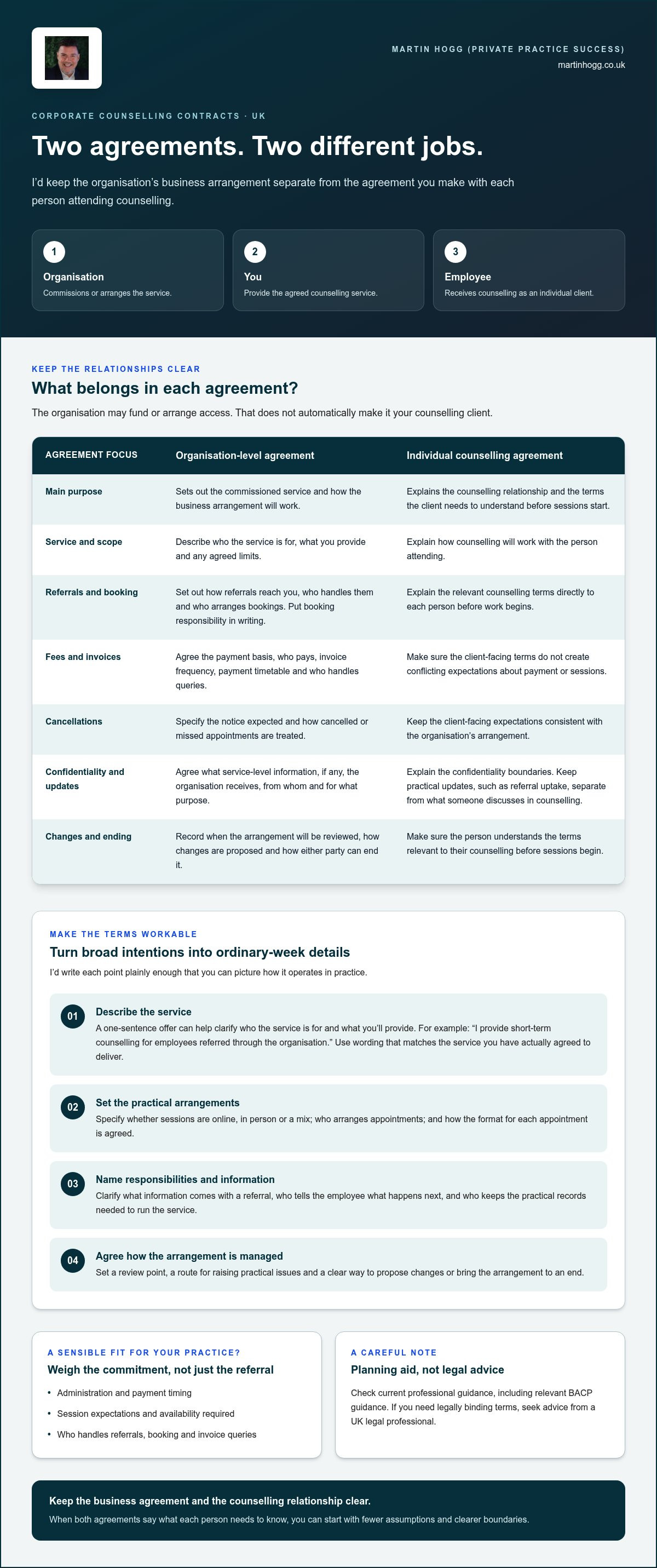
The organisation-level agreement covers the commissioned service: its scope, payment arrangements, responsibilities and how the working relationship is managed. The individual agreement explains the counselling relationship, including the terms the client needs to understand before sessions start. One document may refer to the other, but a business agreement alone may not explain those client-facing terms clearly.
For example, an employer might fund counselling and send an employee your way. Your agreement with the employer can set out referral and invoicing arrangements; your agreement with the employee can explain how counselling will work and the limits of confidentiality. That’s one possible model, not a template for every organisation. I’d map the two relationships before discussing paperwork. If you’re building the business foundations of your practice, Martin Hogg Private Practice Success offers structured practice-development resources and a community for UK counsellors and therapists.
What should a UK corporate counselling contract cover?
A useful agreement turns broad intentions into workable arrangements. I’d make each term concrete enough that you can picture how it operates in an ordinary week. This checklist is a planning aid, not legal advice. If you need terms that are legally binding, get advice from a UK legal professional.
- Service scope: Describe who the service is for, what you’ll provide and any agreed limits on the work. A one-sentence offer can help: for example, “I provide short-term counselling for employees referred through the organisation.” Make sure the final wording reflects the service you have actually agreed to deliver.
- Referral route: Set out how referrals reach you, who handles them and what happens if you can’t take one on. Clarify what information comes with a referral and who tells the employee what happens next.
- Delivery format: Specify whether sessions are online, in person or a mix, and who arranges appointments. If more than one format is used, explain how the format for each appointment is agreed.
- Fees and invoicing: Agree the payment basis, invoice frequency, who pays and the payment timetable. State whether invoices are based on sessions delivered or another agreed unit of work, and who handles queries.
- Cancellations: Explain how much notice is expected and how cancelled or missed appointments are treated. Make sure the organisation and the client-facing terms don’t set conflicting expectations.
- Review and changes: Record when you’ll review the arrangement, how amendments are proposed and how either party can end it. Include a clear route for raising practical issues before they become recurring problems.
Client information and record-keeping
Decide what practical information needs to be recorded to run the service, who is responsible for keeping it, and how it will be handled. Avoid making vague promises about records or information-sharing that you haven’t worked through. Check current professional guidance, including relevant BACP guidance, and seek advice on the requirements that apply to your particular arrangement.
Scope, payment and practical boundaries
Plain wording helps both sides understand the day-to-day commitment. For instance, define whether the organisation is paying for completed sessions or another agreed unit of work, and who deals with invoice queries. If a particular amount of availability is expected, spell out what that means in practice. Set a review point that gives you a chance to discuss what is working and what needs changing. Clear responsibilities now can prevent a small practical snag becoming a regular source of administration.
Building confidence with these business decisions is part of developing a sustainable practice. Private Practice Success gives UK counsellors and therapists access to practical resources, live training and a supportive community.
How to agree corporate counselling contract terms step by step
Take the draft in stages rather than trying to solve every detail in one conversation. I’d keep a short record of decisions as you go. That makes it easier to see what’s settled, what still needs discussion and what must be reflected in the final version of corporate counselling contracts UK organisations commission.
- Define the service. Write a one-sentence offer describing who the work is for and what you’ll provide. Use it to keep later discussions focused. If the offer is difficult to explain in one sentence, you may need to clarify the scope before agreeing to terms.
- Map responsibilities. Note who handles referrals, scheduling, payment queries and routine communication. Flag any task that doesn’t yet have a clear owner. A simple list with one name or role beside each task is often more useful than a long paragraph.
- Align the documents. Check that the organisation’s description of the service matches the information employees receive. Look for differences in wording or expectations, then agree which version needs changing. Pay particular attention to confidentiality, cancellations and what happens when someone doesn’t proceed.
- Review the draft. Read each clause alongside your notes. Mark unclear wording and ask for a specific revision rather than relying on a verbal understanding. If you can’t tell what a term would mean in a typical week, it needs clarifying.
- Record agreed changes. Keep a dated copy of the final wording and a clear record of any later amendments, including how both parties acknowledge them.
Check that both sets of terms tell the same story
Example, not a legal template: an organisation changes its referral process after the draft has been prepared. Rather than relying on a phone conversation, note the revised process, update the relevant wording and make sure both parties acknowledge the change before working to it.
Make changes and responsibilities easy to follow
Agree who will send amendments and how you’ll confirm acceptance. If a term remains unclear after discussion, pause before signing and seek suitable professional or legal guidance. A little patience here is better than discovering later that you and the organisation understood the same sentence differently.
Is a corporate counselling contract a sustainable fit for your practice?
A defined referral arrangement can make work easier to plan. But it may also bring extra administration and expectations about your availability. A signed agreement can’t guarantee referrals, income or a successful working relationship. You still need to decide whether the arrangement fits the practice you’re building.
I’d look beyond the promise of new work. Consider how much time you’ll spend on administration, whether you can manage the expected sessions alongside your existing work, and how you’ll handle quieter periods. The practical details matter just as much as the potential benefits. If the agreement reserves time or asks you to respond within a particular timeframe, include that commitment in your calculation.
Questions to ask yourself before you agree
- Can you deliver the service without disrupting current client commitments or stretching your boundaries?
- Do the session expectations and availability fit the way you want to work?
- Does the payment timing suit your practice, and is the administration manageable?
- Are the reporting arrangements clear and consistent with your professional boundaries?
If you’re weighing whether corporate counselling contracts in the UK are a good fit for your practice, compare the commitment with your actual capacity, not an idealised version of a quiet week. If key details leave you uneasy, pause and clarify them before agreeing.
Where practice-development support fits
Coaching and community can help you think through your practice goals, capacity and business decisions. They aren’t a substitute for legal review of contract terms. General practice resources can support your wider systems, but they aren’t corporate counselling contract templates.
You can take your time and make a considered decision. For practical, ethical support as you build your private practice, explore Private Practice Success.
Take your next step with confidence
You don’t have to accept a corporate opportunity simply because it’s been offered. Give yourself space to decide whether it supports the practice you want to build. If corporate counselling contracts uk are part of that plan, make time to consider what sustainable work looks like for you, not just what looks promising on paper.
I’m Martin Hogg, MBACP (Reg.), and I’ve spent 21 years in UK private practice. Through Private Practice Success, I support counsellors and therapists with ethical practice development, practical resources and a community. That support is about building confidence in the business side of practice, not legal contract review.
If you’d value thoughtful support as you shape your next steps, you’re welcome to explore what’s available.
Take it at your own pace. A considered yes, or a clear no, can both help you build a practice that fits.
Frequently Asked Questions
Does a corporate counselling contract need to be signed by each employee?
Not necessarily. The organisation’s agreement and an employee’s agreement to counselling are separate matters, and the arrangement will determine how each is recorded. For example, an employer might sign the commissioning agreement while each employee receives and accepts your client-facing terms before their first session. Make the process clear: who sends the terms, how the employee confirms agreement, and what happens if they choose not to proceed.
Can an employer see what an employee says in counselling?
Not automatically. What an employer receives should follow the reporting arrangements explained and agreed in advance, not an assumption that payment gives access to session content. For instance, the organisation may ask whether a referral was taken up, while the employee’s conversations remain private. Be precise about what information is shared, with whom and for what purpose, and explain any relevant limits before counselling starts.
Can a corporate counselling contract cover online and in-person sessions?
Yes, the agreement can describe a service that uses online sessions, in-person sessions or a mix, if that is the arrangement you’ve agreed. Spell out how the employee will know which format applies, how appointments are arranged, and what happens if a session needs to move online. For remote sessions, consider whether the arrangements give both of you suitable privacy and a workable way to connect.
How much should counsellors charge for corporate counselling?
There isn’t one fee that suits every commission. For corporate counselling contracts UK practitioners should price the whole commitment, not just the time spent in a session. Consider preparation, administration, invoicing, any reserved availability and the payment timetable. Decide whether you’re charging per session, for a block of work or on another agreed basis. Then check that the amount makes the work sustainable for your practice.
Disclaimer
The information provided on this blog is for general informational purposes only. It is also not intended to be a substitute for professional medical or mental health advice, diagnosis, or treatment. Reading this content does not create a therapist-client relationship.


