
Dealing with Complaints in Private Practice: A Practical Guide for UK Counsellors
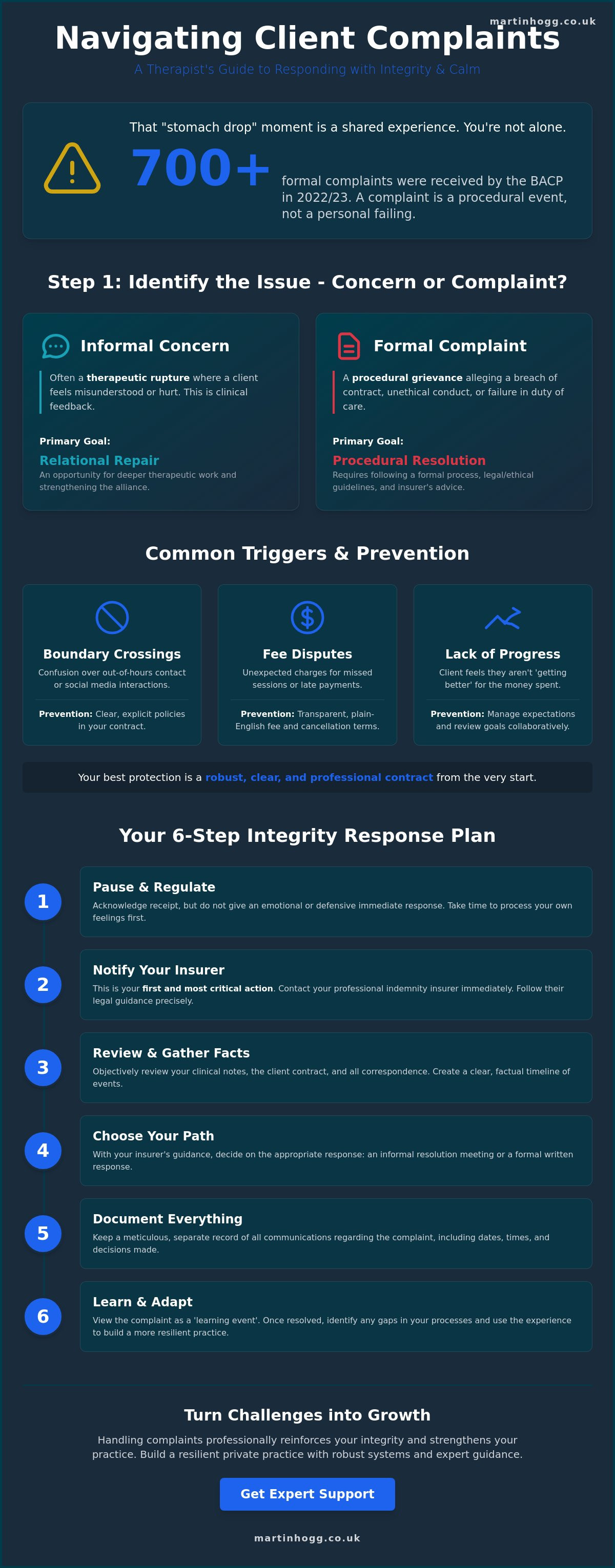
It's 4:00 PM on a Friday when that email notification pings on your phone. You recognise the name, but the tone is different; it's sharp, critical, and clearly a formal grievance. In that single moment, your stomach drops, and every bit of hard-earned confidence seems to vanish. You aren't alone in this feeling. The BACP received over 700 complaints in the 2022/23 period alone, and knowing the right way of dealing with complaints in private practice is essential for your peace of mind. It's easy for imposter syndrome to take hold when your professionalism is questioned.
I understand the deep anxiety that follows. You worry about professional sanctions, insurance requirements, and whether your reputation is permanently damaged. Through my work at Citizen Coaching, I've seen how these moments can be turned into opportunities for growth rather than career-ending disasters. I'll show you how to respond with clinical grace and practical integrity, ensuring you protect both your client's rights and your own wellbeing. We'll walk through a clear step-by-step checklist, look at insurance notification rules, and I'll share template ideas for a solid complaints policy to keep your practice safe and professional.
Key Takeaways
- Understand the vital difference between an informal concern and a formal complaint so you can respond with calm professional integrity rather than panic.
- Learn why your professional indemnity insurer must be your first port of call and how the BACP Ethical Framework supports your transparency and accountability.
- Follow a practical, step-by-step response plan for dealing with complaints in private practice that protects both your clinical reputation and your own well-being.
- Identify when an informal resolution meeting is the right path and when it is safer for everyone involved to move straight to formal written correspondence.
- Discover how to use difficult feedback as a 'learning event' to update your contracts and build a more resilient, transparent practice for the future.
Understanding Complaints in the UK Counselling Landscape
Receiving an email or a phone call from a disgruntled client feels like a physical punch to the stomach. Your heart sinks, your palms sweat, and your mind immediately starts racing through every session you've ever had with them. It is a deeply uncomfortable experience that often triggers a sense of professional shame. I want you to know right now that receiving a complaint does not define your clinical worth. In the modern world of Counselling in the United Kingdom, clients are more aware of their rights and more willing to voice their dissatisfaction than in previous decades. By 2026, the culture of "the therapist knows best" has largely vanished, replaced by a consumer-led model where accountability is expected.
Dealing with complaints in private practice is a natural part of running any professional service. It happens to the most experienced practitioners and the most well-meaning novices alike. While it's easy to spiral into self-doubt, it's more productive to view a complaint as a procedural event rather than a moral judgement. In the UK, professional bodies like the BACP and UKCP have seen a steady rise in enquiries over the last five years, reflecting a broader societal trend toward seeking redress when expectations aren't met. Learning how to manage these moments with a calm, grounded presence is just as important as your work in the chair.
The Difference Between Clinical Feedback and a Formal Complaint
It’s vital to distinguish between a therapeutic rupture and a procedural grievance. A rupture is often an opportunity for deep work; it’s when a client feels misunderstood or hurt by something said in the room. This is clinical feedback. A formal complaint is different. It usually involves an allegation that you've breached a contract, behaved unethically, or failed in your duty of care. Categorising the issue early allows you to decide if you're fixing a relationship or following a legal process. I've found that catching a concern in its "informal" stage often prevents it from escalating into a stressful BACP investigation.
Common Triggers for Complaints in Private Practice
Most issues I see in my work with other therapists stem from a few predictable areas. These include:
- Boundary crossings: Confusion over out-of-hours contact or social media interactions.
- Fee disputes: Unexpected charges for missed sessions or late payments.
- Perceived lack of progress: Clients feeling they aren't "getting better" fast enough for the money they're spending.
Many of these triggers are born from a "fear of visibility" that leads therapists to use vague, overly soft language in their initial contracts. If your policies are unclear because you don't want to sound "too corporate," you're actually inviting confusion. A robust, plain-English contract is your best friend. It sets the stage for a safe, professional relationship where both parties know exactly what to expect. If you find yourself overwhelmed by the administrative side of these challenges, you can always book a slot on my calendar to talk through your practice setup.
The Ethical and Legal Framework: BACP, Insurance, and GDPR
Receiving a complaint can feel like a punch to the gut. It's a natural human reaction to want to defend your reputation or, conversely, to hide away and hope the problem disappears. However, dealing with complaints in private practice requires us to step back from our emotions and lean on the structures designed to protect both us and our clients. These frameworks aren't just red tape; they are the safety nets that keep our profession grounded in integrity.
Aligning with Professional Body Standards
Whether you are a member of the BACP, UKCP, or the National Counselling Society (NCS), your professional body has clear expectations regarding accountability. The BACP Ethical Framework, last updated in 2018, emphasizes that we must be transparent about how clients can challenge our work. To make your complaints procedure "accessible," you should ensure it is written in plain English and clearly linked in your initial contract or on your website. In the UK, a therapist's duty of candour requires you to be open and honest with a client when something goes wrong in their treatment, providing a full explanation and a sincere apology where appropriate. For a deeper look at how these standards are upheld, you can review the BACP's Professional Conduct Procedure which outlines the formal steps taken when a complaint is escalated.
Notifying Your Insurance Provider
Your first phone call shouldn't be to a colleague or a friend. It must be to your professional indemnity insurance provider. Many practitioners hesitate here because they fear their premiums will skyrocket, but "waiting to see if it goes away" is a dangerous game that can invalidate your cover. In insurance terminology, you need to understand the difference between a "circumstance" and a "claim." A circumstance is an event, such as an angry email or a verbal threat of legal action, that might lead to a claim later. A claim is a formal demand for money or specific action. Notifying your insurer early allows them to provide you with legal wording for your response, ensuring you don't accidentally admit liability in a way that compromises your position.
GDPR and Clinical Supervision
Sometimes a complaint comes with a Subject Access Request (SAR) under the Data Protection Act 2018. If a client asks for their clinical notes, you generally have 30 days to comply. This is why clear, objective record-keeping is vital. While you handle the legalities, your clinical supervisor remains your emotional and ethical anchor. They help you process the "why" behind the complaint while you focus on the "how" of the procedure. If you feel overwhelmed by the administrative weight of these requirements, you can always book a session with me to talk through the practicalities of setting up your practice safely. Dealing with complaints in private practice is never easy, but having your paperwork and professional support in order makes the process manageable.
Informal vs. Formal Handling: Choosing the Right Path
Receiving a complaint feels like a punch to the gut. It's natural to feel defensive, but how you react in those first 24 hours determines whether the situation de-escalates or spirals. When dealing with complaints in private practice, you have two primary routes: the informal chat or the formal procedure. Most grievances stem from simple misunderstandings or unmet expectations. I often find that a quick, empathetic response can resolve 80% of issues before they ever reach a professional body.
The Power of the Informal Resolution
Think of yourself as a "Citizen Coach" here. Your goal is to listen, acknowledge, and find a practical way forward. If a client feels unheard, they'll push harder. You can apologise for their experience without admitting clinical negligence. Saying "I am sorry you felt unsupported during our last session" is not a confession of failure; it's an act of empathy. It validates their feelings while keeping the clinical work separate.
Set a clear timeframe for this. Tell the client you'll look into their concerns and get back to them by a specific time, such as Friday at 4 pm. This structure lowers anxiety for everyone involved. Sometimes, a "complaints meeting" is the best tool, but only if you feel safe and have clear boundaries in place. If the relationship has broken down, mediation through a neutral third party can provide a bridge back to a resolution without the coldness of a legal battle.
When a Complaint Must Go Formal
Some situations require you to bypass the coffee and chat. If a client alleges serious harm, sexual boundary crossings, or financial fraud, you must move straight to a formal, written process. This protects both parties and ensures a clear paper trail exists. In the UK private sector, we typically follow a three-stage process: local resolution, internal review by a supervisor or peer, and finally, independent adjudication.
You should always signpost clients to the BACP professional conduct procedure or their specific professional body if local efforts fail. Dealing with complaints in private practice is easier when you're transparent about these options from the start. If you're struggling to find the right words or feel overwhelmed by the process, you can always book a slot on my calendar to talk through your options. Being professional doesn't mean being cold. It means being clear, fair, and honest. Identifying these red flags early prevents a minor grievance from becoming a career-threatening event.
A Step-by-Step Response Plan for Your Practice
When a complaint arrives in your inbox or via a phone call, your heart might sink. It is a natural human reaction to feel defensive or hurt, but how you handle those first few hours determines the outcome. Following a structured plan helps you maintain your professional integrity while dealing with complaints in private practice effectively.
- Step 1: Pause and breathe. Do not send an immediate reply. Your first instinct might be to explain yourself or point out where the client is wrong. Wait at least 24 hours before sending anything beyond a simple acknowledgement. This cooling-off period prevents emotional reactivity from clouding your professional judgment.
- Step 2: Consult your supervisor and insurer. Before you take any formal action, speak to your clinical supervisor. You should also notify your professional indemnity insurer. Most UK insurers require you to report a potential claim or complaint immediately, and they often provide specific guidance on how to phrase your response to avoid admitting liability prematurely.
- Step 3: Acknowledge receipt within 48 hours. Send a brief, professional note. You don't need to address the details yet. Simply state: "I am writing to acknowledge your complaint. I take your feedback seriously and will provide a detailed response by [Date]."
- Step 4: Conduct an internal review. Look back at your clinical notes, the initial therapy contract, and any email exchanges. Check if you followed your own stated policies. This objective review helps you see the situation from a distance.
- Step 5: Issue a formal response. Depending on the severity, you might offer a written explanation or invite the client to a resolution meeting. In the UK, many practitioners find that a face-to-face meeting, perhaps with a neutral third party, can resolve misunderstandings before they escalate to professional bodies like the BACP or NCPS.
Drafting Your Response: Practical Tips
Your tone should be factual and grounded in the contract you both signed. Avoid using "clinical" or "academic" language that can make a client feel small or dismissed. Instead of saying "Your projection is noted," try something more human. For example: "I hear that you felt let down by our last session, and I appreciate you bringing these feelings to my attention." This acknowledges their experience without necessarily agreeing with an unfair accusation. Keep your sentences direct and clear. If you made a clerical error, like a double-booked appointment, own it simply and offer a remedy.
Using Supervision as a Safety Net
You shouldn't try to handle a complaint in isolation. It is too heavy a load to carry alone. Supervision is your primary tool for separating the clinical work from the administrative side of a complaint. Your supervisor helps you look at the "why" behind the client's frustration while ensuring you don't spiral into self-doubt. This support is vital for your own mental health. If you feel your current support system is lacking, you might want to look into how to find a clinical supervisor who understands the pressures of private practice. Dealing with complaints in private practice is a skill, and like any other therapeutic skill, it requires a steady hand and a supportive mentor.
If you are feeling overwhelmed by the administrative side of your practice, I am here to help you find a clearer path forward. Book a consultation call with me today to discuss how we can strengthen your practice foundations.
Building a Resilient Practice and Moving Forward
Once the formal process ends, you might feel a heavy mix of relief and exhaustion. It’s vital to view this period not as a failure, but as a learning event that can actually strengthen your business. Dealing with complaints in private practice often highlights the small cracks in our systems that we’ve become too close to see. By stepping back and analyzing what happened, you can refine your Practice Visibility Blueprint to ensure your professional boundaries are clearer than ever. This isn't just about damage control; it’s about evolving into a more robust practitioner.
I’ve seen many talented counsellors consider quitting after one difficult experience. Don’t let a single event define your entire career. Use the feedback to tighten your administrative ship. Whether the complaint was upheld or not, the fact it happened tells you something about how your service is perceived. Dealing with complaints in private practice is a test of your systems, but it’s also a chance to show your commitment to professional excellence and client care.
Reviewing Your Practice Policies
Many complaints in the UK counselling sector arise from simple procedural misunderstandings rather than clinical errors. Take a cold, hard look at your intake paperwork today. Is your complaints policy hidden in the small print, or is it front-and-centre? Making your terms and conditions explicit helps manage client expectations from session one. This clarity is a cornerstone of starting and growing a private practice that lasts. Update your contracts to reflect the lessons you’ve learned, specifically regarding your cancellation fees or your policy on communication between sessions.
Protecting Your Well-being
The emotional aftermath of a complaint is often the hardest part to manage. It’s common to struggle with imposter syndrome or a sudden loss of confidence in your clinical skills. A 2022 survey of UK therapists indicated that over 60% of practitioners felt deeply isolated during a complaint process, which significantly increases the risk of therapist burnout. You don't have to carry this weight alone. Practitioners who engage in regular peer support and professional development tend to recover their confidence much faster than those who isolate themselves. Your practice is only as resilient as you are, so prioritize your own mental health as much as your clients'.
Rebuilding means reconnecting with why you started this work in the first place. Seek out a professional community that understands the unique pressures of the UK market. If you’re looking for a space where you can get practical guidance and honest support, I invite you to join the Private Practice Success Membership. We focus on helping you get your life and your practice back on track with a no-nonsense, supportive approach. You’ve handled the challenge; now let’s focus on your growth and your future success.
Moving Forward with Confidence
Receiving a complaint can feel like a heavy weight on your shoulders. It's easy to let self-doubt creep in, but remember that dealing with complaints in private practice is a manageable part of your professional journey. By staying grounded in the BACP ethical framework and keeping your insurance and GDPR processes tight, you turn a stressful moment into a protected one. You don't have to face these challenges in isolation. Most issues are resolved through clear communication and a calm, step-by-step response.
I've spent over 20 years in UK private practice, helping therapists build sustainable and resilient businesses. As an Accredited CPD Provider with BACP-endorsed workshops, I focus on the practical steps that keep your practice safe and your clinical work focused. You can move past the fear of "getting it wrong" by surrounding yourself with the right support and clear, proven systems. Let's make sure you have the tools to handle whatever comes your way with calm authority and professional integrity.
Ready to build a more robust and professional practice? Join the Private Practice Success Membership today. You've got the skills to help your clients; now let's ensure your business is just as strong.
Frequently Asked Questions
Do I have to tell my supervisor about a client complaint?
Yes, you must inform your supervisor about any complaint as soon as it arises. Your supervisor is there to help you process the emotional impact and ensure you're following the BACP Ethical Framework 2018. They provide a safe space to look at what happened objectively, which is vital for your own wellbeing and professional growth.
Sharing this information isn't a sign of failure; it's a mark of a responsible practitioner. I've found that talking it through early can prevent a small misunderstanding from spiralling into a much larger problem. It helps you stay grounded when you might be feeling defensive or overwhelmed.
What should I do if a client threatens to report me to the BACP?
You should stay calm and acknowledge their right to contact their professional body without becoming defensive. Provide them with a copy of your written complaints procedure and the contact details for the BACP. Dealing with complaints in private practice is easier when you remain professional and transparent from the very first moment.
Often, a client makes this threat because they feel unheard or powerless. By responding with kindness and clear information, you can sometimes de-escalate the situation. It shows you're a "citizen coach" who takes accountability seriously, which can occasionally lead to a constructive conversation instead of a formal investigation.
Can I still work with a client after they have made a complaint?
It's usually best to stop working together because the therapeutic alliance has likely been damaged beyond repair. You must consider if you can still be truly objective and if the client still feels safe in the room with you. In most cases, the trust required for deep work has vanished once a formal complaint is lodged.
I suggest offering a final session to wrap things up if it's safe to do so. You should also provide the client with a list of other qualified therapists or organisations. This ensures they aren't left without support while they're getting their life back on track with someone new.
How long should I keep records of a complaint in my private practice?
You should keep detailed records of any complaint for at least 7 years after the matter is resolved. This timeframe matches the standard limitation period for legal claims in the UK and meets the requirements of most professional indemnity insurers. You must ensure these files are stored securely and separately from the client's clinical notes to comply with GDPR 2018.
Clear records are your best friend if a complaint is ever reopened. Include dates, copies of all correspondence, and notes from your supervision sessions regarding the issue. Having a tidy paper trail gives you a sense of control and protection during an otherwise stressful experience.
Should I offer a refund to a client who is unhappy with their therapy?
Offering a refund is a business decision rather than an ethical requirement, but you should always talk to your insurance provider before doing so. Some therapists use a partial refund as a gesture of goodwill to settle a dispute quickly. However, you need to be careful that this isn't interpreted as an admission of professional negligence.
I've seen cases where a refund helps a client feel validated and allows everyone to move on. If you decide to go this route, it's helpful to frame it as a "goodwill gesture" in writing. Always prioritise the long-term reputation of your practice over the immediate cost of a few sessions.
What happens if a complaint is made against me on social media or Google Reviews?
You must maintain client confidentiality even if a client chooses to post a public complaint about you. This means you cannot confirm they were a client or discuss any details of their therapy in a public reply. A professional response would be to invite them to contact you privately to discuss their concerns through your formal complaints process.
According to 2023 data from major review platforms, you can request the removal of posts that contain private medical information or defamatory statements. While it feels personal, try to remember that one bad review doesn't define your career. Stay focused on the practical steps to protect your reputation without breaking ethical rules.
Is it mandatory to have a written complaints procedure in the UK?
Yes, having a written complaints procedure is a requirement under Section 62 of the BACP Ethical Framework. You are expected to make this information easily accessible to your clients, perhaps by including it in your initial contract or on your website. It's a fundamental part of being an ethical and transparent professional in the UK landscape.
Having a clear process in place actually protects you as much as the client. It sets out the exact steps that will be followed, which can lower the anxiety for everyone involved. It shows that you run a professional service where client welfare is the top priority.
How does a complaint affect my professional indemnity insurance premium?
Your premium might not increase immediately, but you are contractually obligated to notify your insurer as soon as you're aware of a potential claim. Most UK policies work on a "claims made" basis, meaning you're only covered if you report the incident during the current policy year. Dealing with complaints in private practice becomes much harder if you accidentally void your insurance by staying silent.
Insurers often provide legal advice and support as part of your cover, which is incredibly helpful. While nobody likes the idea of their costs going up, having the backing of a legal team is worth the investment. They can help you draft responses that are professional and protect your interests.


