
Essential Tools for a New Therapy Practice: The Lean Setup Checklist

Article by
Martin Hogg
I help Private Practice counsellors in the UK set up and grow an ethical Private Practice they love, work with their ideal clients, and earn the income they deserve. All without guesswork and burnout. I have been a private practice counsellor myself for over 20 years, specialising in anger management. I set up a not-for-profit social enterprise, Citizen Coaching and Counselling, which delivers thousands of counselling sessions a year to adults and young people in Birmingham. I am a registered BACP Counsellor and the author of three books, My Anger Coach, My Anxiety Coach and My Relationship Coach. These are available on Amazon.
What if you don't need a £1,500 agency website or three expensive software subscriptions to get started? When you qualify, it is easy to feel you must buy every shiny platform on the market just to look legitimate. The truth is, choosing the essential tools for a new therapy practice isn't about collecting monthly bills; it is about building a lean, ethical setup that simply works.
I know the dread that tech confusion brings. Wondering whether your notes meet GDPR standards, panicking over ICO compliance, or fretting about online booking systems will drain your confidence before your first session even begins. You don't need a digital tank when a simple skateboard gets you moving safely and reliably.
In this guide, you will discover the exact low-cost, ethical tools you need to launch and run a thriving UK private practice without the headache. We will explore simple client booking, clean one-page websites, and compliant record keeping so you can focus entirely on supporting your clients.
Key Takeaways
- Discover how choosing the essential tools for a new therapy practice starts with a lean "skateboard" setup rather than costly software packages.
- Handle day-to-day clinical admin, ICO compliance, and client bookings smoothly with straightforward, low-cost systems that protect confidentiality.
- Attract private clients quickly using a clear one-page website and targeted directories, embracing the rule that rough-and-ready messaging beats polished hesitation.
- Overcome professional isolation by combining your streamlined tech stack with genuine peer support and practical business mentorship.
The Lean Practice Stack: Why You Do Not Need Complex Systems on Day One
When setting up in private practice, enterprise software sales pages will try to convince you that you need an all-in-one clinical suite on day one. You don't. Gathering the essential tools for a new therapy practice isn't about buying a bloated management system before seeing a single client. It is about setting up a lean, ethical workflow that helps you start without financial strain.
The Skateboard Model vs the Digital Tank
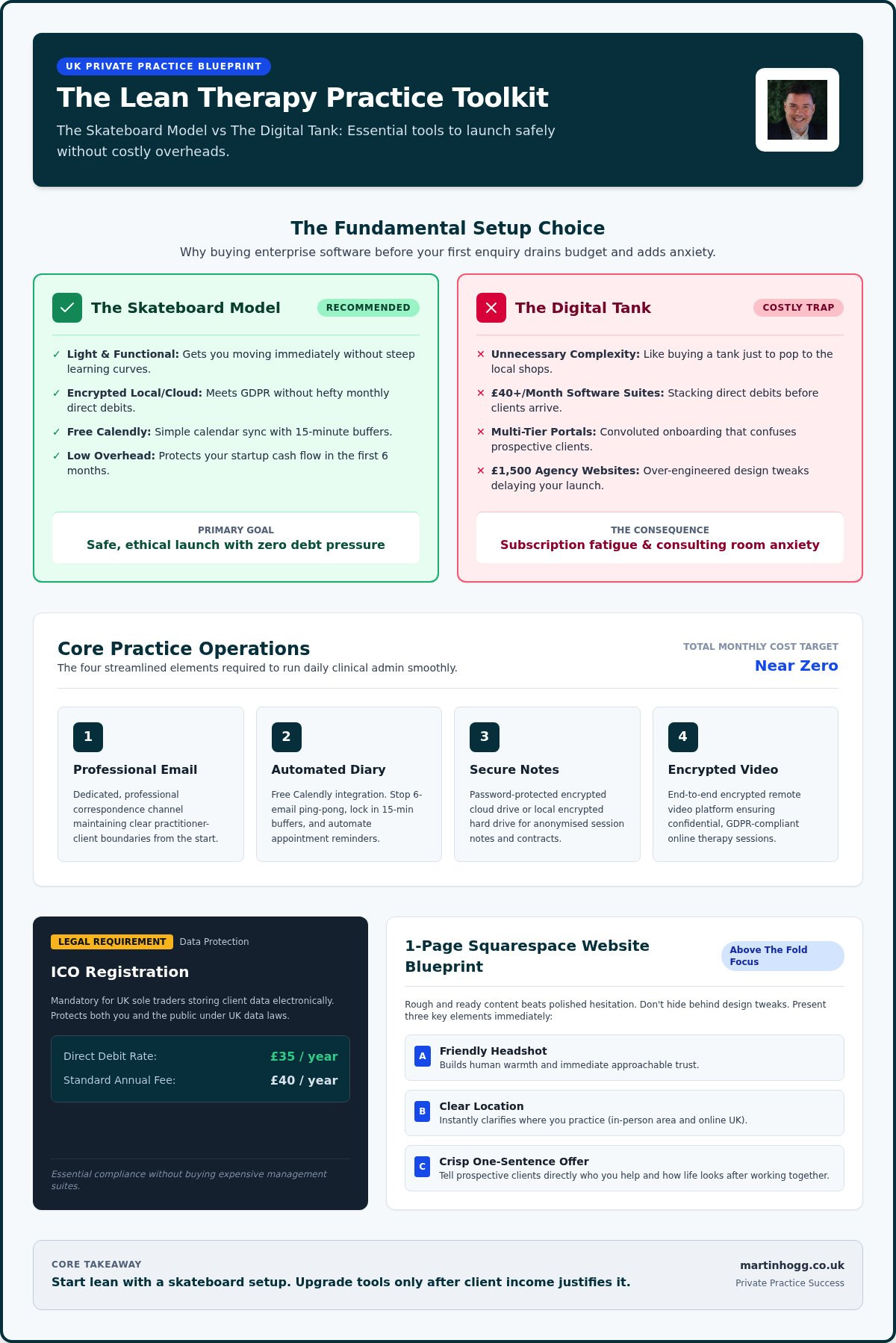
I always coach therapists using the skateboard model. A skateboard gets you moving down the road immediately. It is light, functional, and quick to learn. An expensive enterprise system is like buying a tank just to pop to the shops. To start safely, you only need three core operations: compliant note storage, simple booking, and confidential communication.
| Practice Need | The Lean Skateboard | The Bloated Tank |
|---|---|---|
| Clinical Notes | Encrypted local drive or secure cloud | £40+/month complex software suites |
| Diary Bookings | Free Calendly synced to your diary | Convoluted multi-tier client portals |
Guarding Your Overhead in the First Six Months
Subscription fatigue creeps up fast. Stacking three or four monthly software direct debits drains your startup budget before your initial enquiries even arrive. That financial pressure quickly turns into unnecessary anxiety in the consulting room.
Stick to sensible low-cost options during your early months to protect your cash flow. Choosing lean, essential tools for a new therapy practice keeps your overhead minimal and your head clear. You can always adopt heavier systems later once client income justifies the upgrade.
Core Practice Operations: Clinical Admin, Safe Storage, and Scheduling
Clinical training rarely equips you with the crucial financial and marketing acumen needed to run a business. Setting up your operational backbone doesn't require costly software, though. You can run reliable daily admin using four basic elements: a professional email, an automated diary, secure note storage, and an encrypted video link. These form the essential tools for a new therapy practice without draining your bank account.
Managing Appointments Without Endless Email Ping-Pong
Exchanging six emails just to book an initial assessment wastes time and erodes boundaries. A free Calendly account connected to your dedicated calendar solves this immediately. You set your availability, lock in 15-minute buffers between sessions to prevent burnout, and send clients a direct link. It handles calendar syncing, sends automated reminders, and keeps your evenings free from diary management.
UK Data Protection and Client Record Essentials
Under UK data protection laws, registering with the Information Commissioner's Office (ICO) is mandatory if you store client data digitally. For sole traders, this costs £40 a year, or £35 if paid by direct debit. It is a fundamental legal requirement that protects both you and the public.
Skip pricey clinical suites early on. A password-protected, encrypted cloud drive or an encrypted hard drive works reliably for storing anonymised session notes and contracts. Combine this with end-to-end encrypted video platforms for remote sessions. Selecting lean, essential tools for a new therapy practice keeps you fully ethical without unnecessary overhead. If you want practical templates to streamline this process, our Private Practice Success community offers step-by-step guidance from counsellors who have already walked this path.
Visibility and Client Attraction: Your Skateboard Website and Directory Toolkit
Rough and ready content beats polished hesitation every single time. When assembling the essential tools for a new therapy practice, visibility is often where self-doubt strikes. You do not need an agency-built website costing thousands. You need a fast, dependable route to let prospective clients know you exist. While any standard checklist for starting a private practice highlights marketing, keeping it simple prevents you from hiding behind endless design tweaks.
The One-Page Website That Converts Searchers into Enquiries
A one-page Squarespace website functions as your digital skateboard. Place everything important above the fold: a friendly headshot, your clear location, and a crisp one-sentence offer. Ditch tired clichés like offering a safe, non-judgmental space. Tell people directly who you help and how life looks on the other side. Tight title and description tags will help search engines connect you with local clients. I explore these core principles in my guide on starting and growing a private practice, and you can fast-track your setup with the counsellor efficiency bundle.
Directory Setup: Maximising Counselling Directory and Psychology Today
Directories like Counselling Directory (£24.50 a month) and Psychology Today (£19.95 a month, with a six-month free trial) offer instant visibility. Treat them as rented land. Write your summary focusing on the client's lived struggles rather than listing your certificates. You can use free tools like Canva to format neat profile banners in ten minutes. Choosing these essential tools for a new therapy practice fills your diary while your own website gains traction.
Building Sustainable Practice Momentum: Community and Ongoing Growth
Leaving an agency, clinic, or NHS role to go solo can feel remarkably quiet. The clinical work remains familiar, but the sudden isolation can catch you off guard. While software handles administrative friction, tech alone cannot calm your doubts or validate your pricing decisions. The most overlooked, essential tools for a new therapy practice are not digital apps; they are the people who keep you grounded, accountable, and encouraged.
Overcoming Isolation and Business Self-Doubt
Imposter syndrome tends to show up whenever you publish a profile, define your fee, or turn down a client outside your scope. Working alone makes it far too easy to second-guess yourself into paralysis. Practical peer accountability keeps you steady when client numbers rise and dip across the seasons.
Having trusted colleagues to talk to makes commercial decisions simpler and far less daunting. It helps you focus on serving people you genuinely connect with, especially when refining your message using proven niche building secrets.
Next Steps for Your Practice Journey
Before buying another tool, run a five-minute review of what you already have. Strip away any software subscriptions you have not opened this month. Keep your operational foundation lean and uncluttered:
- A single, dedicated business email address
- An automated booking link with built-in buffers
- Compliant, encrypted storage that satisfies the ICO
- A clear one-page website with direct messaging
Once those essentials are ticking over, invest your energy into community rather than extra tech. Joining a supportive peer group gives you the practical sounding board you need to build long-term momentum. Come and connect with like-minded therapists inside the Private Practice Success community to grow your business sustainably.
Taking Your First Practical Steps With Confidence
Building a successful private practice doesn't require complicated platforms or crippling monthly bills. Assembling the essential tools for a new therapy practice simply means putting the basics in place: registering with the ICO, managing your calendar buffers, and putting a clear, honest skateboard website in front of the people who need you.
I have coached UK counsellors through this journey since founding Citizen Coaching in 2005. As a BACP-endorsed workshop facilitator, I have seen time and again that practical clarity and genuine human connection beat expensive software every single time. You have trained thoroughly to support your clients; now it is time to give your practice the calm, sustainable foundation it deserves.
Keep your tech lean, trust your abilities, and take that first brave step forward today.
Frequently Asked Questions
Do I need dedicated practice management software when first starting out?
No, you do not need dedicated practice management software to start seeing private clients. A standard business email, a reliable scheduling link, and an encrypted folder for session notes will handle your early caseload securely. Gathering the essential tools for a new therapy practice is about keeping admin simple. You can always invest in a comprehensive management suite once your client hours justify the recurring monthly cost.
How do I ensure my digital tools comply with UK GDPR and ICO rules?
First, register as a data controller with the Information Commissioner's Office. Next, ensure every digital tool you touch uses two-factor authentication and end-to-end encryption. Store case notes using anonymised client reference codes rather than full names, keeping clinical records separate from contact details. Always check that your cloud storage provider adheres to UK GDPR guidelines, and provide clients with a clear, straightforward privacy policy before therapy begins.
Can I use a simple one-page website to attract private therapy clients?
Yes, a clean one-page website often converts far better than a bloated multi-page site. Distressed clients don't want to dig through endless tabs to find support. If you place your professional photo, location, session fee, and a clear one-sentence offer above the fold, you remove friction. A simple one-page layout builds trust quickly and gives visitors a direct route to book an initial assessment.
Which directories are most effective for getting private practice referrals?
Psychology Today and Counselling Directory remain the two strongest platforms for UK therapists. Psychology Today provides valuable local reach alongside an introductory six-month free trial, while Counselling Directory carries strong public brand awareness. The BACP directory is another credible option for registered members. Whichever you choose, focus your profile copy on the client's internal world rather than listing your training qualifications.
How much should a newly qualified UK counsellor spend on technology each month?
You can comfortably keep your ongoing software spend under £30 to £40 a month. Free versions of Calendly and Canva handle scheduling and design, leaving website hosting and a professional email inbox as your main monthly tech overheads. Prioritising lean, essential tools for a new therapy practice protects your cash flow early on, ensuring quiet client weeks never create financial panic.
Disclaimer
The information provided on this blog is for general informational purposes only. It is also not intended to be a substitute for professional medical or mental health advice, diagnosis, or treatment. Reading this content does not create a therapist-client relationship.


