Ethical Marketing for Counsellors: A Practical UK Guide for 2026
What if marketing your practice wasn't about "selling" yourself at all, but was actually the very first step in the therapeutic care you provide? Most of us entered this profession to help people, not to become digital marketers. It's common to feel a sense of "salesperson stigma" or to worry that being visible somehow conflicts with our clinical boundaries. You might even feel overwhelmed by the technical side of things or the new BACP Ethical Framework being published this autumn.
This guide is designed to show you that ethical marketing for counsellors is simply about making sure the people who need you can actually find you. I want to help you grow your private practice with a strategy that feels like a natural, grounded extension of your work. It's about moving from feeling invisible to feeling confident in your professional presence.
We'll explore how to align your visibility with the latest 2026 guidelines, how to speak to the needs of those facing 18-week NHS waiting lists, and how to fill your diary with right-fit clients who truly value your expertise.
Key Takeaways
- Reframe marketing as a natural extension of your clinical care, helping you reach people who genuinely need your support.
- Understand how to stay firmly within BACP and UKCP advertising guidelines while maintaining a professional and honest presence.
- Improve your directory profiles by using a warm, human voice that connects with the right clients for your practice.
- Build a sustainable strategy for ethical marketing for counsellors that respects your boundaries and prevents burnout.
- Transition from a "salesperson" mindset to a "help first" approach, creating content that educates and builds trust.
Why Marketing Often Feels 'Wrong' for Therapists (And How to Fix It)
Many of us feel a genuine knot in our stomach at the word "marketing." It often feels like we're being asked to swap our empathy for a megaphone, or our clinical boundaries for a sales pitch. But ethical marketing for counsellors isn't about shouting; it's about being quietly, reliably present when someone is looking for help. It is a transparent, honest, and respectful way of reaching those in need without using pressure or gimmicks.
We can look at the broader principles of marketing ethics to see that true marketing is built on honesty and social responsibility. For those of us in private practice, this means moving away from "persuasion," which is the attempt to talk someone into a service, and moving toward "connection." It's about showing the right person that you're a safe pair of hands. If a person in distress is searching for a therapist and your profile is hidden away, they can't benefit from your skills. Your invisibility doesn't protect your integrity; it simply prevents a potential client from finding relief.
The Therapy Room Extension
Your online presence is essentially the digital waiting room for your practice. Before a client ever hears your voice, they're looking at your website or directory listing to see if they feel safe. By providing clear information about your fees, your approach, and your qualifications, you're already beginning the therapeutic process. You're offering them a sense of predictability and containment before the first session even starts. Trust begins the moment they land on your page.
Overcoming the Visibility Hurdle
It's common to feel a bit of guilt about "charging properly" or being seen as a business owner. We're often taught to be selfless, but a burnt-out therapist with an empty diary isn't helpful to anyone. Embracing your role as a practice owner allows you to build a sustainable career that lasts. Professional visibility is the bridge that connects a person's current distress to a more functional and fulfilling future.
The Core Principles of Ethical Marketing in the UK
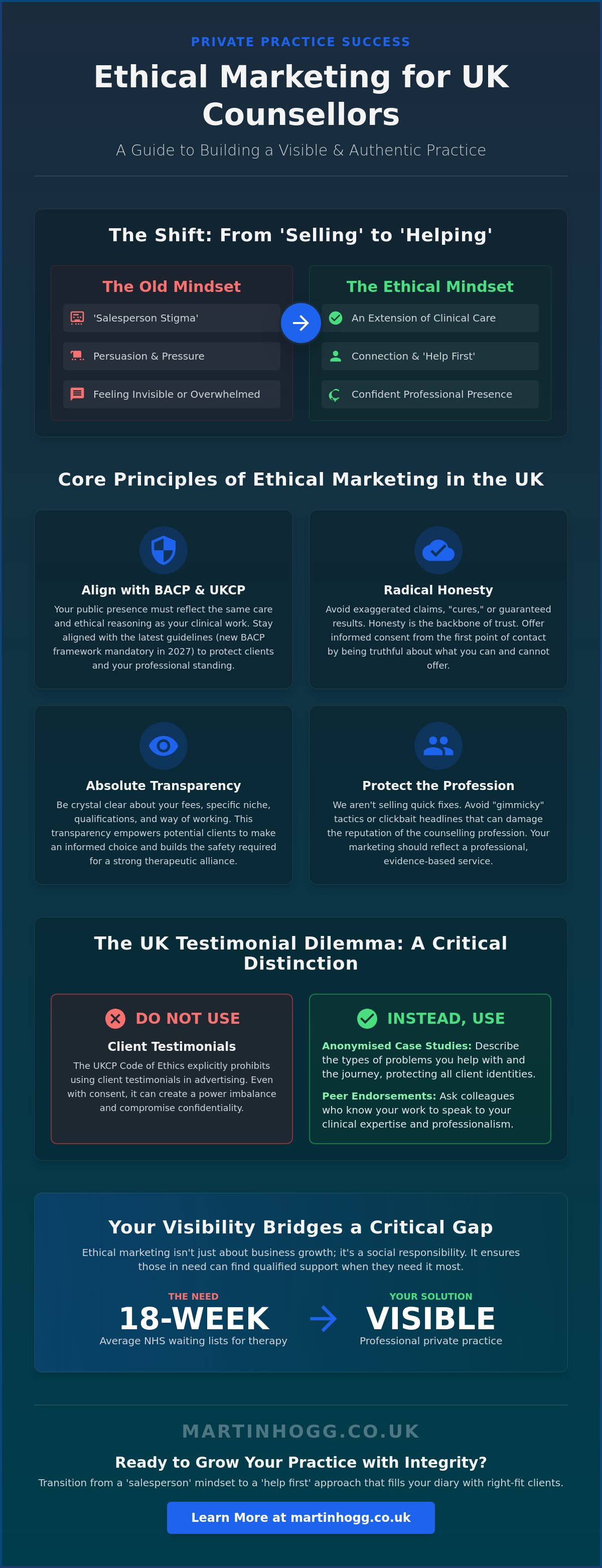
Staying safe in our marketing means staying aligned with our professional bodies. The BACP Ethical Framework, which is updated this autumn and becomes mandatory in early 2027, places a heavy emphasis on ethical reasoning and transparency. It's not just a set of rules to follow; it's a way of ensuring that our public presence reflects the same care we provide in the therapy room. When we align our visibility with these standards, we protect both our clients and our professional standing.
Honesty is the backbone of ethical marketing for counsellors. This means we must avoid the temptation of exaggerated claims, "cures," or guaranteed results. Instead, we offer informed consent from the very first point of contact. By being crystal clear about your fees, your specific niche, and your way of working, you allow potential clients to make an empowered choice. This level of transparency builds the safety and trust necessary for a strong therapeutic alliance to begin.
Protecting the reputation of the profession is something we all carry. Avoiding "gimmicky" tactics or clickbait headlines is essential. We aren't selling quick fixes; we're offering a professional, evidence-based service. If you're feeling a bit stuck on how to present your professional self without the hype, you might find the support you need in our Private Practice Success community.
The Testimonial Dilemma
One of the biggest differences between UK and US marketing is the use of "social proof." In the UK, the UKCP Code of Ethics and Professional Practice explicitly prohibits the use of client testimonials in advertising. Even if a client offers a glowing review, publishing it can create an imbalance of power or compromise confidentiality. Instead, try using anonymised case studies that describe the types of problems you help with, or seek professional endorsements from colleagues who can speak to your clinical expertise.
GDPR and Data Privacy for Marketing
Your marketing isn't just about what you say; it's about how you handle the details of those who reach out. Ensure your contact forms and email lists are fully compliant with UK GDPR. This technical safety is just as vital as your clinical safety. It's also a sensible time to check that your private practice insurance uk is up to date and covers your digital presence and professional conduct.
Practical Steps to Build Visibility Without Losing Your Soul
Building a visible practice doesn't mean you have to change who you are. It's about translating your clinical warmth into a digital format. Many counsellors struggle with directory listings because they try to sound "professional" and end up sounding cold. If you look at profiles on the Counselling Directory or Psychology Today, you'll see many that list every qualification but forget to mention the human being behind the desk.
Effective ethical marketing for counsellors starts with a "Help First" mindset. Instead of trying to "sell" a session, try to offer a small piece of value. This could be a simple grounding exercise or a thought-provoking question that helps someone feel understood. When you focus on being helpful, the pressure to be a "salesperson" disappears. You're just doing what you do best: offering support.
Networking with integrity is another vital piece of the puzzle. It isn't about attending awkward business events. It's about building genuine relationships with fellow practitioners. When you know and trust other therapists, you can refer clients who aren't a fit for you with total confidence. This creates a supportive ecosystem where everyone benefits, especially the clients.
Writing Like a Human, Not a Robot
Your website bio shouldn't be a CV. Clients aren't looking for a list of degrees; they're looking for hope. Instead of saying you "utilise CBT techniques," try explaining that you "help people break the cycle of overthinking so they can sleep better at night." By translating clinical jargon into real-life benefits, you make your help feel accessible and safe. It's about speaking their language so they feel seen and understood.
Low-Pressure Content Ideas
You don't need to post every day to be effective. Sharing a few helpful tips or a short video on how to manage anxiety can demonstrate your expertise without feeling pushy. If you want to understand how to make these efforts more visible to people searching online, you might want to look into SEO for therapists. It's a gentle way to ensure your voice reaches the right ears naturally. If you'd like a structured way to put these steps into practice, our Private Practice Success Membership offers the guidance and community you need to grow with confidence.
Creating a Sustainable Marketing Plan for Your Practice
Even with the best intentions, imposter syndrome can make clicking "publish" feel like a monumental task. You might worry that you're being too bold or that colleagues will judge your professional presence. It's okay to feel that way. Ethical marketing for counsellors is a practice in itself, one that requires patience and a gentle approach toward your own visibility. It is not a performance; it is a way of being found by those who need you.
Sustainability is key to staying in this for the long term. You don't need to spend forty hours a week on your website or social media. For most private practices, dedicating just two hours a week to your visibility is enough to see consistent growth. Setting these boundaries prevents you from feeling overwhelmed. It's important to recognise when your efforts are becoming a drain on your emotional energy. Pushing too hard can lead to therapist burnout, which serves neither you nor your clients.
You don't have to build your practice in isolation. Being part of a community allows you to share the weight of these business challenges with people who understand the unique ethical pressures of our work. When you have a structured approach, the guesswork disappears. It gives you a clear path to follow so you can focus on the clinical work you love, knowing your practice's future is secure.
Measuring Success Beyond the Numbers
It's easy to get caught up in website hits or social media likes, but these are often just vanity metrics. True success is measured by the quality of the enquiries you receive. Are you attracting "right-fit" clients who align with your way of working? When your marketing is honest and clear, you'll find that the people who reach out are already starting to trust you. This improves clinical outcomes because the therapeutic alliance begins before they even book their first session.
Next Steps for Your Practice
If you're ready to move forward with a plan that feels right, I'd invite you to explore the Practice Visibility Blueprint. It's a practical, step-by-step way to grow your practice without the stress. For those who prefer a more personal touch, you can also book one-to-one practice growth coaching with me. We can look at your specific situation and build a strategy that feels like a natural extension of your care.
Building a Practice That Reflects Your Care
Reframing how you see visibility is the first step toward a thriving practice. By staying aligned with the 2026 professional guidelines and focusing on genuine connection rather than persuasion, you can reach the people who need you most. It's helpful to remember that ethical marketing for counsellors is not a compromise of your values; it's the bridge to a sustainable future where you can do your best work without the risk of burnout.
I've spent over 20 years in UK private practice, and as a BACP-endorsed workshop provider and accredited CPD trainer, I've seen how the right support can change everything. You don't have to figure out the technical hurdles in isolation. You can build a professional presence that feels safe, grounded, and entirely like you. It's about taking small, steady steps toward a more functional and fulfilling career.
If you're ready to move away from feeling invisible and start filling your diary with right-fit clients, I'd love to help you take that next step. Join the Private Practice Success community and start your Visibility Blueprint today. Your expertise is valuable, and the right people are already looking for the help you provide. Let's make sure they can find you.
Frequently Asked Questions
Is it ethical for a counsellor to use social media for marketing?
It's perfectly ethical to use social media as long as you maintain clear professional boundaries and don't compromise client confidentiality. Instead of seeking viral fame, use these platforms to offer grounding techniques or to address social stigmas with clarity. Your goal should be to provide value to the community, making your support accessible to those who might feel intimidated by traditional clinical settings.
Can I use client testimonials on my therapy website in the UK?
No, you cannot use client testimonials on your website in the UK as it violates the UKCP Code of Ethics and Professional Practice. The BACP also views this as a potential breach of professional boundaries because of the power imbalance between therapist and client. Instead of reviews, try using anonymised case studies that illustrate how your specific approach helps people move forward in their lives.
How much should a private practice counsellor spend on marketing?
You don't necessarily need a large budget to grow your practice; instead, focus on investing about two hours of your time each week. For many solo practitioners, the main costs are directory listings and basic website hosting. A sustainable approach to ethical marketing for counsellors prioritises steady, rhythmic activity over expensive, one-off advertising campaigns that might lead to a sudden, unmanageable surge in enquiries.
What are the BACP guidelines for advertising my services?
The BACP requires all advertising to be honest, accurate, and socially responsible in line with the ASA's CAP Code. As of February 2026, there are specific guidelines on using BACP logos and designatory letters correctly to ensure you don't mislead the public about your qualifications. Following these rules ensures your visibility remains a bridge to a more functional future for your clients rather than a source of confusion.
Do I need to be an expert in SEO to get more counselling clients?
You don't need to be a technical expert to see results; writing like a human being is often the most effective form of ethical marketing for counsellors. While basic search engine principles help, your priority should be creating clear, jargon-free content that speaks directly to a client's struggles. If your website bio feels like a private, safe conversation, you'll naturally attract the right-fit clients who resonate with your specific way of working.

Article by
Martin Hogg
I help Private Practice counsellors in the UK set up and grow an ethical Private Practice they love, work with their ideal clients, and earn the income they deserve. All without guesswork and burnout. I have been a private practice counsellor myself for over 20 years, specialising in anger management. I set up a not-for-profit social enterprise, Citizen Coaching and Counselling, which delivers thousands of counselling sessions a year to adults and young people in Birmingham. I am a registered BACP Counsellor and the author of three books, My Anger Coach, My Anxiety Coach and My Relationship Coach. These are available on Amazon.
Disclaimer
The information provided on this blog is for general informational purposes only and is not intended to be a substitute for professional medical or mental health advice, diagnosis, or treatment. Reading this content does not create a therapist-client relationship.


