
Explaining Therapy’s Value Through Goals Clients Can Work Toward

Article by
Martin Hogg
I help Private Practice counsellors in the UK set up and grow an ethical Private Practice they love, work with their ideal clients, and earn the income they deserve. All without guesswork and burnout. I have been a private practice counsellor myself for over 20 years, specialising in anger management. I set up a not-for-profit social enterprise, Citizen Coaching and Counselling, which delivers thousands of counselling sessions a year to adults and young people in Birmingham. I am a registered BACP Counsellor and the author of three books, My Anger Coach, My Anxiety Coach and My Relationship Coach. These are available on Amazon.
Therapy’s value is easier to understand when you connect it to goals people recognise in everyday life. Explaining the value of therapy to potential clients means describing how a supportive space and shared goals can help someone make sense of what is troubling them and consider what they want to change. Those goals should reflect the person, not a fixed list.
You may know therapy can help, yet find it hard to explain how without sounding vague or promising too much. Keep it practical: people may want to understand their feelings, manage difficult moments, improve relationships or make choices that fit their values. Progress looks different for everyone.
Here, I’ll show you how to describe the role of a supportive therapeutic relationship, outline common goals clients can work towards and explain how those goals may develop over time. You’ll have clearer language for discussing therapy’s value, while keeping the focus on what matters to the person seeking support.
Key Takeaways
- Describe how listening, respect and client choice help people speak openly without feeling judged.
- Build therapy goals with clients around what matters in their lives, then revisit them as circumstances change.
- Explain benefits through everyday possibilities, such as responding differently to difficult feelings or taking a meaningful next step.
- Help clients understand that a first session can clarify what they want from therapy and how you might work together.
1. Creating a safe, non-judgmental therapeutic space
Carl Rogers placed acceptance and empathy at the heart of a relationship that supports change. Explain what clients can expect: you’ll listen, take their concerns seriously and avoid deciding what their experience should mean. This gives people room to talk about mental health, relationships or difficult choices without needing polished answers.
Start by agreeing how you’ll work together. Ask what the person hopes to address, what feels difficult to discuss and whether they prefer reflection or practical ideas. Someone unsure about exploring family history, for example, may want to begin with current work stress. Respecting that choice can build confidence and help clients feel involved.
Private therapy is arranged directly with a practitioner, while NHS talking therapies are accessed through NHS services. Both can offer structured support; the route, approach and fit depend on the person’s circumstances and preferences. Explain your own way of working clearly, without suggesting one route is automatically better.
Discuss confidentiality and its limits before or as therapy begins. Explain your agreement in everyday language and make space for questions, so the person understands how their information is handled in your clinical setting.
Evidence for therapy is assessed through studies of approaches and outcomes, not testimonials alone. Cognitive behavioural therapy, for example, focuses on identifying and changing unhelpful thoughts and behaviours. Describe your approach accurately, without promising a particular result.
In the UK, potential clients can look for a practitioner on the BACP Register and review their training, qualifications and approach. Encourage them to consider whether your experience matches their needs, then use an initial conversation to explore whether you’re a good fit.
There’s no single session frequency or duration that suits everyone. Agree a pattern together, then review it as the client’s needs, progress and circumstances change. Discuss fees before work starts, describe possible goals without guaranteeing outcomes, and explain how you’ll assess whether therapy is helpful. This makes the value clear while allowing the client to make an informed choice.
2. Common goals of counselling and therapy
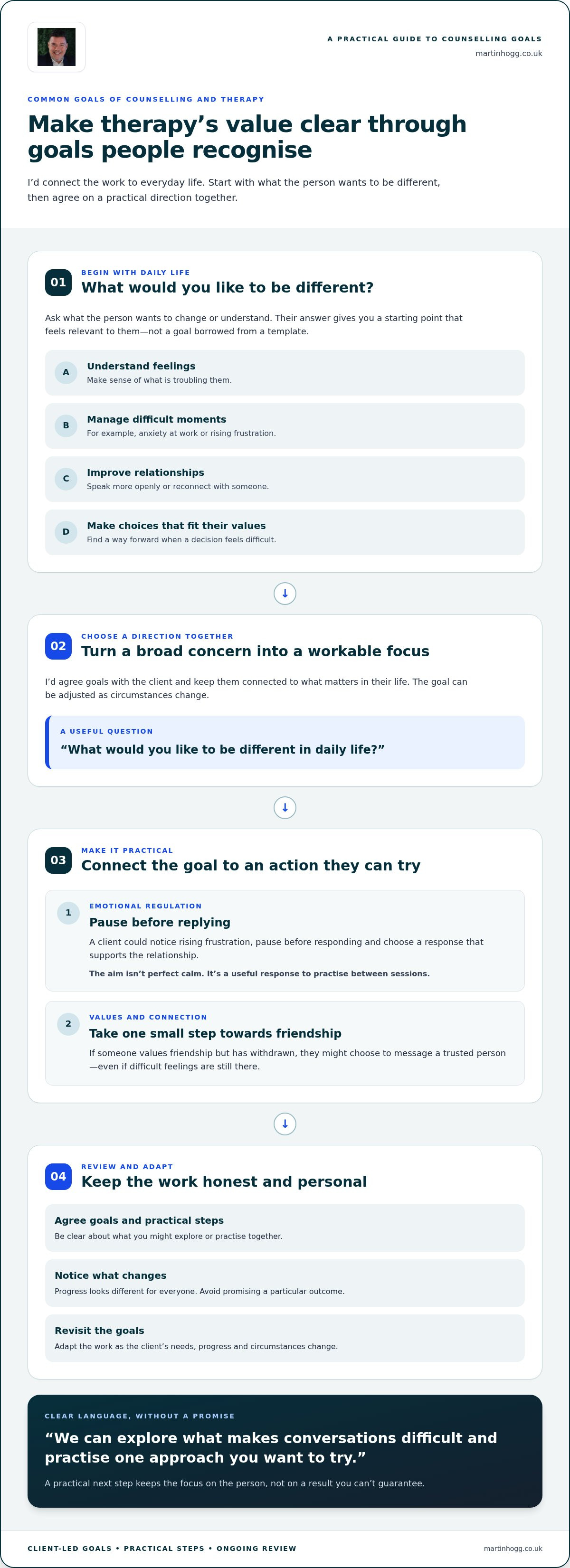
Goals give counselling practical direction, but they should fit the individual rather than follow a template. Ask what the person wants to be different in daily life. They might want to manage anxiety at work, speak more openly in relationships or feel less stuck when making decisions. For counsellors, explaining the value of therapy to potential clients starts with connecting the work to concerns people recognise.
Some goals involve building emotional skills. Dialectical behaviour therapy, for example, emphasises emotional regulation and coping skills. A client might practise noticing rising frustration, pausing before replying and choosing a response that supports a relationship. The aim isn’t perfect calm. It’s developing a useful response to practise between sessions.
Other goals focus on values and connection. In Acceptance and Commitment Therapy, values can guide meaningful action even when difficult feelings remain. If someone values friendship but has withdrawn, one small step might be messaging a trusted person. This links a chosen direction to an achievable action, rather than making symptom removal the only measure of progress.
Explaining the value of therapy to potential clients also means describing the process honestly. Agree goals, identify practical steps and review what changes. For instance, you might say, “We can explore what makes conversations difficult and practise one approach you want to try.” That’s clearer than promising a particular outcome. As circumstances shift, revisit the goals and adapt the work together.
Starting therapy can feel daunting. Someone may worry about being judged, struggle to explain what’s wrong, feel unsure about the process or find the cost difficult to manage. Acknowledge these concerns and explain what an initial conversation involves. Don’t assume hesitation means a lack of interest. Offer clear information and space to decide.
If you’re working on how to communicate your practice’s focus and value, the Martin Hogg Private Practice Success community offers a place to develop that message. Keep your wording grounded in goals clients can work towards, not outcomes you can’t promise.
3. What are the benefits of therapy for mental health and wellbeing?
Therapy may help people respond more flexibly when difficult thoughts or feelings arise. Psychological flexibility means taking useful action for what matters, even while discomfort remains. Someone anxious about a family visit, for example, might plan a short conversation rather than avoid it entirely. That small shift can make everyday choices feel less dictated by fear.
Therapy can also help people notice patterns in how they see themselves. A client who believes they must always please others might explore where that expectation began and how it affects current relationships. Careful reflection can help them distinguish their own needs from pressure they’ve absorbed, supporting more considered decisions instead of automatic agreement.
Practical tools can help people use reflection outside sessions. A client might keep a brief journal of moments that brought pride, connection or fulfilment, then look for themes with their therapist. Mindful awareness can help them notice when daily choices feel out of step with what matters. These observations give conversations a concrete starting point.
Therapy can help people work through barriers between intention and action. Fear, self-doubt or competing responsibilities may make change feel too big. If a client values connection but has been isolated, they could choose one manageable step, such as replying to a friend’s message. Reviewing what helped or hindered can inform the next step.
Discussion can also clarify conflicting priorities. Someone balancing family expectations with personal independence might explore what each choice protects, then consider options that respect both needs. The aim isn’t to force a neat answer, but to help the person make an informed decision and understand its trade-offs.
Describe these benefits as possibilities to work towards, not guaranteed results. Ask what would look different in an ordinary week, then revisit the example together. Perhaps the client wants to pause before reacting at work or say no without lengthy apologies. Specific changes make progress easier to recognise, while leaving room for setbacks and changing priorities.
4. How does therapy work and what happens in a first session?
Therapy often begins by understanding why someone has sought support. In an initial session, invite them to describe what feels hardest now, what they’ve tried and what they hope might change. They don’t need a perfect account. A client might start with “I’m not sleeping well” and gradually explain the pressures around it.
Explain the shape of the conversation before asking personal questions. You might say, “We can start with what’s troubling you, then decide together what would be useful to explore.” This offers direction without turning the session into an interview. It also makes clear that the person can ask questions and share at their own pace.
Next, explore what kind of support feels manageable. Some people want space to talk; others prefer practical exercises or a clearer focus. Open questions can help: “Would you like me to listen, offer reflections or help you think through options?” Their answer can guide your approach, rather than leaving them to guess what therapy involves.
As sessions continue, you and the client can notice patterns, consider different responses and review what feels useful. Someone who dreads difficult conversations might identify what they fear, rehearse how to begin, then reflect on what happened. This connects the work in sessions with choices in everyday life.
Explain that plans can change as the person’s needs become clearer. A goal that initially seems central may give way to another concern, such as relationship strain affecting work. Regularly asking, “Is this still the right focus?” keeps the work collaborative. Discuss session arrangements and fees openly, too, so practical details don’t come as a surprise.
Martin Hogg Private Practice Success: Practice Visibility Blueprint
Martin Hogg’s Private Practice Success offers the Practice Visibility Blueprint for counsellors who want potential clients to understand and find their practice more easily. If you can explain your work clearly in sessions but struggle to communicate its value before someone gets in touch, the Blueprint can help you focus on how your practice presents itself.
That’s a useful next step after clarifying the goals clients can work towards. Your website and other practice information can connect what you offer with concerns people recognise in everyday life, without promising a particular outcome. Start by making the message clear and human, rather than trying to polish every last word.
If you’d like support with your practice visibility, visit Martin Hogg’s website.
Take the next step with clarity
Explaining the value of therapy to potential clients isn’t about finding a perfect pitch. It’s about making your work understandable, honest and relevant to the person reading. A clear message can help someone recognise that support may be worth exploring, while leaving them free to decide what feels right.
If you’re ready to strengthen how you communicate your practice, choose one small step. Clarify who you work with, write a more specific description of your approach or consider further learning. Martin Hogg’s Private Practice Success also offers Anger Management CPD for Professionals for counsellors who want to develop their practice in this area.
You don’t need every word to be perfect before you begin. Keep the message human, make the next step clear and build from there.
Frequently Asked Questions
What Are the 6 Main Goals of Counselling and Therapy?
There isn’t one fixed set of six goals for everyone. Common aims include reducing distress, building self-understanding, developing coping skills, improving relationships, making decisions that reflect personal values and taking practical steps towards change. A client might work on managing anxious thoughts while practising clearer communication at home. Goals should reflect what matters to the individual, not a standard checklist.
How does private therapy compare with NHS talking therapies?
Private therapy is arranged directly with a practitioner, while NHS talking therapies are accessed through NHS services. Both can offer structured support; the route, approach and fit depend on the person’s circumstances and preferences.
What evidence shows that therapy is effective?
Therapy’s effectiveness is assessed through studies of approaches and outcomes, not testimonials alone. Cognitive behavioural therapy, for example, focuses on identifying and changing unhelpful thoughts and behaviours.
Disclaimer
The information provided on this blog is for general informational purposes only. It is also not intended to be a substitute for professional medical or mental health advice, diagnosis, or treatment. Reading this content does not create a therapist-client relationship.


