Facebook Group Tips for UK Counsellors: Building Visibility Ethically
You don't have to shout to be heard in a crowded digital space. In fact, trying to be the loudest often has the opposite effect. I know how it feels to scroll through group after group, feeling invisible and wondering if you're just wasting time that could be spent with clients. You might worry about professional "trolling" or accidentally crossing an ethical line while searching for counsellors facebook group tips that actually work. It’s a common struggle for many of us in private practice.
The BACP reported in May 2026 that social media adverts generated over 23,000 enquiries to directory members in just one year. There’s a massive opportunity here if you use it correctly. I'm going to share a clear plan to help you grow your visibility without compromising your professional integrity. As part of the Citizen Coaching philosophy, I believe mental health support should be accessible, and that starts with making sure the right clients can find you.
We’ll look at how to choose the best groups, stay aligned with the latest ASA guidance on social media disclosure, and build a peer community that truly supports your growth. Let’s get your practice visibility back on track in a way that feels comfortable and right for you.
Key Takeaways
- Shift your mindset from broadcasting to genuine community conversation to build trust that traditional directories can't provide alone.
- Use a three-tier group strategy to find peer support, connect with your local community, and reach your specific niche where they already spend time.
- Learn practical counsellors facebook group tips to demonstrate your expertise ethically without slipping into "free therapy" or feeling like a salesperson.
- Protect your energy by setting clear "office hours" for social media and adopting a simple 15-minute daily visibility habit.
- Apply the "Citizen Coach" approach to lead with value, helping you get your practice back on track through meaningful, helpful engagement.
The Role of Facebook Groups in a UK Private Practice
Traditional directories are a solid foundation, but they often lack the human connection that modern clients crave. If you rely solely on a static profile, you might find your practice growth has stalled. Facebook groups offer a different path. They allow you to move away from the "shouting" style of traditional advertising toward a more rhythmic, conversational approach. Instead of just being a name on a list, you become a helpful presence in a digital community.
For many of us working as solo practitioners, these groups also act as a digital water cooler. Private practice can be isolating, and having a space to connect with others who understand the unique pressures of our work is vital for our own well-being. However, we must be clear about our intentions. There is a sharp distinction between using a group for visibility and using it for clinical support. While you can share general counsellors facebook group tips or offer professional insights, clinical case discussions must always remain within the bounds of secure, formal supervision.
By applying basic Business networking principles, you can build a reputation for being both approachable and professional. It’s about being the person who offers a steady hand and a calm perspective when others are feeling overwhelmed. If you're looking for a structured way to manage this, my Private Practice Success Membership provides a community where we focus on these practical growth steps together.
Why visibility matters for counsellors
I often talk to counsellors who feel a deep sense of self-doubt about marketing their services. It can feel like you're being pushy or boastful. But think of it this way: if you are invisible, the person who needs your specific expertise cannot find you. Practice visibility is a tool for connecting help-seekers with the right support. When you show up consistently and offer value, you build the "know, like, and trust" factor. This means that by the time a potential client sends that first email, they already feel a sense of safety and connection with you.
Choosing the Right Groups: Peer Support vs. Client Attraction
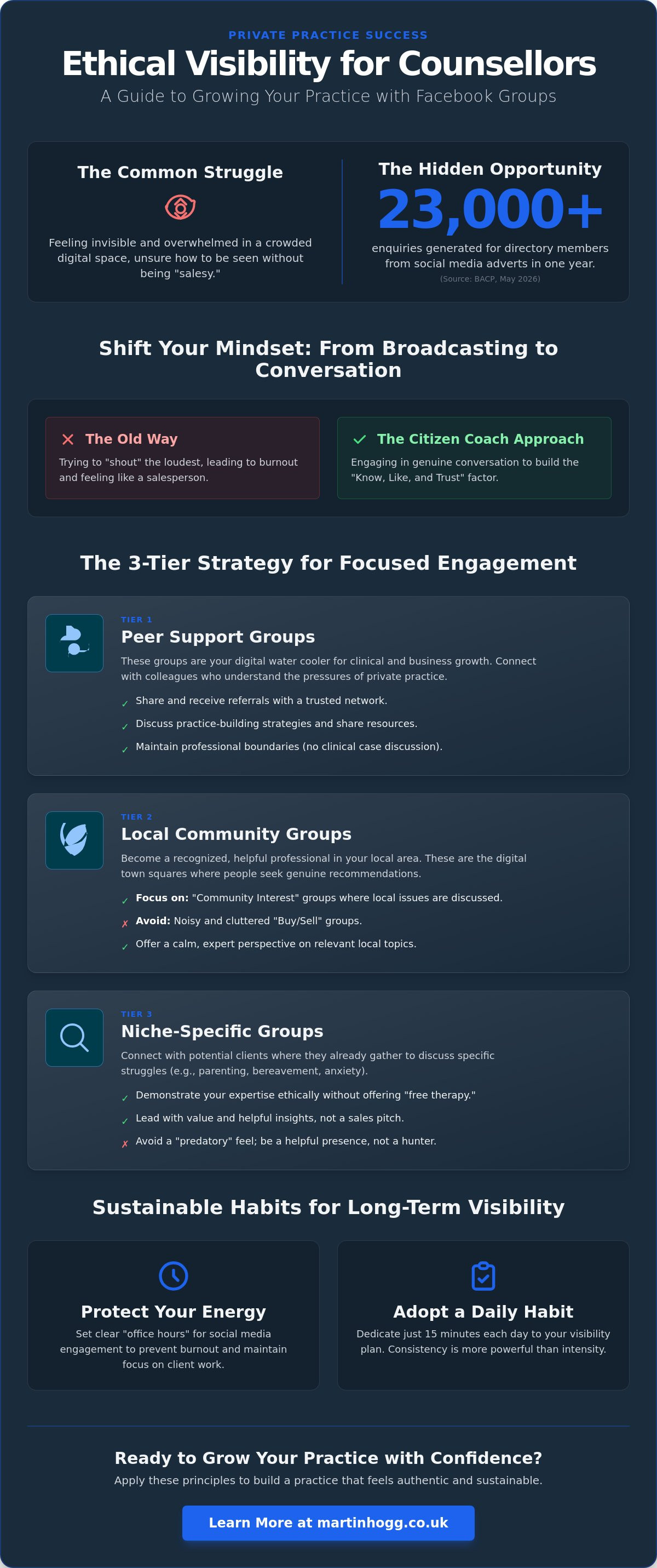
Joining every Facebook group in sight is a recipe for burnout. I suggest a three-tier strategy to keep your focus sharp: peer support, local community, and niche-specific groups. This approach ensures you aren't just hunting for clients, but also nurturing your own professional growth. When you look for counsellors facebook group tips, the best advice is often to be picky about where you spend your energy. Your time is a finite resource; don't waste it in spaces that don't align with your values.
Peer groups for clinical and business growth
Peer groups are essential for the business side of therapy. These spaces allow us to share referral networks and discuss the practicalities of running a practice without the fear of being judged. It's important to follow the BACP social media guidance to ensure you maintain boundaries even in these private spaces. If you're looking for a structured peer environment that values action over abstract theory, you might find the Private Practice Success community a helpful place to start. It’s a space designed to help you build a sustainable practice alongside people who truly understand the journey.
Local and niche groups for finding clients
Local groups require a different touch. I've found that local "Buy/Sell" groups are often a waste of time; they are filled with noise and commercial clutter. Instead, look for "Community Interest" groups. These are the digital town squares where people discuss local issues and seek genuine recommendations. When entering niche groups based on specific struggles like parenting or bereavement, avoid the "predatory" feel. You aren't there to pounce on every post; you're there to offer a calm, expert perspective that helps people get their lives back on track.
Don't be afraid of groups where other counsellors gather. What some see as "competitor" groups, I see as networking opportunities. Many therapists have full books and look for trusted peers to whom they can refer clients. Watch out for red flags, though. If a group feels toxic or the moderation is so restrictive that you can't offer genuine value, it's okay to leave. Focus on groups that feel respectful and professional.
Ethical Engagement: How to Be Visible Without Being Salesy
Many counsellors I speak with worry that being visible online means acting like a salesperson. It really doesn't have to feel that way. I advocate for what I call the "Citizen Coach" approach. This means you lead with value and practical support rather than a pitch. You are simply showing up as a helpful, grounded professional in a community that might be feeling overwhelmed. When you follow these counsellors facebook group tips, your goal is to be the most helpful person in the room, not the loudest.
The key is answering questions in a way that demonstrates your expertise without giving "free therapy". If someone shares a struggle with anxiety or a difficult relationship, offer a calm observation or a practical tool they can use right away. You’re showing them what it’s like to work with you without crossing a clinical boundary. By staying rooted in the BACP Ethical Framework, you ensure your public posts always prioritise client safety and professional integrity. For more examples of successful social media use, look for practitioners who provide steady, rhythmic support rather than those who post constant "call to action" buttons.
The "No-Nonsense" guide to posting
Clarity always beats cleverness. Avoid clinical jargon that creates a barrier between you and the public. Words like "attachment styles" or "cognitive distortions" might mean a lot to us, but they can feel cold to someone in crisis. Use "I" and "You" to keep the conversation human and grounded. If a discussion needs to go deeper, a simple, "I’ve helped people with this before; feel free to message me if you’d like to chat more," is often all it takes to transition a group comment to a private enquiry.
Managing self-disclosure and professional boundaries
Maintaining your professional container is vital. You can be human and relatable without sharing your entire life story. If you encounter "keyboard warriors" or negative comments, don't get defensive. Respond with the same calm confidence you’d use in a therapy room, or simply step away. This is a core part of Marketing for Therapists in the UK. It’s about building a reputation through consistent, kind engagement. If you want to practice these interactions with peers first, come and join our Private Practice Success community where we support each other in getting our voices heard ethically.
Maintaining Boundaries and Preventing Social Media Burnout
Social media can easily become a 24/7 commitment if you let it. I often see counsellors fall into the trap of endless scrolling, hoping for a breakthrough that never quite comes. This "always-on" anxiety isn't just exhausting; it can actually pull you away from the very people you want to help. One of the most practical counsellors facebook group tips I can give you is to set strict "office hours" for your social media activity. Decide when you will be present and when you will step away to protect your own mental space.
I recommend adopting a 15-minute visibility habit. Set a timer once or twice a day. During this window, you can answer a couple of questions or offer a kind word to a peer. Once the timer goes off, close the app. This rhythmic approach ensures you stay consistent without getting lost in the noise. Remember, Facebook is merely a bridge. Your ultimate goal is to move these conversations toward your own website or email list, where you have more control over the professional container.
Moving from "Member" to "Leader"
As you grow in confidence, you might feel it’s time to start your own group for a specific niche, such as supporting men or managing anger. Leading a space is a significant responsibility. You must be prepared to moderate the conversation and keep the environment safe for everyone. It’s easy to over-extend yourself here. If you start to feel the weight of this work, I suggest reading my guide on Therapist Burnout to help you spot the early warning signs of fatigue.
Your next steps for practice growth
Building visibility is a journey, not a one-off task. You can consolidate everything we’ve discussed into a broader Practice Visibility Blueprint. This will help you see how your group activity fits into the bigger picture of your private practice. If you'd like more direct support, check the Martin Hogg calendar for upcoming workshops where we dive deeper into these growth strategies.
You are a professional with immense value to offer. Don’t let the fear of being seen hold you back from helping those who need you. It is possible to grow your practice ethically and with your integrity intact. Take that first small step today; you have everything you need to get your practice back on track.
Your Path to a Visible and Sustainable Practice
Building a presence online doesn't have to feel like a second job or a compromise of your values. We've explored how to shift from passive scrolling to purposeful engagement by choosing the right groups and leading with the "Citizen Coach" mindset. By implementing the 15-minute visibility habit and sticking to clear office hours, you can protect your energy while ensuring those in need can find your support. These counsellors facebook group tips are your toolkit for growing a practice that feels authentic and professional.
I bring over 20 years of practice growth experience to my work as a BACP-endorsed workshop provider. My goal is always to provide practical, no-nonsense coaching that works for UK-based therapists. If you're ready for more structured guidance and a supportive peer community, I invite you to join the Private Practice Success Membership for structured support.
You have a vital role to play in your community. When you step out of the shadows and share your expertise with a calm confidence, you make it easier for people to get their lives back on track. Start with one small action today and trust that your voice is worth hearing.
Frequently Asked Questions
Is it ethical for a counsellor to post in Facebook groups?
It is ethical to post in groups as long as you maintain clear professional boundaries and protect client confidentiality. The BACP’s updated 2026 ethical guidelines emphasize the importance of separating your personal and professional identity online. Focus on offering general support and signposting rather than giving specific clinical advice to individuals in a public forum.
How much time should I spend in Facebook groups each week?
I recommend spending roughly 105 minutes per week on social media engagement. By following a 15-minute daily habit, you can share counsellors facebook group tips or answer community questions without falling into the scrolling trap. This structured approach prevents the overwhelm that often leads to practitioner burnout while keeping your practice visible.
Should I use my personal Facebook profile or a business page for groups?
You should join as a Business Page whenever the group settings allow it to keep your private life secure. If a group requires a personal profile, ensure your privacy settings are locked down and your profile picture remains professional. This creates a clear "professional container" that protects both you and your potential clients from inappropriate self-disclosure.
What should I do if a current client finds me in a Facebook group?
Don't panic if a client sees your professional posts; simply address it calmly in your next session. It is helpful to include a social media policy in your initial contracting so clients understand how you use these spaces. Discussing the "digital encounter" openly helps maintain the therapeutic relationship and ensures boundaries remain intact.
Can I really get clients from Facebook without paying for ads?
Yes, organic engagement is a highly effective way to build the trust needed for referrals. While BACP data for 2025 to 2026 shows that paid adverts generated over 23,000 enquiries for directory members, organic presence in niche groups often leads to higher-quality enquiries. By showing up as a "Citizen Coach" and offering steady, practical value, you become the first person people think of when they are ready to seek help.

Article by
Martin Hogg
I help Private Practice counsellors in the UK set up and grow an ethical Private Practice they love, work with their ideal clients, and earn the income they deserve. All without guesswork and burnout. I have been a private practice counsellor myself for over 20 years, specialising in anger management. I set up a not-for-profit social enterprise, Citizen Coaching and Counselling, which delivers thousands of counselling sessions a year to adults and young people in Birmingham. I am a registered BACP Counsellor and the author of three books, My Anger Coach, My Anxiety Coach and My Relationship Coach. These are available on Amazon.
Disclaimer
The information provided on this blog is for general informational purposes only and is not intended to be a substitute for professional medical or mental health advice, diagnosis, or treatment. Reading this content does not create a therapist-client relationship.


