
How to Attract Private Pay Therapy Clients: A Practical Guide for UK Counsellors
What if you could stop waiting for the next £40 referral from an EAP and finally earn what your clinical expertise is worth? I know that many UK counsellors feel like a cog in a corporate machine, often working for less than half their private rate just to keep the diary full. You didn't train for three years just to spend your time filling out endless spreadsheets for a low-paying agency. Learning how to attract private pay therapy clients isn't about becoming a pushy salesperson; it's about making it easy for the people who need you most to find you.
You probably worry that marketing yourself feels a bit un-therapeutic or that your website needs to be perfect before it goes live. It's a common fear that keeps talented therapists stuck in a cycle of inconsistent income. You deserve a practice that feels authentic. This guide will show you how to move away from that anxiety and build a sustainable practice with clients who value your specific niche. We'll walk through the practical steps I've developed at Martin Hogg (Private Practice Success) to create an online presence that brings in a steady stream of self-referring clients, helping you get your professional life back on track.
Key Takeaways
- Understand why moving away from a total reliance on EAPs helps you build a more stable, rewarding practice that reflects your true value.
- Discover how to attract private pay therapy clients by narrowing your focus, making it easier for people in distress to find the specific help they need.
- Learn why your personal website is your most important digital asset and how to use directories as a bridge rather than a permanent crutch.
- Get a practical three-step plan to audit your online presence and rewrite your directory profiles so they speak directly to your ideal client’s heart.
- Reframe marketing as a helpful form of professional outreach, allowing you to handle initial enquiries with the same empathy and confidence you bring to the therapy room.
What is a Private Pay Client and Why Do They Matter in 2026?
In the UK therapy world, a private pay client is someone who covers the full cost of their sessions out of their own pocket. They don't rely on an Employee Assistance Programme (EAP) or a health insurance provider to foot the bill. The private pay model is a direct contract between therapist and client. This directness changes the energy in the room. When a client invests their own hard-earned money, they often bring a higher level of commitment to the work. They aren't just ticking a box because their HR department suggested it; they're here because they want a specific result.
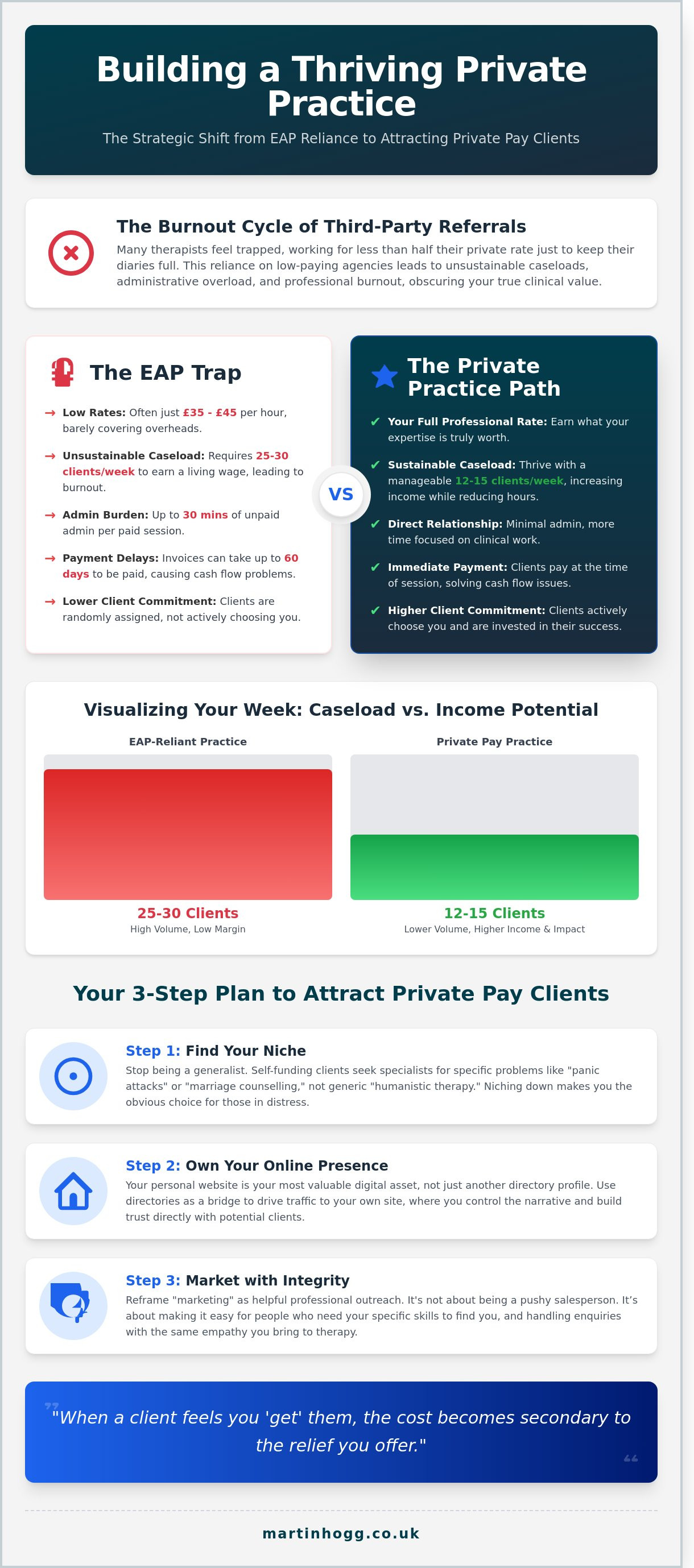
Relying on insurance companies or EAPs often feels like a safe bet, but it's a trap that leads straight to burnout. Many EAPs in 2024 still offer rates as low as £35 to £45 per hour, which barely covers the overheads of a professional practice. To make a living, you're forced to see 25 or 30 clients a week. That isn't sustainable for you or fair to them. Learning how to attract private pay therapy clients allows you to reduce your caseload to a manageable 12 or 15 sessions while actually increasing your take-home pay. It gives you the mental space to be the best guide possible for those you support.
Before you can build this kind of practice, it helps to be clear on the basics of our profession. If you're explaining your work to a new client, you might find it useful to reference this overview of What is psychotherapy? to ground your conversation in established practice.
The Shift from Third-Party Referrals to Self-Referral
The UK landscape has shifted dramatically. With NHS waiting lists for talking therapies often stretching beyond 18 weeks in many trusts, people are tired of waiting. The cost of living has made everyone more cautious with their spending, but it's also made them more discerning. They don't want a randomly assigned counsellor from a corporate list. They want to choose a person they trust. Being the "first choice" therapist means you aren't just another name on a spreadsheet; you're the specific professional they've decided can help them get their life back on track.
The Financial Sustainability of a Private Practice
You need to look at your "true" hourly rate. If an EAP pays £40 but requires 30 minutes of admin and takes 60 days to pay, your actual hourly rate is closer to £25. Private pay clients pay at the time of the session, usually via bank transfer or card. This solves cash flow issues immediately. By focusing on how to attract private pay therapy clients, you create a business that supports your life rather than draining it. If you're ready to look at your own practice numbers and plan a way forward, you can book a time on my calendar to discuss a practical strategy.
Finding Your Niche: How to Stand Out to Self-Funding Clients
When you try to be everything to everyone, you often end up being invisible to the people who need you most. Many counsellors start out as generalists because they fear that narrowing their focus will lead to fewer enquiries. In reality, the opposite is true. If you want to know how to attract private pay therapy clients, you must understand that self-funding individuals aren't looking for a "jack of all trades." They are looking for a specialist who understands their specific pain and has a proven track record of helping people just like them.
The psychology of an online search is driven by urgency and specific symptoms. A person in distress doesn't look for "humanistic therapy"; they look for a way to stop their panic attacks or save their marriage. By identifying the problems you are most passionate about solving, you position yourself as a solution rather than a generic service. This clarity is exactly what allows you to charge your full professional fee. When a client feels you "get" them, the cost becomes secondary to the relief you offer. The NHS and private sector collaboration has highlighted how much the public now relies on independent practitioners to fill specific gaps in care, making your unique specialism more valuable than ever.
Moving from Modality to Problem-Solving
Clients in crisis rarely care about the theory behind your work. They search for "anger management" or "support for ADHD" rather than "transactional analysis." To resonate with them, your language needs to reflect their daily struggle. In the UK, effective niches often focus on underserved areas. You might specialise in working with men who find traditional talk therapy intimidating, or perhaps you focus on grief after sudden loss. Describe the results of your work, such as "getting your life back on track," to create an immediate connection with someone who feels lost.
Researching Your Local and Digital Market
Spend an hour looking at directory listings in your part of the West Midlands or your specific town. You'll likely see dozens of profiles that look identical. Look for the gaps. Are there many therapists supporting neurodivergent adults or those struggling with workplace burnout? Your own life experience is often your greatest professional asset here. If you've managed a career change or raised a child with additional needs, that lived experience informs your specialism and builds instant trust. If you're feeling stuck on how to define your unique angle, you can always check my calendar for a brief chat about your practice goals.
Where to Focus Your Energy: Directories vs. Your Own Website
When you are figuring out how to attract private pay therapy clients, it is easy to feel overwhelmed by the sheer number of digital platforms available. You might wonder if you should be dancing on TikTok or posting daily on Instagram. In my experience, it's better to focus on the foundations. Directories like Psychology Today and the Counselling Directory are the high streets of the therapy world in the UK. They provide immediate visibility because they already rank well on Google. However, they are essentially rented space. If a directory changes its algorithm or raises its monthly fee, you have very little control over your lead flow.
Your own website is the only digital asset you truly own. While directories offer short-term wins, your website builds long-term SEO growth that can sustain your practice for years. Social media can be a helpful tool for building trust, but it often requires a high level of consistent energy for a relatively low return on investment. I suggest using directories to get your first few private clients through the door, then reinvesting that income into a professional website that reflects your unique approach to helping people get their lives back on track.
Optimising Your Directory Profiles
Most therapists make the mistake of writing their profile like a CV. To stand out, you must follow the "First Paragraph Rule." Your opening sentences should reflect the client's internal struggle back to them. Instead of listing your qualifications, try starting with a statement that shows you understand their anxiety or feeling of being stuck. Your photograph should be professional but warm; avoid the cold, clinical look of a corporate headshot. Speak like a human being. Replace jargon like "congruence" or "modalities" with everyday language that a person in crisis can actually digest.
The Essentials of a High-Converting Therapist Website
A successful website acts as a bridge between a person's pain and your solution. Your "About Me" page should actually be about the client. It needs to demonstrate that you are a safe, capable guide who understands their specific hurdles. Every page must have a clear "Call to Action" so people know exactly how to take the next step. I find that offering a simple, no-pressure chat is the best way to lower the barrier for someone seeking help. You can see how I structure this by looking at my consultation booking page. Finally, ensure your site is mobile-friendly. With over 55% of UK web traffic now coming from mobile devices, a clunky phone interface will cost you clients.
A 3-Step Visibility Plan to Attract Private Pay Clients
Getting noticed by the right people isn't about shouting the loudest or using clever marketing tricks. It is about being present and prepared when someone decides they have finally had enough of feeling stuck. If you want to know how to attract private pay therapy clients, you need a practical system that builds trust before the first phone call even happens. This involves looking at your practice through the eyes of a person who is currently feeling overwhelmed and looking for a way out.
Step 1: The Practice Visibility Audit
Start by searching for your own name on Google. A 2023 industry report suggested that 81% of clients will research a therapist online before they ever make contact. What do they see first? Check that your fees, perhaps £70 or £90 per session, are easy to find. If your directory profile still lists an old office address or a phone number you no longer use, you are creating barriers for people in crisis. Clear away the clutter and ensure your contact details are current across every platform.
Step 2: Connecting with Your Community
Local referrals remain the most reliable way to grow a sustainable practice. Reach out to local GPs, family law solicitors, or wellbeing centres in your area. You don't need to give a sales pitch. Instead, offer to meet for a ten minute coffee to explain how your specific approach helps people get their lives back on track. Building a network with other therapists is also vital; if a colleague has a full waiting list or encounters a case outside their expertise, they need a trusted peer to whom they can confidently refer.
Step 3: Consistent Content and Outreach
You do not need to be a social media expert to stay top of mind. Sharing one helpful, non-clinical piece of advice each month through a simple blog or newsletter shows that you are a grounded, accessible professional. Focus on practical solutions for common struggles like anxiety or work stress. If you feel unsure about how to present yourself online, check our upcoming training calendar for live workshops on visibility designed specifically for counsellors.
Finally, make it a habit to monitor your enquiries. Keep a simple log of where every new lead comes from. If you find that 65% of your private work is coming from one specific local directory, you know exactly where to focus your time and budget next month. This data takes the guesswork out of how to attract private pay therapy clients and lets you focus on the clinical work you love.
Ready to build your presence? You can book a place on our next marketing workshop to refine your visibility plan.
Overcoming the "Sales" Hurdle: Marketing with Integrity
Many therapists I speak with feel a genuine sense of dread when they hear the word "marketing." It often feels like something that belongs in a corporate boardroom rather than a consulting room. I want to suggest a shift in your perspective. Marketing isn't about "selling" yourself in a pushy or disingenuous way; it's a form of professional outreach. If you have the skills to help someone move past trauma, addiction, or anxiety, it's your responsibility to let them know you exist. Learning how to attract private pay therapy clients is simply the process of making yourself visible to the people who need your specific expertise.
When that first enquiry call comes in, remember that the therapeutic relationship has already begun. You don't need a polished sales script. You need empathy, presence, and clarity. Being direct about your fees, whether you charge £60 or £100 per session, is actually a vital therapeutic boundary. It creates a sense of safety and professional containment from the very first interaction. Through my guidance, we focus on these practical moments because they build the foundation of a stable, ethical practice that respects both the therapist and the client.
Addressing the Fear of Being "Seen"
It's completely normal to feel anxious about putting your face or your voice out there. Imposter syndrome affects a huge number of practitioners, often making us feel like we aren't "expert" enough to charge private rates. You don't have to do this alone. Finding a supportive community of fellow UK private practitioners allows you to share these burdens. When you realise that others feel the same way, the fear loses its power, and you can focus on the service you provide rather than your own nerves.
Practical Steps for Long-Term Success
Growth doesn't happen by accident. I recommend setting aside at least two hours every week to work on your business, rather than just in it. This time is for reviewing your website, updating your directory profiles, or planning your CPD. Keeping your skills sharp ensures you stay confident in your value. If you want a structured way to grow your practice, you can join the Practice Visibility Blueprint to get a clear plan that works. Taking consistent, small actions is what leads to a full diary and a practice that truly sustains your career and your life.
Take the Next Step Toward Your Independent Practice
Moving away from a total reliance on EAPs or agencies takes a bit of courage, but the rewards for your clinical work and your bank balance are significant. You've seen that finding a specific niche and keeping your website simple are the most effective ways to build trust. Knowing how to attract private pay therapy clients isn't about using pushy sales tactics. It's about showing up as a calm, capable professional for those who need your specific help in 2026.
I've spent over 20 years in private practice right here in the West Midlands and across the UK. I've also shared these practical strategies through BACP-endorsed workshops with hundreds of counsellors just like you. You don't need to be a marketing expert to fill your diary; you just need a clear, no-nonsense plan that respects your ethics and your time. If you're ready to stop feeling overwhelmed by the business side of things, I'm here to help you get your practice on track.
Start your journey to a successful practice with the Practice Visibility Blueprint
You already have the skills to change lives. Now, let's make sure the right people can find you.
Frequently Asked Questions
Is it ethical for a counsellor to market their services to private pay clients?
It is entirely ethical to market your practice as long as your claims are honest and your focus remains on the client's well-being. The BACP Ethical Framework doesn't stop you from finding work; it simply requires that you're truthful about your qualifications and what you can offer. I see marketing as a vital way to reach the 1 in 4 people in the UK who experience mental health issues each year. If you don't tell people you exist, you can't help them.
How much should I charge as a private pay therapist in the UK?
You should typically charge between £50 and £85 per session depending on your location and experience level. In Birmingham, the average rate for a private session sits around £60, while London rates often exceed £100 per hour. It's important to set a fee that covers your overheads, supervision, and CPD while reflecting the quality of your work. If you charge too little, you risk burnout; if you charge too much without the experience to back it up, you'll struggle to fill your diary.
Do I really need a website, or is a directory profile enough?
A professional website is essential because it gives you full control over how you present your story and your expertise. While a directory profile is a good starting point, 75 percent of users judge a business's credibility based on its website design. A site allows you to demonstrate your specific approach and explain how to attract private pay therapy clients by showing you understand their pain. It's your digital home where you can speak directly to the person behind the problem.
How long does it take to get a steady stream of private pay clients?
It usually takes between 3 and 6 months of consistent marketing effort to see a reliable stream of new enquiries. You won't fill your practice overnight, but if you commit to one or two strategies, you'll see the momentum build. In my experience, therapists who post weekly content or update their SEO regularly reach a full caseload 40 percent faster than those who wait for word-of-mouth. Patience is a practical tool when you're building a sustainable business.
What is the best way to handle the "how much do you charge" question?
State your fee clearly and immediately without sounding apologetic or hesitant. I usually say, "My fee is £60 per session, which includes our 50 minutes together and any resources I send between meetings." When you're confident about your value, the client feels more secure in your ability to help them. Don't hide your prices on your website either; 80 percent of clients prefer to know the cost before they even pick up the phone to call you.
Can I still work with EAPs while I build my private pay practice?
You can certainly work with Employee Assistance Programmes (EAPs) to keep your income stable while you grow your own brand. Many therapists keep 20 or 30 percent of their hours for EAP work to ensure they have a guaranteed floor for their monthly earnings. Just be careful not to let the lower-paid work take up all your energy. The goal is to gradually replace those slots with private clients who pay your full professional rate.
How do I attract male clients to my private therapy practice?
To attract more men, use active, solution-focused language that focuses on "getting life back on track" or "tools for change." Men often respond better to practical goals rather than abstract emotional exploration. In 2023, male suicide rates in England and Wales reached their highest level since 1999, so reaching this group is vital. Avoid clinical jargon and speak plainly about the tangible results they can expect from working with you in a safe environment.
What are the most common mistakes therapists make when trying to get clients?
The most common mistake is trying to appeal to everyone and ending up sounding like a medical textbook. If your profile lists 20 different issues you treat, potential clients won't feel like you truly understand their specific struggle. Another error is neglecting your online presence; learning how to attract private pay therapy clients requires making sure your site actually appears in Google searches. Focus on one niche and speak their language with empathy and clarity.


