
How to Market a Trauma Therapy Practice Ethically

Article by
Martin Hogg
I help Private Practice counsellors in the UK set up and grow an ethical Private Practice they love, work with their ideal clients, and earn the income they deserve. All without guesswork and burnout. I have been a private practice counsellor myself for over 20 years, specialising in anger management. I set up a not-for-profit social enterprise, Citizen Coaching and Counselling, which delivers thousands of counselling sessions a year to adults and young people in Birmingham. I am a registered BACP Counsellor and the author of three books, My Anger Coach, My Anxiety Coach and My Relationship Coach. These are available on Amazon.
Ethical marketing is clear and honest, and never uses someone’s pain to make a sale. Knowing how to market a trauma therapy practice means explaining who you work with, what support involves and what prospective clients can expect, without promising recovery or using fear to prompt contact. Your words should help people make an informed choice, not make them feel they must act now.
If you work with trauma, being visible can feel uncomfortable. You may worry that sharing your work will sound exploitative, or that saying too little will leave people unsure whether your practice suits them. That tension is understandable. Straightforward, thoughtful marketing can respect a reader’s choices while making your practice easier to find.
This article explains how to describe your approach plainly, set realistic expectations and make your website and other marketing consistent with trauma-informed care. It covers language, testimonials, images and claims, as well as ways to reach people without turning painful experiences into a sales hook. The aim is honest, useful communication that helps the right person decide whether your practice feels suitable.
Key Takeaways
- Describe your approach, boundaries and expectations in plain language so prospective clients can make an informed choice.
- Consider how wording, images and success claims might affect someone who has experienced trauma before publishing them.
- Define your niche around the people and needs you can work with confidently, rather than trying to speak to everyone.
- Make your professional credentials and advertising clear, then use the Practice Visibility Blueprint to shape a more focused marketing plan.
Transparency and trustworthiness
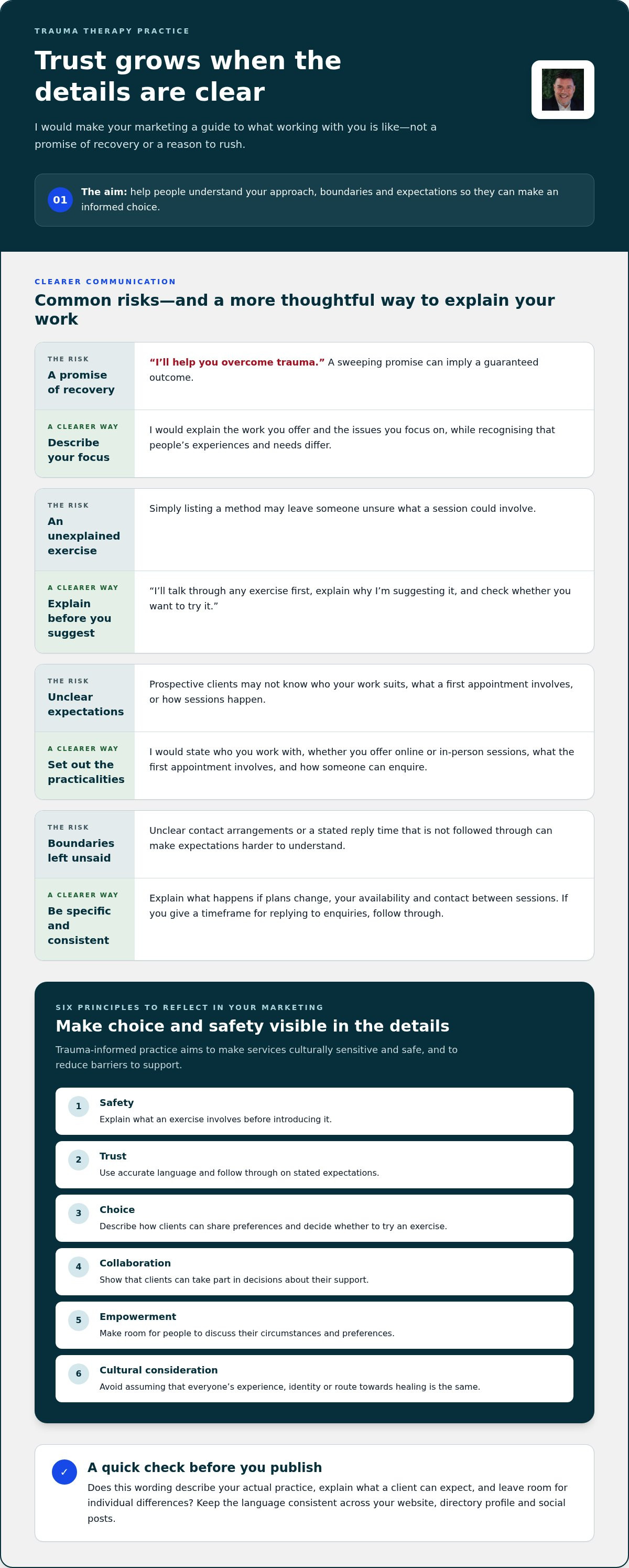
Trust comes from clear communication, not grand promises. Explain who your trauma-focused work may suit, what a first appointment involves and how someone can enquire. State whether you offer online sessions or meet in person, and use plain language so people can make an informed choice about their support.
Be specific about what clients can expect. Explain how you work, what you ask of clients and what happens if plans change. If you state a timeframe for replying to enquiries, follow through. Set clear boundaries around availability and contact between sessions. These practical details help people understand your service without implying that therapy guarantees a lasting outcome.
Trauma-informed practice aims to make services culturally sensitive and safe, and to reduce barriers to accessing support. Its six principles are safety, trust, choice, collaboration, empowerment and cultural consideration. Reflect these principles in your marketing by describing how clients can share preferences, discuss their circumstances and take part in decisions. Avoid assuming that everyone’s experiences, identity or route towards healing will be the same.
Explain interventions before introducing them. For example, your profile might say, “I’ll talk through any exercise first, explain why I’m suggesting it, and check whether you want to try it.” This gives prospective clients a clearer picture than simply listing a therapy method. It also shows how you consider emotional and psychological safety, including when someone is managing anxiety or substance-related difficulties.
Before publishing a claim, ask whether it accurately describes your practice and allows for individual differences. Replace “I’ll help you overcome trauma” with a grounded explanation of the work you offer and the issues you focus on. Use consistent language across your directory profile, website and social posts. Name any qualification or method accurately, and explain what it means for the client. Steady, clear wording helps people assess whether your approach suits them, without pressure or inflated expectations.
Trauma therapy marketing and its potential effects
Your marketing can shape how people understand symptoms, traumatic stress and their own experiences. Clear information helps prospective clients decide whether to enquire.
Marketing Channels for Trauma Practices
A website, directory profile and social media account are channels for explaining your work. A useful question is how to market a trauma therapy practice without relying on a single platform. Choose formats you can maintain, such as short educational posts or articles. Counselling Directory and Psychology Today profiles can complement your website. Costs depend on directory subscriptions, advertising spend and content production. The Private Practice Success community can help you develop practical marketing ideas.
Defining a Target Client Niche
A niche describes the clients and concerns your practice is equipped to support. Start with your training, experience and preferred work. For example, you might focus on adults affected by difficult relationships, or people experiencing anxiety after a traumatic event. Don’t suggest that everyone with a particular disorder needs the same techniques. A clear focus helps people judge whether your service suits their circumstances, without implying a specific outcome.
Local Search Visibility
To reach people through local search, make your service area and availability clear. Use relevant location wording in your page title, description tag and contact details. Keep your website and directory listings consistent, and answer common questions in useful articles. These details help search engines understand your practice and help prospective clients decide whether travelling or meeting online works for them.
Building Professional Referral Relationships
Introduce your work to GPs, charities and other clinicians with a concise note about your client group, approach and referral process. Make your contact details easy to share, and explain what information helps you respond to an enquiry. Set out what an initial call covers and offer a clear next step, such as booking through Calendly. Track enquiries by source, consultations and new clients in a simple spreadsheet. Review which channels bring suitable enquiries, not just clicks, and adjust your effort accordingly.
How can a trauma therapy practice define its target clients and niche in the UK?
Define your niche where your training, experience and preferred work meet. Start with clients you can support safely, rather than choosing a label because it sounds popular. For example, you might work with adults affected by difficult relationships, or men who find it hard to talk about painful experiences. A specific focus helps your message reach people who recognise themselves in it.
Use a simple three-part test. First, name the people you work with. Next, describe the difficulty they bring in everyday language. Then explain what your sessions offer, without promising a particular result. For example: “I support adults affected by difficult relationship experiences to understand their responses and consider what they need next.” Keep the wording accurate to your competence and approach.
- Client group: adults, young people, couples or another group you’re trained to work with.
- Presenting concern: the experiences or challenges people may bring, described without diagnosing them.
- Practical fit: your online availability and the type of support you provide.
Look for a useful level of focus. “Trauma therapy in the UK” describes a broad service; “support for men affected by traumatic experiences” identifies a more specific audience. Don’t stretch your niche to include work you aren’t equipped to offer. If someone’s needs fall outside your competence or capacity, a referral may be the safer course.
Ask a colleague who understands counselling, but hasn’t helped write your marketing, to review your draft niche. Ask who they think the service is for and what they expect it to involve. If their answer differs from your intention, make the wording plainer. Note which parts feel too broad or uncomfortable to stand behind. A niche should help the right people recognise your service while leaving room for individual circumstances and goals. Review it as your training and practice develop, rather than treating today’s wording as permanent.
What UK professional registration and advertising rules apply to trauma therapists?
Identify your professional status accurately, without implying a qualification or registration you don’t hold. The details depend on your role and professional body, so follow that body’s current guidance when describing membership, registration and practice standards. If you refer to the BACP, make clear what your relationship with it is.
Keep a short record of the qualifications and training you name on your website, Counselling Directory profile and Psychology Today listing. Check the wording against your certificates and membership details. A course in a trauma-related method is not the same as a general claim to specialist status. Describe your training precisely, then explain how it informs your work with clients.
Advertising should help prospective clients understand what you offer without creating a misleading impression. Avoid claims such as “guaranteed recovery” or “the best trauma therapist in the UK”. Instead, name your approach, intended client group and relevant experience. If you describe a method as evidence-based, be ready to explain which method you mean and what the claim refers to. Don’t suggest that one technique suits everyone or every traumatic experience.
I’d review each public profile with a simple checklist:
- Does the wording match your actual qualifications and professional status?
- Are your experience and methods described precisely, without inflated claims?
- Can a reader tell who the service is for and what an enquiry involves?
- Do your website and directory profiles present consistent information?
Review testimonials, photographs and case examples carefully. Remove identifying details from examples, and don’t present one person’s outcome as typical. If you use a client quotation, follow your professional body’s guidance and protect the person’s privacy. Clear, accurate descriptions help people decide whether to enquire while keeping your public claims grounded in your work.
Martin Hogg Private Practice Success: Practice Visibility Blueprint
Martin Hogg, through Private Practice Success, offers the Practice Visibility Blueprint for counsellors who want a clearer, more consistent way to reach suitable clients. If you know your trauma therapy focus but are unsure how to communicate it across your website, directory profiles and content, the Blueprint can help you organise your marketing steps.
Start by making your message straightforward: who you work with, what you offer and how someone can enquire. Use that focus to guide practical choices, such as what your website says above the fold and which content to create. This is a useful next step if your marketing feels scattered or you want to build visibility without relying on dramatic claims.
For support bringing your practice marketing into focus, visit martinhogg.co.uk.
Choose a clear next step for your practice
You don’t need to make your next move a full marketing overhaul. Choose one useful change, such as clarifying your one-sentence offer or making your website’s first screen easier to understand. Learning how to market a trauma therapy practice often means building a steady approach that fits your values and available time, not adding every channel at once.
If you want support putting that approach into practice, Martin Hogg’s Private Practice Success offers the Practice Visibility Blueprint and Private Practice Success Membership. For professional development, it also offers Anger Management CPD for Professionals. Choose the option that fits the work you want to focus on next.
Clear, thoughtful marketing can develop alongside your practice. Take a workable next step and keep your focus on helping people make an informed choice.
Frequently Asked Questions
How should trauma therapists create a website that builds trust and attracts clients?
Start with a simple one-page website that answers the questions prospective clients need answered before making contact. Put your one-sentence offer, location or online availability, and a clear next step above the fold. Add a short explanation of your approach and a booking option, such as Calendly. Squarespace can help you build a straightforward first version. Useful, rough-and-ready content is better than waiting for perfect copy.
How can a trauma therapy practice market its services ethically without making misleading claims or exploiting trauma?
Describe the support you provide, not a promised transformation. Explain that you work with people affected by difficult experiences, then describe what sessions may involve. Avoid distressing images, dramatic personal stories and language suggesting someone must act immediately. Before publishing, review each claim and ask whether it gives a fair picture of your service. Keep educational content focused on useful information, not diagnosing readers from a post.
Which social media and content marketing channels work best for trauma therapy practices?
Use a website, directory profiles and social media, choosing formats you can maintain, such as short educational posts or articles. Counselling Directory and Psychology Today profiles can complement your website.
How can a trauma therapy practice measure marketing performance, enquiries and client acquisition costs?
Track enquiries by source, consultations and new clients in a simple spreadsheet. Review which channels bring suitable enquiries, not just clicks, and adjust your effort accordingly.
Disclaimer
The information provided on this blog is for general informational purposes only. It is also not intended to be a substitute for professional medical or mental health advice, diagnosis, or treatment. Reading this content does not create a therapist-client relationship.


