
Instagram for Therapists Guide: Building a Human Connection in a Digital World
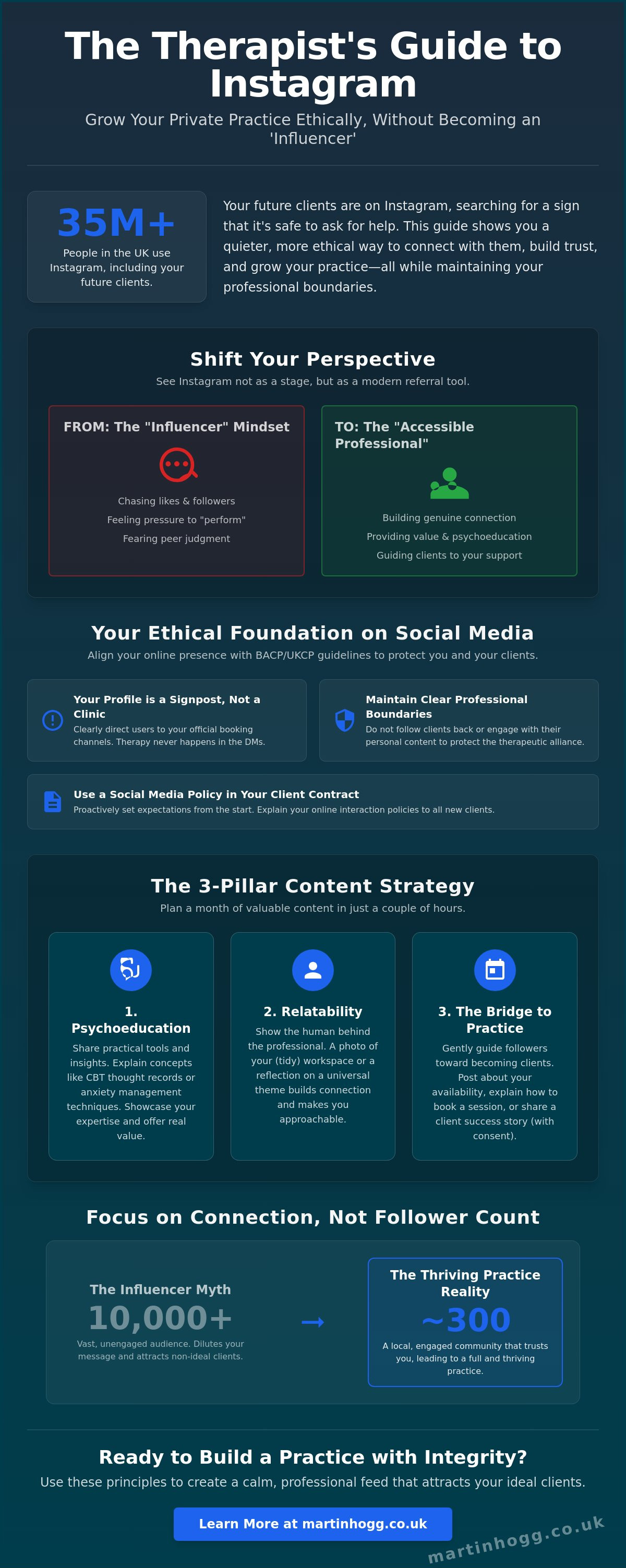
You don't need to become an "influencer" to find success on social media. With over 35 million people in the UK using the platform as of 2024, your future clients are already there, looking for a sign that it's okay to ask for help. I know the hesitation you're feeling. You've spent years training as a professional, and the idea of "performing" for a camera feels completely jarring. You likely worry about dual relationships or the fear of being judged by your peers. It's common to feel overwhelmed by the technology when your clinical hours are already demanding. This instagram for therapists guide is here to show you that there's a quieter, more ethical way to grow your private practice.
You can build a genuine human connection with those who need your support without losing your professional identity or your spare time. I'll show you how to use the platform as a tool for good, keeping your boundaries intact while you reach people who truly need your expertise. We'll walk through a practical strategy to create a calm feed that feels like a natural extension of your therapy room, ensuring you get more enquiries from your ideal clients while staying firmly within your ethical guidelines.
Key Takeaways
- Understand why being visible on social media is about helping clients find the right support, rather than chasing likes or popularity.
- Learn how to share your professional voice using this instagram for therapists guide to balance being relatable with maintaining clear clinical boundaries.
- Get practical steps to set up a professional profile that clearly explains who you help and how they can book a session with you.
- Master a simple three-pillar content strategy that allows you to plan a month of posts in just a couple of hours.
- Discover how to build a quiet, trust-based path that moves people from browsing your feed to getting their life back on track in your therapy room.
Why Instagram Matters for UK Therapists (and the Ethics of Being Seen)
Many counsellors I talk to in Birmingham and across the UK feel a bit of a shudder when they think about Instagram. It feels like a world of filters and vanity, far removed from the quiet, sacred space of the therapy room. I want to shift your perspective. Instagram isn't a popularity contest; it's a modern referral tool. It's often the first place a person in distress looks to see if a therapist feels "safe" before they ever pick up the phone.
A digital presence is now a core part of what I call the Practice Visibility Blueprint. It's about being where the people are. In 2023, the BACP Public Perception Survey found that 86% of people believe it's more acceptable to talk about mental health than it was five years ago. This shift is happening because we are making ourselves visible. Using this instagram for therapists guide will help you show up with integrity, ensuring you don't lose your professional identity while trying to help people get their lives back on track.
I know the fear of peer judgement is real. You might worry about "dual relationships" or what a clinical supervisor might think of a reel. However, Social media therapy concepts show us that providing psychoeducation online is a powerful way to bridge the gap between suffering and support. It's about being an accessible professional, not a distant medical figure.
The Ethical Framework for Social Media
Your online presence must align with BACP or UKCP ethical guidelines. This means maintaining clear boundaries. I always tell practitioners that therapy never happens in the DMs. Your profile should be a signpost, not a clinic. It's vital to include a social media policy in your initial client contract. This document explains that you won't follow clients back or interact with them on public platforms, which protects the therapeutic alliance from the start.
The Shift from Influencer to Accessible Professional
You don't need 10,000 followers to have a successful private practice. In fact, chasing big numbers often dilutes your message. I've seen therapists with 300 followers run full, thriving practices because those 300 people are local and engaged. Focus on "micro-connections" within your UK community. When you share practical, grounded advice, you help de-stigmatise mental health support. You're showing that therapy is a normal, healthy part of being a "citizen" in today's world. If you want to discuss how to balance your professional boundaries with a growing practice, you can book a slot on my calendar to chat about your specific situation.
Finding Your Professional Voice: Relatability vs. Oversharing
Choosing how much of yourself to show online can feel like a tightrope walk. You want to be approachable, yet you must maintain the professional boundaries that keep the therapeutic relationship safe. In this instagram for therapists guide, we focus on finding a middle ground that builds trust without compromising your privacy. Potential clients aren't looking for a polished, corporate brand; they're looking for a human being. When someone is in crisis, they want to know if you're a person they can actually talk to. Showing your face and sharing your perspective helps bridge that gap before the first session even begins.
There's a vital distinction between being authentic and being vulnerable for the sake of marketing. Authenticity means being the same person online as you are in the therapy room. It doesn't mean sharing your current personal struggles or raw emotions that haven't been fully processed. Your profile should be a beacon of stability and hope. When you follow an instagram for therapists guide, the goal is always to make the path to the therapy room feel shorter and less intimidating for those who need it most.
Defining Your Content Pillars
To keep your feed balanced and professional, it helps to categorise your posts into three main pillars. This ensures you provide actual value rather than just "performing" for the algorithm.
- Psychoeducation: Share practical tools that help people manage anxiety or improve communication. If you're a CBT practitioner, you might explain how a simple thought record works. This shows people how they can start getting their life back on track.
- Relatability: This is the human side. It might be a photo of your workspace or a book you're currently reading. It shows you're a real person, perhaps enjoying a walk in the Lickey Hills or a quiet coffee, without oversharing your private life.
- Authority: Mention your latest CPD training or your years of clinical experience. This reminds your audience that they're in safe, expert hands.
Managing the Fear of Visibility
It's natural to feel a bit of "imposter syndrome" when you first start posting. You might worry about what colleagues think or feel like you're being too visible. Remember that your professional voice is a tool for client recovery. Every time you share a helpful insight, you're potentially reaching someone who is too anxious to pick up the phone. If the pressure to perform feels heavy, take a step back and focus on the one person you want to help today. For more advice on building your presence from the ground up, you can read my advice on Starting and Growing a Private Practice.
Staying grounded is about consistency over perfection. You don't need a professional film crew; you just need to be clear, kind, and helpful. If you'd like to chat about how to balance your clinical work with your online presence, feel free to book a time for us to talk.
Setting Up Your Practice Profile for Trust and Clarity
Your Instagram profile acts as the digital front door to your private practice. When someone arrives, they should feel the same sense of relief they might feel walking into a well-lit, comfortable therapy room. To make this happen, you first need to decide on your account type. I always recommend switching to a Professional or Creator account. This change gives you access to "Insights," which are essential metrics that show you exactly which posts are helping people and which are being ignored. Without this data, you're just guessing, and your time is too valuable for that.
The first thing a visitor sees isn't your text; it's your profile picture. In the world of private practice, human connection is everything. Avoid using a generic logo or a stock image of a pebble. A clear, professional headshot of you looking approachable builds immediate rapport. It tells the visitor that there's a real person ready to listen. In a digital space that can often feel cold or performative, your face is a beacon of authenticity. It shows you're a practitioner who is present and ready to help.
The Anatomy of a Perfect Therapist Bio
You only have 150 characters to explain how you can help. This instagram for therapists guide suggests a simple formula: who you help, how you help, and the result they can expect. For example, "Helping men in Birmingham manage anxiety so they can get their lives back on track." It's direct and lacks fluff. You must also include your professional credentials, such as MBACP or UKCP. This isn't about ego; it's about safety and professional standards in the UK. Finally, include a clear call to action. Tell them exactly what to do next, like "Book a free 15-minute consultation below."
Visuals and the "Calm" Aesthetic
Your "grid" is the collection of images and videos on your profile. It should feel steady and intentional. You don't need to be a graphic designer to achieve this. Tools like Canva allow you to pick a simple colour palette, perhaps soft blues or earthy tones, and two consistent fonts. This consistency creates a "calm" aesthetic that mirrors the stability you provide in a session. When your content looks organised, it suggests your practice is too. It lowers the barrier for those who feel overwhelmed.
A smart "Link in Bio" strategy is the final piece of the puzzle. Don't send people to a cluttered homepage where they have to hunt for information. Use a direct link to your booking page or a simple landing page with three clear options. Making it easy for a client to find your calendar is a practical way to show you value their time and energy. It turns a moment of interest into a tangible step toward recovery.
Content That Connects: What to Post Without Burning Out
Many counsellors I talk to feel drained just thinking about what to post. It does not have to be a full-time job. This instagram for therapists guide works best when you follow a simple three-pillar strategy: Educate, Connect, and Invite. By categorising your thoughts into these areas, you stop staring at a blank screen and start sharing meaningful content.
To keep this sustainable, I recommend batching your content. You can plan a whole month of posts in about 120 minutes. Map out your topics on a quiet Friday afternoon, write your captions, and use a scheduling tool. This approach protects your energy for the clinical work that matters most.
Your choice of format determines your reach. Reels are excellent for reaching people who do not follow you yet; they are short, punchy, and favoured by the algorithm. Static posts are better for depth and education. Stories are the place for the "human" side of your practice. Use them to show your workspace, the books on your shelf, or even your morning brew. These small glimpses build the trust necessary for someone to reach out.
Psychoeducational Posts That Provide Value
People visit your profile because they are looking for a way out of their struggle. You can explain concepts like CBT or EMDR without using heavy clinical jargon. Speak to the person, not the textbook. Share a simple grounding technique for panic or three ways to set a firm boundary at work. This positions you as an expert who is also relatable. If you're looking for a broader view on building your practice, my Marketing for Therapists in the UK guide offers more context on these strategies.
Engagement and Interaction
When someone leaves a comment, respond with professional warmth. You aren't starting a therapy session; you're acknowledging a human being. Use polls or the "ask a question" sticker in Stories to see what your followers are currently finding difficult. This gives you a clear idea of what to write about next. To avoid the trap of constant scrolling, set strict "social media hours". Check your notifications for 15 minutes twice a day, then close the app. This instagram for therapists guide is about making the platform work for you, not the other way around.
If you're feeling stuck with your strategy and want some direct support, you can book a time to talk with me.
Turning Followers into Clients: The Bridge to Your Practice
Moving a person from a double-tap on a photo to a booked initial consultation is a quiet, gradual process. I often call this the invisible funnel. Unlike traditional advertising, where a person sees an ad and buys immediately, therapy requires a much deeper level of trust. A potential client might follow you for six months, reading your posts on anxiety or grief, before they ever feel brave enough to reach out. This instagram for therapists guide is designed to help you build that bridge of trust, one post at a time.
You'll know your content is working when the "likes" turn into specific questions. However, Instagram is a public space, and therapy is private. You must have a clear plan for when to move the conversation. As soon as someone shares personal details or asks about sessions, it is time to transition them to a secure, encrypted environment. This protect both your professional boundaries and their privacy.
To see if your efforts are paying off, track your results with simple data. Don't just look at follower counts. Instead, add a "How did you hear about us?" question to your intake form. If you find that 20% of your new enquiries come from social media, you know your strategy is working. This approach ensures Instagram isn't just a hobby, but a functional part of your broader Practice Visibility Blueprint.
The Direct Path to Booking
Make it easy for people to find the information they need. Use your "Highlights" circles to answer the most common questions. Include a section for your fees in £, your location, and exactly what happens in the first session. This reduces the anxiety of the unknown. When it comes to Direct Messages, keep it brief and ethical. I recommend having a polite template ready. It should acknowledge their message and kindly invite them to contact you via your secure work email or booking link. If you want to master these practical business skills, check our CPD and Workshop Calendar for upcoming marketing training sessions.
Consistency Over Intensity
I've seen many talented counsellors start with great energy, posting every day for a week, only to disappear when they feel overwhelmed. This intensity leads to burnout. It's much better to post twice a week for a whole year than to be hyper-active for a single month. Building a sustainable habit is what supports long-term business growth. It allows you to stay present in the digital space without it taking over your life. Your voice is needed. There are people in our community who are looking for exactly the kind of support you provide. Stay steady, stay authentic, and keep showing up for them.
Putting Your Practice Visibility Into Action
Building a presence on social media doesn't have to mean losing your professional identity or your privacy. It's about showing up as a grounded, real person so that potential clients in the UK feel safe enough to reach out. By setting clear ethical boundaries and focusing on helpful, relatable content, you create a sturdy bridge between a casual scroll and a first session. This instagram for therapists guide is designed to help you manage your digital space without the burnout that often follows when we try to do too much at once.
Marketing your practice is a practical skill, much like the therapeutic work you do in the room. I've spent over 20 years in UK private practice, and I've seen how a steady, intentional approach changes everything. As a BACP-endorsed workshop provider and the creator of the Practice Visibility Blueprint, I focus on results that actually help you get your life back on track. You don't need to be a marketing expert; you just need a plan that feels right for a professional counsellor.
If you're ready to grow your practice with confidence and clarity, I'd love to support you. Join the Private Practice Success Membership to master your marketing and start building the visibility you deserve. Your work is important, and the right clients are waiting to find you.
Frequently Asked Questions
Is it ethical for a therapist to have a public Instagram account?
Yes, it's entirely ethical for a therapist to maintain a public profile as long as you follow the BACP Ethical Framework (2018) regarding professional boundaries. You're acting as an educator rather than a clinician when you post. This instagram for therapists guide focuses on providing general value to the public, which is a vital part of making mental health support accessible to everyone in our community.
How do I handle current clients following me on social media?
I always suggest addressing social media directly in your initial contracting process so everyone knows where they stand. It's helpful to include a specific social media policy in your informed consent paperwork that explains you don't follow clients back to protect their confidentiality. If a client does follow you, there's no need to panic; just maintain your professional boundaries as you would if you bumped into them at the local supermarket.
What should I do if a client sends me a therapeutic message in the DMs?
You should acknowledge the message briefly and then redirect the conversation to your secure professional email or suggest discussing it in your next scheduled session. It's important to state clearly that Direct Messages aren't a secure or monitored way to receive psychological support. I've found that setting this boundary early prevents the therapeutic relationship from becoming blurred by the casual nature of social media apps.
Do I need to show my face on my professional Instagram page?
You don't have to be on camera every day, but showing your face occasionally helps build the trust necessary for someone to book a session. A 2023 study by Sprout Social found that 70% of people feel more connected to a brand when the owner is visible. If you're feeling camera-shy, start by sharing a professional headshot or a short video of your therapy room to help potential clients feel at ease.
How often should a therapist post on Instagram to see results?
Consistency is much more important than frequency, so aiming for two or three quality posts a week is a great starting point. Research from Hootsuite in 2024 suggests that regular, predictable posting is better for engagement than a sudden burst followed by weeks of silence. Don't let the pressure to create content overwhelm you; it's better to post once a week than to burn out and stop altogether.
Can I use Instagram to find other therapists for networking and referrals?
Instagram is a brilliant tool for connecting with peers and building a referral network across the UK. By following other professionals and engaging with their content, you can find like-minded counsellors who specialise in areas different from your own. This peer support is invaluable for private practitioners who might otherwise feel isolated, and it often leads to a steady stream of cross-referrals when your own books are full.
Should I keep my personal and professional Instagram accounts separate?
I strongly recommend keeping your private life and your professional practice on separate accounts to maintain healthy boundaries. This instagram for therapists guide is designed to help you build a professional presence that reflects your expertise without compromising your privacy. Having a dedicated business account also gives you access to professional tools and analytics that aren't available on a standard personal profile.
How do I deal with trolls or negative comments on mental health posts?
You can handle negative comments by using the "Restrict" or "Block" features to keep your page a safe space for your followers. While a 2022 survey by the Center for Countering Digital Hate showed that online harassment exists, most therapists find that negative interactions are very rare. Don't waste your emotional energy arguing with people; simply delete the comment, block the user if necessary, and stay focused on the people who truly value your support.


