
LinkedIn for Therapists: A Practical Guide to Client Attraction in 2026
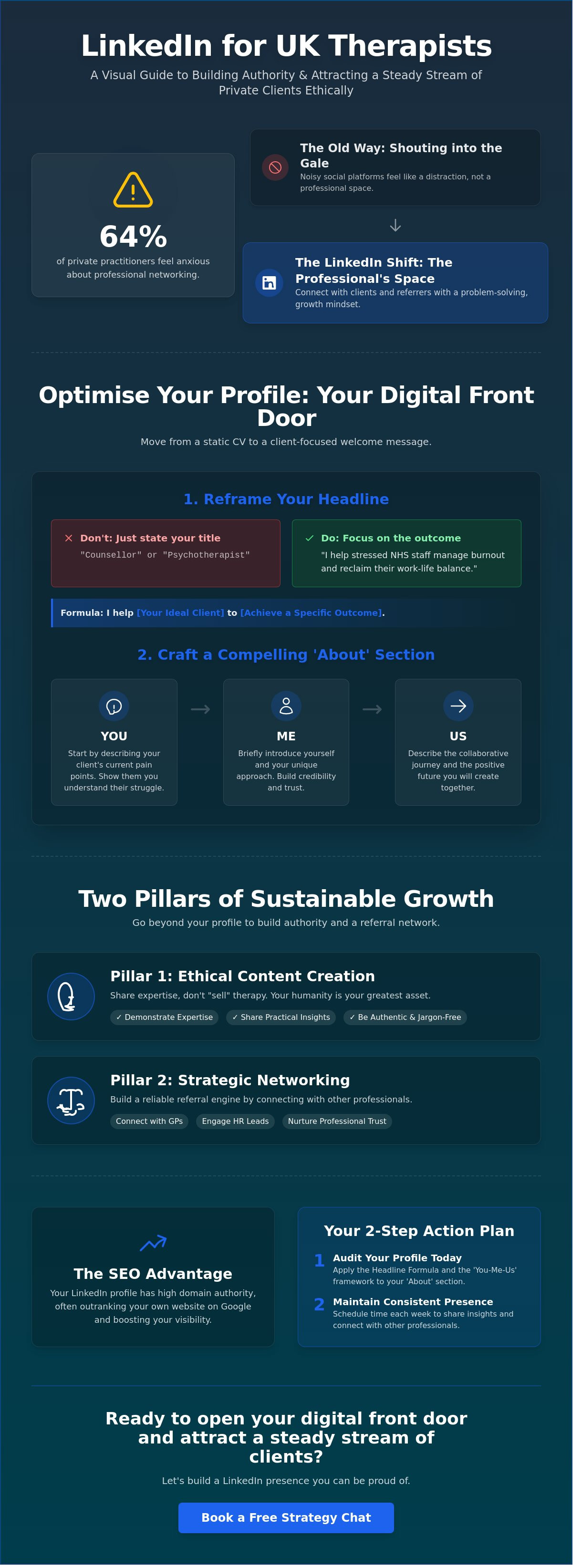
What if you could fill your practice without ever feeling like you're selling your soul to a corporate algorithm? Many UK counsellors I speak with feel invisible in an increasingly crowded market, yet a 2024 industry survey found that 64 percent of private practitioners feel genuine anxiety about putting themselves out there on professional networks. It's completely normal to worry that focusing on linkedin for therapists client attraction might feel too clinical or, worse, like a hollow sales pitch. You want to help people, not become a full-time marketing expert.
I understand the hesitation that comes with sharing your work online. You've spent years training to help others, and you want your professional presence to reflect that depth rather than sounding like a generic business advert. This guide will show you how to use LinkedIn ethically to build real authority and attract a steady stream of private clients. We'll look at how to build a profile you're proud of, a clear plan for your weekly posts, and how to secure consistent referrals from other professionals to get your practice back on track.
Key Takeaways
- Understand why LinkedIn is becoming the primary space for UK therapists to build professional authority and reach people who are looking for serious, grounded support.
- Learn how to rewrite your profile headline and 'About' section so they speak directly to your ideal client's struggles rather than just listing your clinical qualifications.
- Master a respectful strategy for linkedin for therapists client attraction by sharing practical insights that demonstrate your expertise without ever feeling like you are 'selling' therapy.
- Identify how to build a reliable referral engine by connecting with GPs, HR leads, and other professionals through authentic, jargon-free outreach.
- Get a clear, two-step action plan to audit your current profile and maintain a consistent presence that fits comfortably around your existing clinical hours.
Why LinkedIn is a Vital Tool for UK Private Practice Growth
If you have spent any time on Facebook or Instagram lately, you will know they can feel a bit noisy. For a therapist looking to grow a practice, those platforms often feel like shouting into a gale. LinkedIn is different. It is a professional networking platform where people don't just scroll for distraction; they show up to solve problems. By 2026, the trend of using LinkedIn for professional authority building will be the standard for UK healthcare providers. This shift means your profile is no longer just a static page. It is a way to reach private pay clients who are already invested in their personal development and professional referrers who need a trusted pair of hands.
I talk to many counsellors in Birmingham and across the UK who worry they aren't corporate enough for the platform. They fear their empathetic voice will get lost among the spreadsheets and sales pitches. The reality is that your humanity is your greatest asset. In a world of automated content, a real person talking about real struggles like anxiety, trauma, or burnout stands out. You aren't there to be a suit; you are there to be a guide. Your human, empathetic voice is what builds the trust necessary for linkedin for therapists client attraction to actually work.
The Professional Advantage for Counsellors
LinkedIn users often have a growth mindset. They are looking for ways to improve their lives, which aligns perfectly with the work we do in the therapy room. There is a practical SEO benefit too. Because LinkedIn has such high domain authority, your profile will often appear on page one of Google, sometimes even outranking your own practice website. For a therapist in a competitive local market, this is a massive advantage. Whether you are following BACP ethical guidelines or connecting with local West Midlands businesses, being visible here builds a bridge to those who need you most. It allows you to position yourself as a specialist rather than a generalist.
Moving Beyond the Digital CV
A common mistake is treating your profile like a resume. If you are looking for a job, a list of your past roles is fine. If you are looking for linkedin for therapists client attraction, you need to speak directly to the person in pain. Your profile should focus on how you help, not just where you studied. It is about moving from "here is what I have done" to "here is how I can help you get your life back on track." Your LinkedIn profile is the digital front door for your practice, welcoming clients in before they even book a session. If you want to discuss how to open that door wider, you can book a time to chat on my calendar.
Optimising Your LinkedIn Profile to Attract Your Ideal Therapy Clients
Your LinkedIn profile is more than a digital CV; it is your online practice room. When a potential client or a professional referrer lands on your page, they should immediately feel a sense of relief. They need to know you understand their struggle and have a clear plan to help them. This shift in focus is the foundation of linkedin for therapists client attraction. It moves the spotlight away from your credentials and onto the person seeking help.
Start with your headline. Most therapists simply put "Counsellor" or "Psychotherapist," but this doesn't tell a client how you can help them. Instead, use a formula like "I help [specific group] achieve [specific outcome]." For example, "I help stressed NHS staff manage burnout and reclaim their work-life balance." This speaks directly to the reader. It shows you aren't just a general practitioner, but someone who understands their unique world. Use the Featured section to support this by pinning a short video introduction or a link to a helpful guide you've written. This builds trust before you even have your first session.
Crafting a Compelling 'About' Section
The 'About' section is where you can build a real human connection. I recommend using the 'You-Me-Us' framework. Start by describing the reader's current pain points. If you specialise in anxiety, describe the physical sensations and the mental exhaustion they feel. This shows you're listening. Next, introduce yourself and your approach briefly. Mention your experience in marketing for therapists uk to show you understand the professional landscape. Finally, describe the 'Us'-what the therapeutic journey looks like and the positive changes they can expect. Don't hide your contact details. Make it incredibly simple for someone to find your email or a link to book a quick conversation to discuss their needs.
Visual Trust Signals and Professionalism
Visuals create an immediate emotional response. According to LinkedIn's own data, profiles with a professional headshot receive 21 times more profile views. Your photo should be clear, well-lit, and friendly. You don't need a suit, but you do need to look like someone a client would feel safe talking to. Your banner image is equally important. Avoid the default LinkedIn blue background. Instead, use an image that reflects your work, such as a calming landscape or a tidy, welcoming therapy room in your UK practice.
Finally, set up your 'Service Page.' This is a specific LinkedIn feature that allows you to list 'Counselling' or 'Coaching' as a service. It makes you more discoverable in search results when people look for help locally. Don't forget to list your core skills, such as CBT or EMDR, and ask a few colleagues for endorsements. These small signals of clinical credibility go a long way in reassuring a nervous client that they are in safe, experienced hands.
Creating Ethical Content: How to Share Your Expertise Without Sounding Salesy
Many of us feel a bit uneasy when we think about marketing. We worry about looking like we're chasing sales rather than helping people. The reality is that linkedin for therapists client attraction works best when you stop trying to sell and start trying to be useful. Think of yourself as a helpful expert. You're sharing bits of wisdom that someone can use right now, even if they never book a session with you. This builds trust without you ever having to use a hard pitch.
I suggest focusing on three main pillars: clinical insights, myth-busting, and practical self-care. Use UK English and keep your tone warm and conversational. Avoid the cold, academic language we often use in clinical reports. If you're explaining attachment styles, talk about how it feels when a partner doesn't text back, rather than just quoting theory. You must maintain your professional boundaries, too. You don't have to share your personal life to be authentic. Share your professional perspective instead. It's about being human, not being an open book.
What to Post: 3 Simple Content Templates
You don't need to be a professional writer to create impactful posts. Use these three frameworks to get started:
- The 'Common Question' post: Think about the questions people ask you during an initial consultation. "How do I know if therapy is working?" or "What happens if I cry?" Answering these publicly helps lower the barrier for others.
- The 'Clinical Insight' post: Take a concept like burnout and explain it simply. Use a metaphor that makes sense in daily life, like a phone battery that won't hold its charge. This makes your expertise accessible.
- The 'Behind the Scenes' post: Share a photo of your therapy room or the books on your desk. This shows the human side of your counselling private practice uk. It helps potential clients picture themselves sitting across from you.
Engagement: The Secret to Visibility
LinkedIn rewards conversation. Spending 10 minutes commenting on a colleague's post is often more effective than writing a long essay of your own. If someone disagrees with you, respond with the same calm curiosity you'd use in the therapy room. This approach to linkedin for therapists client attraction is about being a steady, reliable presence in your professional community. A 20-minute daily routine is plenty for most practitioners. Check your notifications, leave three thoughtful comments, and share one helpful thought. It's about consistency, not intensity. You'll find that being a supportive member of the community does more for your reputation than any advert ever could.
Strategic Networking: Building a Referral Engine Beyond Direct Client Outreach
I often see therapists focusing solely on talking to potential clients. While that's important, the real strength of linkedin for therapists client attraction lies in connecting with the people who already have the trust of your ideal clients. These are your referral partners. In my experience, a single solid relationship with a local GP, an HR lead, or a family law solicitor can result in a steady stream of work that lasts for years. You aren't just looking for one person in distress; you're looking for the gatekeepers who support people before they even realize they need therapy.
When you reach out to these professionals, avoid the "salesy" approach. Nobody likes a cold pitch in their inbox. Instead, send a personalized connection request that mentions something specific about their work. You might say, "I noticed your recent post on workplace stress in Birmingham firms and found your perspective on burnout very grounding. I'm a local counsellor specializing in trauma, and I'd love to connect." It's about being a human first and a practitioner second. This approach helps you stand out from the automated spam that litters most professionals' feeds.
Finding Your Professional Tribe
Start by using the LinkedIn search bar to find local professionals who serve your demographic. If you work with parents, look for local school governors or pediatric specialists. If you specialize in executive burnout, search for HR Directors within a 20-mile radius. Once you've connected, don't let the relationship go cold. I suggest moving these conversations from the LinkedIn inbox to a 15-minute virtual coffee or a brief discovery call. It’s much easier to build trust when you can hear someone's voice and share your philosophy on how you help people get their life back on track.
Don't forget the value of peer-to-peer networking. Joining UK-specific groups like the 'Counsellors Staffroom' or local mental health networks allows you to share knowledge and refer clients when your own diary is full. A 2023 survey of private practitioners found that 60% of high-quality referrals came from professional networks rather than direct social media searches. Giving and asking for professional recommendations on your profile also adds a layer of "social proof" that reassures both partners and clients of your clinical authority.
Collaborating for Practice Growth
LinkedIn is a fantastic tool for finding collaborators. You might find a guest for your blog or a speaker for a local workshop you're hosting. These collaborations often lead to unexpected cpd for counsellors uk opportunities, as you learn from other experts in complementary fields. Referral building is a slow-burn strategy that yields the highest quality clients. It requires patience and a genuine desire to be helpful to your peers, but the stability it brings to a private practice is well worth the effort.
If you're feeling overwhelmed by the technical side of networking and want a practical plan to grow your practice, I'm here to help. You can book a discovery call with me to discuss how we can get your referral engine running.
Moving from Connection to Consultation: Your LinkedIn Action Plan for 2026
Building a presence on LinkedIn isn't about becoming a social media influencer or spending hours every day glued to a screen. It's about being visible to the person who is currently sitting at their desk, feeling overwhelmed, and looking for a sign that things can get better. By following a structured, practical plan, you can turn this platform into a reliable tool for linkedin for therapists client attraction without it taking over your life or draining your energy.
- Step 1: Audit your current profile. Go through your page with a "Client-First" lens. Does your headline focus on your academic qualifications, or does it explain the specific problem you help people solve? Your profile should act as a warm invitation to a conversation, not a cold, clinical CV.
- Step 2: Commit to a 30-day consistency challenge. Aim for just two posts per week. One post could share a practical tip for managing anxiety, while the other might reflect on a common hurdle your clients face. This steady rhythm builds trust and keeps you at the front of people's minds.
- Step 3: Reach out to 5 potential referral partners. Identify five professionals, perhaps local GPs, HR managers, or even other therapists with different specialisms, and send a personalised message. Focus on how you can support their network rather than simply asking for a favour.
- Step 4: Track your consultation requests. Keep a simple tally of where your leads come from. If a specific topic or type of post triggers more enquiries, you'll know exactly what your audience needs to hear more of.
Measuring Success Beyond 'Likes'
It's easy to feel discouraged if a post doesn't get dozens of likes, but vanity metrics rarely reflect the health of a private practice. In the world of therapy marketing, a "quiet" profile view or a thoughtful private message is far more valuable than a viral post seen by thousands of people who aren't your target audience. When someone does reach out, make the transition to a professional setting as smooth as possible. Direct them to your calendar for a brief introductory call. If you find yourself spending hours on the platform without seeing these real-world results, it's a clear sign that you might need more structured support to refine your visibility.
Next Steps for Your Private Practice
The Practice Visibility Blueprint is designed to take the guesswork out of your strategy, helping you focus on the activities that actually fill your diary. It simplifies the process so you can spend less time worrying about algorithms and more time doing the work you're trained for. Success on LinkedIn requires a blend of patience, persistence, and that essential human touch that therapists provide so well. Stay authentic, keep showing up, and remember that your next ideal client is likely looking for exactly the kind of help you offer. Ready to grow? Join our community of successful therapists and let's get your practice back on track.
Taking Your Next Step Toward a Thriving Practice
Building a sustainable private practice doesn't have to feel like an uphill struggle. By optimising your profile and sharing your expertise ethically, you can turn a professional platform into a steady stream of referrals. We've looked at how linkedin for therapists client attraction works best when you show up as your authentic self, focused on helping others rather than just selling a service. It's about building trust through consistent, helpful content and connecting with fellow professionals who can support your journey.
I know that putting yourself out there can feel daunting, especially when you're balancing clinical work with the demands of running a business. With over 20 years of experience in UK private practice, I've seen how the right, no-nonsense strategies can replace overwhelm with clarity. As a BACP-endorsed workshop provider, my goal is to help you get your practice on track so you can focus on what you do best. You've got the skills to make a difference; now let's make sure the people who need you can find you.
If you're ready to move beyond the theory and start seeing real results in 2026, I'm here to guide you. Discover how the Practice Visibility Blueprint can grow your practice and provide the practical support you need. You're doing vital work, and it's time your visibility reflected that.
Frequently Asked Questions
Is LinkedIn actually effective for therapists who don't work in corporate settings?
Yes, LinkedIn is a powerful tool for therapists even if you don't aim for corporate contracts. Research shows that 40% of LinkedIn users access the platform daily to improve their professional lives, which often includes managing stress or work-life balance. Your ideal clients are already there, looking for someone who understands their specific pressures. Using LinkedIn for therapists client attraction allows you to reach people who value their mental health as much as their careers.
What should I do if a current or former client tries to connect with me on LinkedIn?
You should politely decline the request or simply leave it pending to protect therapeutic boundaries. It's best practice to include a clear social media policy in your initial client contract. Data from the BACP suggests that maintaining clear digital boundaries prevents dual relationships that could complicate therapy. If they message you, a brief, pre-written response explaining your professional policy on social media connections usually settles the matter without causing any offence.
How much time do I realistically need to spend on LinkedIn to see results?
You can see real progress by spending just 20 minutes a day, three times a week on the platform. Consistency matters far more than the total number of hours you put in. Use this time to share one helpful post and reply to three comments from others in your network. Setting a timer helps you stay focused and prevents the scrolling that can make social media feel like an exhausting chore.
Can I post about my specific therapeutic modalities like CBT or EMDR on LinkedIn?
You can certainly post about your modalities, provided you translate the clinical terms into practical benefits. Instead of just saying you offer EMDR, explain how it helps a person process a difficult memory so they can finally sleep better. A 2023 survey found that 70% of therapy seekers find clinical jargon confusing. Focus on the results your clients experience, making your expertise in CBT or Transactional Analysis feel accessible rather than academic.
Is it ethical for therapists to have a 'Service Page' with reviews on LinkedIn?
It's ethical to have a Service Page, but you must avoid using the review feature for therapy clients. The BACP Ethical Framework prohibits soliciting testimonials from current or former clients because of the inherent power imbalance. You can use the Service Page to list your fees and specialities, but keep the reviews section turned off or empty. Focus your LinkedIn for therapists client attraction strategy on sharing valuable insights rather than relying on client ratings.
How do I deal with 'Imposter Syndrome' when posting professional content?
You handle imposter syndrome by shifting your focus from yourself to the person you're trying to help. Remember that you don't need to be the world's leading expert; you just need to be one step ahead of the person who is struggling. Start by sharing a simple tip that worked for a client this week. When you write for one specific person rather than a faceless crowd, the pressure to be perfect usually starts to fade away.
What is the best time of day for a therapist to post on LinkedIn for maximum reach?
The best time to post is generally between 8 am and 10 am on Tuesdays, Wednesdays, and Thursdays. This is when UK professionals are typically checking their feeds as they start their workday. The most important thing is to post when you're actually available to respond to comments. Engaging with people in the first 60 minutes after posting helps the LinkedIn algorithm show your content to a wider audience.
Do I need a LinkedIn Premium account to attract therapy clients?
You don't need a Premium account to build a successful private practice through LinkedIn. The basic free profile allows you to post content, join groups, and connect with potential referrers without any monthly fee. While Premium offers extra search filters and InMail credits, these features are usually more suited for recruiters than for therapists. Save that monthly cost and focus on creating authentic, helpful content that resonates with your local community.


