
Marketing a trauma-informed practice with empathy and care

Article by
Martin Hogg
I help Private Practice counsellors in the UK set up and grow an ethical Private Practice they love, work with their ideal clients, and earn the income they deserve. All without guesswork and burnout. I have been a private practice counsellor myself for over 20 years, specialising in anger management. I set up a not-for-profit social enterprise, Citizen Coaching and Counselling, which delivers thousands of counselling sessions a year to adults and young people in Birmingham. I am a registered BACP Counsellor and the author of three books, My Anger Coach, My Anxiety Coach and My Relationship Coach. These are available on Amazon.
Your marketing can help someone feel safer before they ever speak to you. Marketing a trauma-informed practice means using clear, empathetic language that respects people’s choices and avoids shame, false urgency and sensationalism. People experience trauma differently, so no single message or approach will suit everyone.
You already know trust matters in counselling. The challenge is showing that care in your website copy, directory profiles and social posts without sounding stiff or saying more than you can stand behind. You don’t need a dramatic story or a promise of a quick fix to help the right people understand what you offer.
This guide explains how to choose considerate language, tell grounded stories without exploiting anyone’s experience, and describe your work honestly. Use these practical steps to make your marketing clearer, more welcoming and more consistent with the practice you want to build.
Key Takeaways
- Choose language that respects different experiences and gives people room to decide what feels right for them.
- Make your website and directory profiles clear about your approach, what you offer and what someone can expect next.
- Share stories that centre people’s agency and growth, without relying on fear or dramatic details to attract attention.
- Use the Practice Visibility Blueprint when you want practical support making your marketing clearer and more consistent with your values.
1. Empathetic language and survivor-centred messaging
Write as though someone with lived experience is reading every page, because they may be. Trauma affects people differently, so avoid language that assumes a particular history, response or route to recovery. The U.S. Department of Veterans Affairs notes that not every stressful event is trauma that can lead to PTSD. Recognise that distinction rather than labelling a reader’s experience for them.
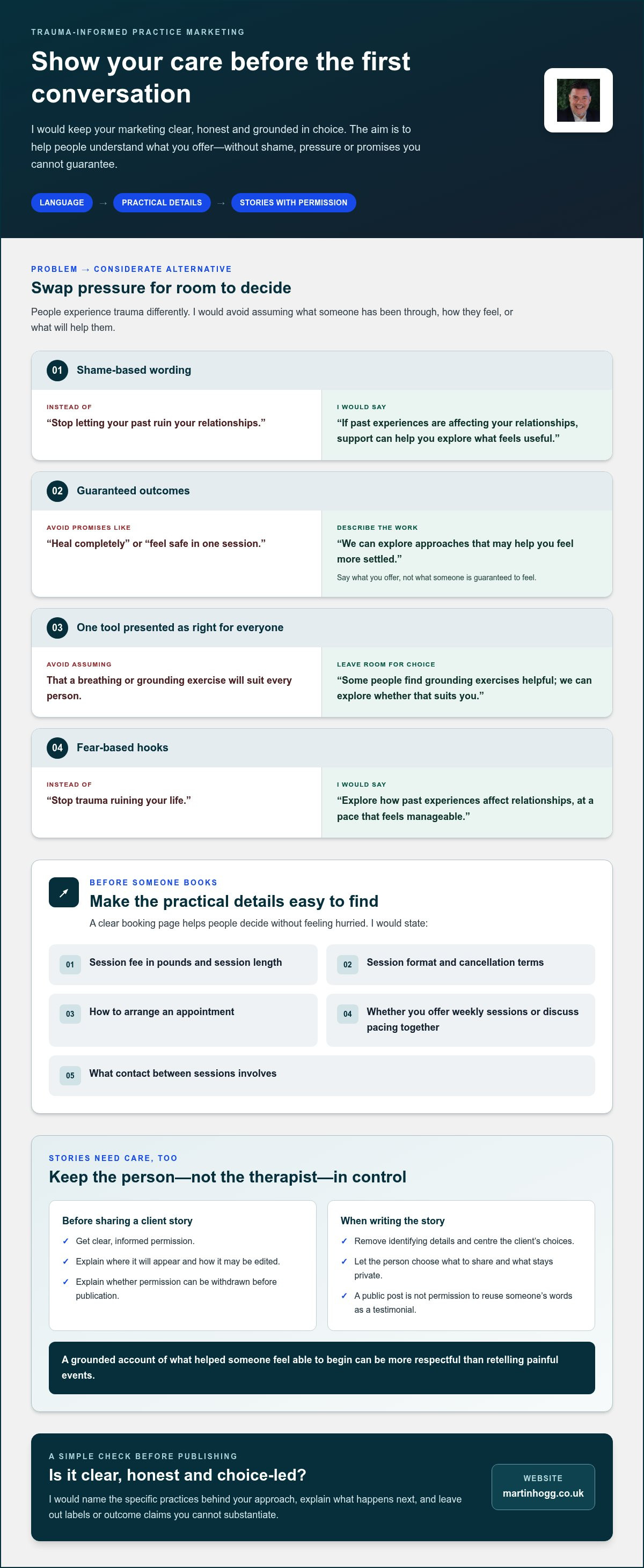
Shame-based copy can make readers feel blamed for struggling. Replace “Stop letting your past ruin your relationships” with “If past experiences are affecting your relationships, support can help you explore what feels useful.” Avoid exaggerated promises such as “heal completely” or “feel safe in one session”. Describe what you offer, not what someone is guaranteed to feel.
Nuance matters. Rather than presenting a breathing exercise as the answer for everyone, say, “Some people find grounding exercises helpful; we can explore whether that suits you.” This leaves room for choice and recognises that body-based practices can feel uncomfortable for some people.
Which marketing channels work best for UK therapy and healthcare practices? Choose channels your intended clients can access and you can maintain, such as a clear Squarespace website, a BACP profile, Counselling Directory or Psychology Today. Keep your one-sentence offer consistent across them, and make the next step easy to understand.
What UK advertising rules apply to marketing therapy and mental health services? Keep claims accurate, clear and supported. Don’t mislead people about your qualifications, approach or likely outcomes. Describe your service plainly and avoid guarantees or pressure tactics.
What risks arise from unsupported trauma-informed claims, and how can a practice avoid them? Broad claims can mislead readers and weaken trust. Name the specific practices behind your approach, such as offering choices or explaining what a first session involves, and leave out labels you cannot substantiate.
Be careful with claims about the nervous system, too. “This will regulate your nervous system” promises a particular result. Try “We can explore approaches that may help you feel more settled” instead. This is more honest and avoids turning a complex relationship with trauma into a sales claim.
2. What Is Trauma-Informed Marketing?
Marketing a trauma-informed practice means applying care principles at every public touchpoint, from your Squarespace homepage to your Calendly booking page. SAMHSA’s framework names safety, trustworthiness and transparency, peer support, collaboration, empowerment, voice and choice, and attention to cultural, historical and gender issues. In private practice, put these principles into action by communicating clearly, offering choice and explaining what happens next.
How can a practice describe trauma-informed services accurately and ethically? Explain the practices behind the phrase instead of using it as a badge. For example, say, “We’ll discuss your aims and agree a pace together,” if that reflects your work. Don’t promise that therapy will resolve trauma or make someone feel safe. Describe what you do, not a guaranteed outcome.
Be transparent about practical details before someone books. State your session fee in pounds, session length, format, cancellation terms and how to arrange an appointment. Explain whether you offer weekly sessions or discuss pacing together, and what contact between sessions involves. A clear booking page helps people decide without feeling hurried.
Explain how you handle data, too. Tell visitors what information your enquiry form collects, why you need it and how they can contact you about it. If the form asks about availability, don’t use it to invite a detailed trauma history. Keep requests proportionate to the next step.
How can you create a trauma-informed marketing plan and measure results? Choose one audience and one useful message. Review your website, BACP profile and directory listings for clarity, choice and consistency. Track practical signals, such as relevant enquiries and completed bookings, alongside feedback on whether your information felt clear. Use what you learn to revise one page or message at a time.
Transformation messaging should centre the person’s agency, not cast the therapist as rescuer. Say, “We can explore what support might fit your goals,” rather than promising a new life. If you’d value ongoing help with practice decisions, the Private Practice Success Membership is a relevant next step.
3. Grounded storytelling instead of fear-based hooks
A fear-based hook might promise, “Stop trauma ruining your life.” It may catch attention, but reduces a complex experience to a threat and a quick fix. Instead, describe what your practice can offer: “Explore how past experiences affect relationships, at a pace that feels manageable.” This gives readers a reason to continue without making them feel broken.
Client success stories need particular care. Before sharing one, get clear, informed permission and explain where it will appear, how it may be edited and whether the person can withdraw permission before publication. Remove identifying details and focus on the client’s choices. For example, describe someone finding ways to set boundaries rather than portraying the therapist as the hero who changed their life.
Lived-experience stories can make your values tangible, but the person telling the story should retain control. Let them choose what to share, what stays private and whether their name or image appears. A public post isn’t permission to reuse someone’s words as a testimonial. A brief account of what helped them feel able to begin can be more respectful than retelling painful events.
Cultural context matters, too. Stories about family expectations, faith or identity can land differently across communities. Before using one, consider whether your language assumes that a particular cultural experience is universal. Training can help you notice assumptions, but careful editing still matters: check that the story reflects the person’s own meaning, not a stereotype.
Before publishing, identify whose experience is centred, remove details included only for drama, and check that the ending doesn’t promise the same result for everyone. A Canva graphic or Squarespace case study should pass the same test. Grounded stories show what support may involve while leaving readers free to decide whether it fits.
4. Avoiding sensationalism and exploitation
A distressing image can grab attention, but may also make someone feel exposed or unsafe. Don’t use close-ups of crying faces, dramatic shadows or graphic descriptions to sell counselling. For a Canva post, choose a calm, relevant image or simple text instead. Explain your work without making pain a spectacle.
Check every public post for details that turn suffering into a hook. “Are you trapped by your trauma?” frames the reader as helpless; “Explore support for the effects of difficult experiences” leaves more room for choice. Remove countdowns, pressure to book immediately and claims of fast recovery. These tactics can turn a sensitive decision into an emotional test.
Education can be useful without becoming a catalogue of distress. If you write about flashbacks, explain the topic in measured language and give readers a clear way to leave the page or choose another subject. A content note may help someone decide whether to continue, but it doesn’t replace thoughtful wording. Focus on practical information and the support you provide.
Before publishing, read the message as someone encountering your practice for the first time. Ask whether each detail serves the reader, whether it stereotypes anyone, and whether the same point works without dramatic language. Replace “This shocking mistake keeps trauma survivors stuck” with “Here are options to discuss with your therapist.” If you use someone’s experience, get permission for that specific use and respect any limits they set. Ethical marketing respects both the individual and the audience.
As a final check, remove any sentence that relies on fear, shame or someone else’s pain to persuade. Describe your training and approach plainly, without turning distress into a sales tool. That restraint makes your message clearer and gives readers space to consider their next step.
Martin Hogg Private Practice Success: Practice Visibility Blueprint
Martin Hogg’s Practice Visibility Blueprint helps counsellors bring their marketing into line with the care they offer. If you know what you stand for but struggle to express it clearly across your website, directory profiles and posts, it can help you focus your message so potential clients understand who you support and how to take the next step.
Consider the Blueprint when your marketing feels scattered or your words don’t sound like you. You can put the principles in this guide into practice without relying on fear-based hooks or chasing polished perfection. Clear, honest communication is a practical place to start.
Visit martinhogg.co.uk to explore the Practice Visibility Blueprint or get in touch with Martin Hogg Private Practice Success.
Make care part of how people find you
Marketing a trauma-informed practice isn’t a separate task to tick off. It makes your values visible in everyday decisions, from the words on your homepage to how you explain the first step. You don’t need every sentence perfect before you begin. Choose one page, read it as a potential client, and make one useful improvement.
For practical support with your visibility, explore Martin Hogg’s Practice Visibility Blueprint and Private Practice Success Membership. Counsellors looking to develop their professional learning in anger management may also find the Anger Management CPD for Professionals relevant. Choose the support that fits the work in front of you.
Keep building at a manageable pace. Clear, respectful communication can help the right people understand what you offer and decide whether to take the next step.
Frequently Asked Questions
What Is Trauma-Informed Marketing?
Trauma-informed marketing considers how your words, images and processes may affect people with different experiences. It applies care principles across the client journey, not just in a paragraph on your website. A directory profile, enquiry form and booking email should all provide clear information, avoid pressure and leave prospective clients able to choose their next step.
What does trauma-informed marketing mean for a UK practice?
For a UK practice, this means presenting your service clearly, responsibly and respectfully across your website, professional profiles and client communications. Use your own language rather than relying on labels alone. A profile might explain who you work with, what sessions involve and how someone can enquire. Keep details consistent so people aren’t left piecing together different versions of your offer.
How can a trauma-informed practice market services without exploiting trauma or using triggering content?
Build educational content around a useful question, not a distressing image or personal disclosure. For example, explain what someone might consider before their first counselling appointment without describing graphic events. Let readers choose whether to engage: avoid unexpected direct messages about sensitive topics, and moderate comments so personal disclosures aren’t left exposed in a public thread.
How can a practice reach underserved communities while making its marketing accessible and inclusive?
Check whose experiences your images and examples represent, and whose are missing. Use plain English, readable text and captions on videos, and explain unfamiliar therapy terms rather than assuming everyone knows them. Invite feedback through a simple, optional route. Ask whether a webpage is easy to understand, for example, without asking people to disclose personal histories to help you improve it.
What should a trauma-informed practice include on its website, such as consent, privacy and booking information?
Make practical steps easy to find: explain how to enquire, what happens after someone gets in touch and how appointments are arranged. Keep enquiry forms focused on what’s needed at that stage. If you offer an email newsletter, make sign-up separate from an enquiry. Explain clearly what information you collect and why.
How can a practice build trust through testimonials, reviews and client stories ethically?
Don’t rely on testimonials as the only evidence of what your practice is like. Explain your approach in your own words and share practical details about the client journey. If you publish a review or story, make sure the person understands how it will be used and can choose what to share. Don’t edit their words into a stronger claim or imply that their experience predicts another client’s outcome.
Disclaimer
The information provided on this blog is for general informational purposes only. It is also not intended to be a substitute for professional medical or mental health advice, diagnosis, or treatment. Reading this content does not create a therapist-client relationship.


