
Marketing for Therapists in the UK: A Comprehensive Guide
What if the very thing that makes you a brilliant therapist is also the biggest obstacle standing between you and a thriving practice?
If you're reading this, you're likely one of
Key Takeaways
- Effective marketing for therapists UK requires balancing authentic professional promotion with ethical boundaries that protect both your practice and client trust.
- Combining traditional networking methods with digital strategies creates a robust marketing approach that reaches clients through multiple touchpoints without overwhelming your resources.
- Successful therapist marketing focuses on genuine connection and education rather than aggressive sales tactics, helping potential clients understand how you can support their wellbeing.
- Real-world case studies reveal practical marketing strategies that UK therapists have used to grow sustainable practices whilst maintaining their professional integrity.
- A step-by-step marketing framework helps you start promoting your practice consistently, even if you're new to marketing or feel uncomfortable with self-promotion.
Understanding Marketing for Therapists in the UK
Marketing for therapists in the UK isn't about selling services like a high-street shop. It's about creating genuine connections with people who need your help and making yourself visible to those searching for support during their most vulnerable moments.
Ethical Marketing Strategies for Therapists
Marketing for therapists in the UK doesn't have to feel like selling your soul. The key lies in understanding that ethical marketing is simply an extension of the therapeutic relationship-it's about being clear, honest, and genuinely helpful to people who need support.
The challenge many therapists face is reconciling their professional values with the need to attract clients.
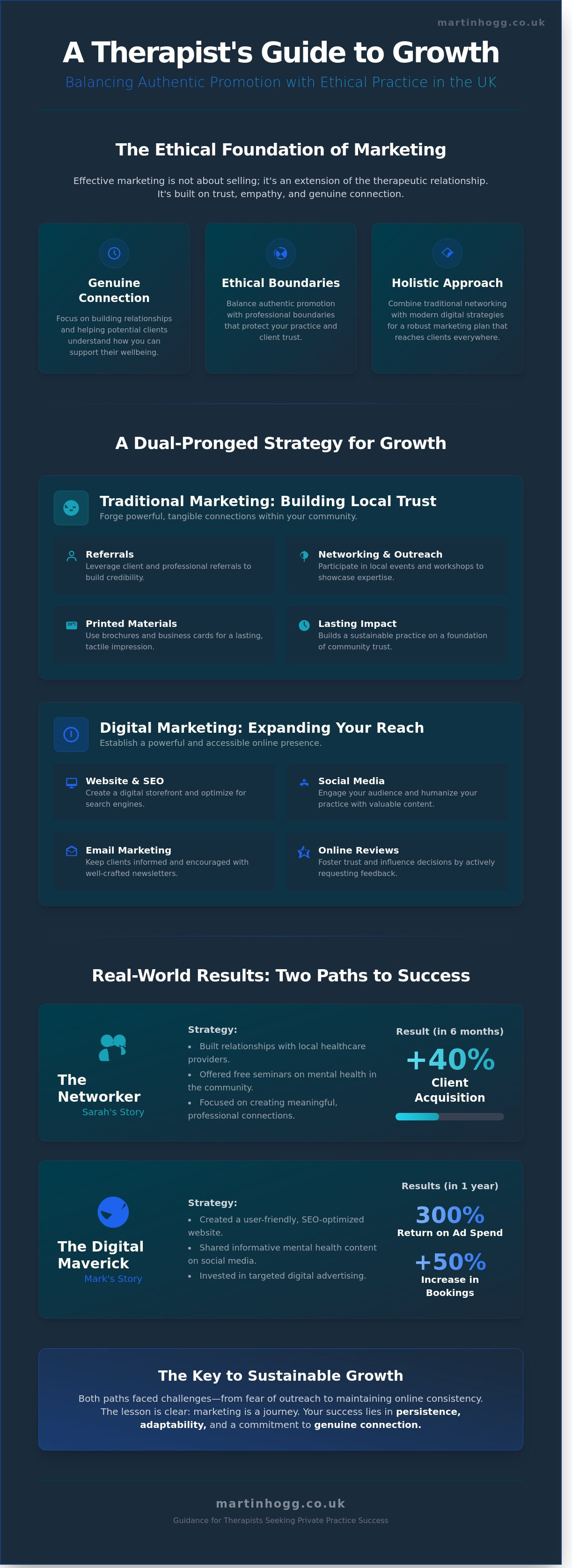
Combining Traditional and Digital Marketing
In the evolving landscape of marketing for therapists UK, blending traditional and digital marketing strategies can create a robust approach that maximises your reach and enhances client engagement. Understanding the strengths and limitations of each method is crucial for developing a holistic marketing strategy tailored to your practice's needs.
Traditional Marketing Techniques
Traditional marketing remains a powerful tool for therapists. Referrals from clients and professionals play a pivotal role in building trust and credibility. Networking within your community and participating in local events can significantly enhance your visibility. Many therapists find that community outreach initiatives, like workshops or talks, not only showcase their expertise but also foster connections with potential clients.
Printed materials such as brochures or business cards can still be effective. These tactile items often leave a lasting impression and are easy to distribute during networking events or local meetups. For practical guidance on enhancing your referral network, check out the Networking for Therapists Checklist.
Digital Marketing Tools
On the digital front, establishing a strong online presence is essential. A well-designed website acts as your practice's digital storefront, providing potential clients with vital information about your services, qualifications, and approach. Search engine optimisation (SEO) is crucial here; optimising your website for relevant keywords can significantly improve your visibility on search engines.
Social media platforms offer an opportunity to engage with your audience directly. Regular posts that share insights or promote workshops can help humanise your practice and build a community. Don't overlook the power of email marketing; a well-crafted newsletter can keep your clients informed and encourage return visits. For more detailed strategies, refer to the Email Marketing Guide.
Lastly, online reviews can greatly influence potential clients’ decisions. Actively requesting feedback and responding to reviews fosters trust and demonstrates your commitment to client care. By integrating both traditional and digital marketing methods, you create a comprehensive approach that caters to a diverse clientele, ultimately enhancing your practice's visibility and growth.
Practical Examples of Successful Marketing
Understanding how to effectively implement marketing for therapists in the UK can greatly enhance your practice. Through real-world case studies, we can see the strategies that have worked for others and the valuable lessons learnt along the way.
Case Study: Building a Referral Network
A therapist, Sarah, sought to expand her client base by building a referral network. She initiated relationships with local healthcare providers and community organisations. By attending workshops and offering free seminars on mental health, Sarah made meaningful connections with professionals who could refer clients to her practice.
The results were significant. Within six months, her client acquisition increased by 40%. The key takeaway here is the power of networking. It’s not just about providing therapy; it’s about being known in your community. Sarah recommends starting small. Reach out to a few professionals you admire and offer to collaborate or share resources.
Case Study: Leveraging Digital Tools
Another therapist, Mark, embraced digital marketing tools to promote his practice. He created a user-friendly website, optimised for search engines, and began utilising social media platforms like Instagram and Facebook. By sharing informative content around mental health topics, he attracted a wider audience.
Mark's investment in digital advertising yielded a return of 300% within a year. His website traffic tripled, and he saw a 50% increase in bookings. The actionable insight from Mark's experience is to focus on content that resonates with your audience. Understand their pain points and offer solutions through your posts. Regularly updating your website and engaging with followers on social media can create a community around your practice.
However, both Sarah and Mark faced challenges. Sarah initially struggled with the fear of reaching out and self-doubt about her professional worth. Mark found it daunting to maintain consistent online engagement. The lesson here is that marketing is a journey. You will face hurdles, but persistence and adaptability are key. Avoid common pitfalls such as neglecting follow-ups or failing to measure your marketing efforts. Regularly assess what strategies are bringing in clients and adjust accordingly.
If you're interested in exploring more about digital presence, check out 5 Common Myths About Therapist Websites for insights on how to optimise your online presence.
By learning from these practical examples, you can implement effective marketing strategies tailored to your practice. Remember, the journey of marketing for therapists in the UK is one of continuous learning and adaptation. Ready to take the next step? Let's get started today.
Actionable Steps to Start Marketing Your Practice
Starting your marketing journey as a therapist doesn't require a grand gesture or perfect plan. You need clarity on where you're going and the courage to take the first step. Many counsellors in the UK delay marketing because they're waiting for the "right moment" or complete confidence. The truth is, you'll learn by doing.
Begin with your existing clients. They're your strongest advocates and the foundation of sustainable growth. Ask satisfied clients for testimonials, encourage word-of-mouth referrals, and ensure your current service delivery is exceptional. This costs nothing but creates genuine momentum for your marketing for therapists UK efforts.
Next, establish your online presence with intention. Choose one platform initially-whether that's a simple website, LinkedIn, or local directories-and do it well rather than spreading yourself thin across multiple channels. Your goal isn't perfection; it's consistent visibility to the people who need your help.
Developing a Marketing Plan
A practical marketing plan starts with three essential components: your ideal client profile, your unique value proposition, and your available resources. Write down specifically who you help, what makes your approach different, and how much time and budget you can realistically commit each week.
Set achievable goals with clear timelines. Rather than "increase clients," aim for "gain two new referrals monthly through networking" or "publish one helpful article weekly for six months." Budget considerations for UK therapists typically range from £100-£500 monthly for basic marketing activities, including professional photography, website maintenance, and local advertising.
Evaluating and Adjusting Your Strategy
Track simple metrics that matter: new enquiries per month, conversion rates from initial contact to booking, and client retention. Use free tools like Google Analytics for website traffic or maintain a basic spreadsheet to monitor referral sources.
Review your progress monthly, not daily. Ask yourself: which activities generated genuine interest? What felt sustainable? Where did you struggle with consistency? Adjust based on results, not assumptions. If networking events drain your energy but writing energises you, shift your focus accordingly.
The most successful marketing for therapists UK approaches evolve through consistent small improvements rather than dramatic overhauls. Stay curious about what works for your personality and practice style.
Consider joining upcoming marketing workshops for deeper insights and peer support. Learning alongside other UK therapists provides practical strategies and the reassurance that you're not alone in this journey. Your practice deserves to be known by the people who need your help most.
Your Practice, Your Future
Building a successful therapy practice in the UK doesn't require a marketing degree or a massive budget. It requires authenticity, consistency, and a clear understanding of who you're here to help. The strategies we've explored-from ethical content creation to combining traditional networking with digital presence-all serve one purpose: connecting you with the people who need your support most.
Remember, effective marketing for therapists UK isn't about becoming someone you're not. It's about becoming more visible as exactly who you are. Your unique approach, your specific expertise, and your genuine care for clients are your greatest marketing assets. Start with one or two strategies that feel manageable, build them into sustainable habits, then gradually expand your reach.
The counselling profession needs more practitioners who understand both the art of therapy and the practicalities of running a thriving practice. If you're ready to take your marketing efforts to the next level with guidance specifically designed for UK therapists, explore Martin Hogg (Private Practice Success) workshops and resources-endorsed by BACP and proven with private practices across the country.
Your expertise deserves to be seen. Your practice deserves to flourish.
Frequently Asked Questions
What is ethical marketing for therapists?
Ethical marketing for therapists involves promoting your services in a way that respects client confidentiality and professional integrity. This means avoiding misleading claims about outcomes, ensuring that your advertising is truthful, and not exploiting vulnerable individuals. For example, sharing testimonials should be done with consent, and your marketing should focus on how you can genuinely support clients in their therapeutic journey.
How can therapists attract more clients ethically?
Therapists can attract more clients ethically by building a strong online presence through informative content and engaging social media. Hosting free workshops or webinars on mental health topics can also showcase your expertise while providing value to potential clients. Ensure your marketing efforts align with professional guidelines, such as those set out by the British Association for Counselling and Psychotherapy (BACP), to maintain trust and credibility.
What are the best digital marketing tools for UK therapists?
Some of the best digital marketing tools for UK therapists include Mailchimp for email marketing, Canva for creating visually appealing graphics, and Hootsuite for managing social media accounts. Google Analytics can help you track website performance, while platforms like Therapist Directory can increase your visibility in search results. These tools can streamline your marketing efforts and help you connect with potential clients effectively.
How important is having a website for a therapy practice?
Having a website is essential for a therapy practice as it serves as your online business card. A well-designed website allows potential clients to find you easily and learn about your services, qualifications, and approach. Additionally, it can enhance your credibility and provide a platform for sharing valuable resources, such as blog posts or articles related to mental health, which can improve your visibility in search engines.
What are some common mistakes therapists make in marketing?
Common mistakes therapists make in marketing include being overly vague about their services and not having a clear target audience. Many therapists also neglect the importance of SEO, making it difficult for clients to find them online. Additionally, failing to engage with their audience on social media can result in missed opportunities for connection and trust-building, which are crucial in attracting clients.
How do I know if my marketing strategy is working?
You can determine if your marketing strategy is working by tracking key performance indicators (KPIs) such as website traffic, social media engagement, and the number of client inquiries. Tools like Google Analytics can provide insights into how visitors interact with your site. Additionally, asking new clients how they found you can give you direct feedback on which marketing channels are most effective.


