
Marketing for Therapists UK: Ethical Growth Guide 2026

Article by
Martin Hogg
I help Private Practice counsellors in the UK set up and grow an ethical Private Practice they love, work with their ideal clients, and earn the income they deserve. All without guesswork and burnout. I have been a private practice counsellor myself for over 20 years, specialising in anger management. I set up a not-for-profit social enterprise, Citizen Coaching and Counselling, which delivers thousands of counselling sessions a year to adults and young people in Birmingham. I am a registered BACP Counsellor and the author of three books, My Anger Coach, My Anxiety Coach and My Relationship Coach. These are available on Amazon.
What if marketing your practice wasn't about "selling" at all, but was actually the final step in the helping process? I know how it feels. You've spent years training to be a therapist, yet suddenly you're expected to understand marketing for therapists UK and become a whiz at Canva. It's exhausting to pay for a Counselling Directory listing that stays silent while you're drowning in technical jargon. You want to help people, but the fear of sounding "salesy" or unethical often keeps you hidden.
I'm here to show you a different way. This guide is about building a sustainable practice using ethical, grounded strategies that feel like a natural extension of your clinical work. I'll teach you how to attract right-fit clients without losing your soul to an algorithm. We will look at the "skateboard model" for your website, how to follow BACP ethical standards in your promotion, and how to create a simple routine that brings professional visibility without the overwhelm. It's time to fill your diary in a way that feels authentic.
Key Takeaways
- Reframe visibility as an act of service so that people in distress can actually find the professional support they need.
- Simplify your online presence using the "skateboard model" to create a website that works without the technical overwhelm.
- Master the essentials of marketing for therapists UK by optimising your directory profiles to project approachable authority.
- Create a human networking routine to build referral links with local GPs and HR departments without feeling like a pushy salesperson.
The Ethical Shift: Why Marketing is an Act of Service for UK Therapists
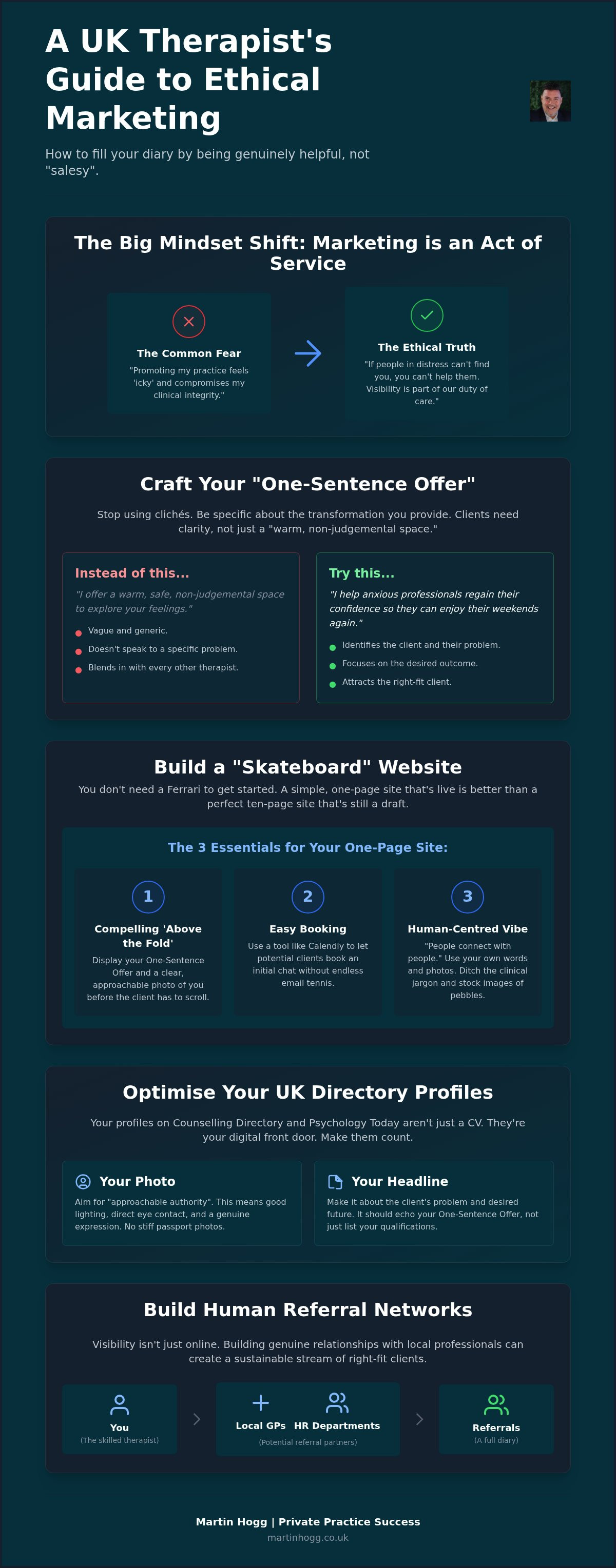
I talk to many counsellors who feel that marketing is a bit, well, "icky". There is a common fear that promoting yourself somehow compromises your clinical integrity. But let's be honest; if a person in distress can't find you, you can't help them. Effective marketing for therapists UK is actually an act of service. It's about being visible enough for the right person to find the support they need. The British Association for Counselling and Psychotherapy (BACP) provides a framework for ethical practice, and being clear about what you offer is part of that responsibility. You aren't "selling" a product; you're offering a bridge to a better future.
Crafting Your One-Sentence Offer
Most therapist profiles are a sea of clichés. You've seen them: "I offer a warm, non-judgemental space." While that's lovely, it doesn't tell a client how their life will change. You need a "One-Sentence Offer" that identifies the specific problem you solve and the transformation your client can expect. For example, "I help anxious professionals regain their confidence so they can enjoy their weekends again." This clarity removes the guesswork for the client. If you're struggling to narrow this down, I've got some niche building secrets that can help you find your focus.
The "People Connect with People" Philosophy
Potential clients aren't looking for a blank-slate clinical mask. They want to know if they can sit in a room with you for fifty minutes. Your personality is your greatest tool. Don't be afraid to be a bit opinionated or human. Whether it's your take on a specific issue or just showing a bit of your grounded nature, it builds trust. Rough and ready content that shows your face and voice beats a polished, corporate-style website every time. People connect with people, not with clinical frameworks. It's about showing up as a guide who understands the weight of their experience.
Building Your Skateboard Website: Visibility Without the Overwhelm
You don't need a Ferrari to get to the shops; a skateboard will do. In the world of marketing for therapists UK, many practitioners get stuck trying to build a perfect, ten-page website before they even have their first client. I suggest the "Skateboard Model". This is a simple, one-page site that gets you moving immediately. It is about being functional, not flawless. Tools like Squarespace or Wix are more than enough to start. They are intuitive and keep the technical jargon to a minimum.
The most critical part of your site is the "above the fold" content. This is what a client sees before they even think about scrolling. It should include your one-sentence offer and a clear call to action. I recommend using a Calendly link so people can book an initial chat without the back and forth of emails. By keeping things honest and transparent, you align your site with BACP's Ethical Framework, which values professional standards and client welfare.
The 3 Essentials of a High-Converting Therapy Homepage
First, get your Title and Description tags right. These are the snippets people see on Google. They should be clear and tell the searcher exactly what you do. Second, use Canva to create human-centred visuals. You don't need a designer; a decent photo of you looking approachable is better than stock images of pebbles. Finally, remember that "rough and ready" content beats a polished site that never launches. A site that exists helps people. A site in "draft" mode helps no one.
Avoiding the "Brochure" Trap
Your website should not be a dry list of your qualifications. It should feel like the start of a conversation. Clients want to know if you understand their pain, not just where you went to university. If you want a structured way to build this out, The Practice Visibility Blueprint provides a step-by-step path to getting seen without the stress.
Dominating UK Directories and Local Search in 2026
I often see therapists treat their directory listings like a dry CV. That's a mistake. In the world of marketing for therapists UK, the Counselling Directory and Psychology Today are the big hitters for a reason. They have the budget to sit at the top of Google results, so your job is simply to stand out once a client clicks through. You don't need to be a tech expert; you just need to be human.
Your photo is the first thing they see. Forget the stiff, clinical passport shot. You want "approachable authority". That means good lighting, direct eye contact, and a genuine smile. You need to look like someone they can trust with their deepest secrets. When writing your headline, make it about the client's pain, not your list of qualifications. Ensure your claims follow the Advertising Standards Authority (ASA) guidelines; be honest and avoid promising "cures" for complex medical conditions.
Optimising Your Psychology Today Profile
The "first 20 words" rule is vital here. This is the snippet shown before someone clicks "read more". Use the One-Sentence Offer we discussed earlier to hook them immediately. If you tell them exactly how you can help in those first two lines, you've already won half the battle. Consistency across your website and directories builds a professional image that people trust.
Local SEO Without the Jargon
If you see clients in person, your Google Business Profile is your best friend. Keep it active by adding a new photo or a short update once a month. It’s a simple way to stay relevant in local searches without needing a degree in computer science. Effective marketing for therapists UK doesn't have to be complex. If you find yourself blending in with the crowd, using Niche Building Secrets will help you identify the unique angle that makes you the obvious choice.
Networking and Referrals: The Human Side of UK Marketing
I often hear counsellors say they hate networking. They usually picture awkward rooms and pushy sales pitches. But networking in marketing for therapists UK is just making friends with people who see your clients first. Think of local GPs, HR managers, or even other therapists. If you specialise in anger management and another therapist focuses on postnatal depression, you aren't competitors. You're a reciprocal referral network. Building these links ensures that clients get the right help, even if it isn't from you.
The "Skateboard" Approach to Content
You don't need a film crew or a script. A 30-second phone video posted on LinkedIn or Instagram is far more powerful than a 1,000-word academic blog. People want to hear your voice and see your face to decide if they trust you. It builds familiarity before they even book a call. Pick one platform where your ideal clients hang out and post "rough and ready" updates. It's about being a real person, not a distant expert. This approach fits the idea that people connect with people.
Building Your Referral Base
Approaching a GP surgery or a local business doesn't have to feel like being a medical "rep". Just ask for a coffee and a chat. Explain what you do and who you help. Most professionals are actually relieved to have a trusted name to pass on to people in distress. It's about solving a problem for them as much as for the client. As your network grows and the enquiries start coming in, you'll need to stay organised. I recommend using the Counsellor Efficiency Bundle to manage the admin side. This lets you focus on the human connections that make a private practice thrive.
Taking the Next Step in Your Private Practice
Building a practice doesn't have to be a lonely or intimidating slog. We've looked at how you can reframe your visibility as an act of service and launch a "skateboard" website that gets you moving without the technical headache. By focusing on your one-sentence offer and human connections, you're making it easier for people in pain to find you. This grounded approach to marketing for therapists UK is about trust, not tricks.
I've spent over 20 years in UK private practice and I'm a BACP-endorsed workshop provider. I know the internal hurdles you're facing because I've helped a community of over 100 UK therapists overcome them too. You don't have to do this on your own.
You have the skills to change lives. Now, it's just about letting the right people know you're there. Start with one small, rough and ready step today.
Frequently Asked Questions
How do I get more counselling clients in the UK without a huge budget?
I would start by optimising your directory profiles and building a simple, one-page "skateboard" website. These don't require a massive investment, just a bit of time and a clear one-sentence offer. Networking with local GPs and other therapists is also free and incredibly effective. Effective marketing for therapists UK is more about being human and visible in your community than it is about having a massive advertising budget.
Is social media necessary for therapists in 2026?
It isn't strictly necessary, but it is a powerful tool for building familiarity. If you enjoy it, pick one platform where your ideal clients hang out, like LinkedIn or Instagram, and share "rough and ready" video content. Don't feel pressured to be everywhere at once. A consistent, human presence on one channel is far better than a neglected profile on five. It's about letting people see the person behind the practice.
What should I put on the "above the fold" section of my website?
This is the most valuable real estate on your site. I would include your one-sentence offer that clearly states who you help and the transformation they can expect. Pair this with an approachable photo of yourself and a clear call to action, such as a button for a free initial chat via Calendly. You want a visitor to know exactly what you do and how to reach you before they even scroll.
How much time should I spend on marketing my private practice each week?
I recommend setting aside two to three hours a week for a manageable marketing routine. This could include updating your Google Business Profile, reaching out to a local professional for a coffee, or recording a quick video. Marketing for therapists UK shouldn't feel like a full-time job. If you have a simple system in place, you can maintain professional visibility without it taking over your clinical time or causing significant overwhelm.
What is the best directory for UK counsellors to join?
The Counselling Directory and Psychology Today remain the most effective "big hitters" in the UK. They consistently rank at the top of search results, making them worth the monthly fee. I would also ensure your BACP registration is clearly displayed, as this builds immediate trust with potential clients. Remember, a directory listing only works if your profile copy is focused on the client's needs rather than just your qualifications.
Disclaimer
The information provided on this blog is for general informational purposes only. It is also not intended to be a substitute for professional medical or mental health advice, diagnosis, or treatment. Reading this content does not create a therapist-client relationship.


