
Marketing Yourself as a Specialist Therapist: A Practical UK Guide

Article by
Martin Hogg
I help Private Practice counsellors in the UK set up and grow an ethical Private Practice they love, work with their ideal clients, and earn the income they deserve. All without guesswork and burnout. I have been a private practice counsellor myself for over 20 years, specialising in anger management. I set up a not-for-profit social enterprise, Citizen Coaching and Counselling, which delivers thousands of counselling sessions a year to adults and young people in Birmingham. I am a registered BACP Counsellor and the author of three books, My Anger Coach, My Anxiety Coach and My Relationship Coach. These are available on Amazon.
Your specialism should make your practice easier to understand, not smaller. But marketing yourself as a specialist therapist can feel uncomfortable if you’re unsure what to call your focus, or worry that a clear message might overstate your experience or put people off.
If your website or directory profile could describe almost any therapist, the right people may struggle to recognise that you could be a good fit. You don’t need grand claims or polished marketing language. You need a straightforward way to explain who you work with, what you can help with and how someone can enquire.
Start by getting specific about the clients and concerns you work with, then make that message clear on your website and profiles. This guide covers how to describe your specialism accurately, help potential clients and referrers understand your work, and choose a manageable next step to improve your visibility. A specialism can sharpen your message without closing the door on everyone else.
Key Takeaways
- Marketing yourself as a specialist therapist starts with a clear, credible message about who you work with and the concerns you address.
- Review your client work, training and experience to identify a focus that feels genuine and grounded in your competence.
- Write a plain-English one-sentence offer, then adapt it consistently for your website, Counselling Directory and Psychology Today profiles.
- Choose one manageable next step: update a profile, check how people can enquire, then ask someone to read your wording and tell you what they understand.
What does it mean to market yourself as a specialist therapist?
Making your work visible can feel awkward. You may worry that talking about a specialism sounds like boasting, or that choosing a focus means turning people away. Keep it simple: marketing yourself as a specialist therapist means helping people understand who you work with and what concerns you can support them with, in language that reflects your actual practice.
Therapy is a service, not a product someone can inspect before choosing. The broad ideas behind Services marketing help explain why clear information about the service and the person providing it matters. Your specialist message is not a promise of an outcome. It’s a plain account of the work you offer, so a potential client or referrer can decide whether it may be relevant.
A specialist message describes the people you often work with and the concerns you’re equipped to address. It doesn’t have to define every client you will see.
Does choosing a therapy specialism mean turning clients away?
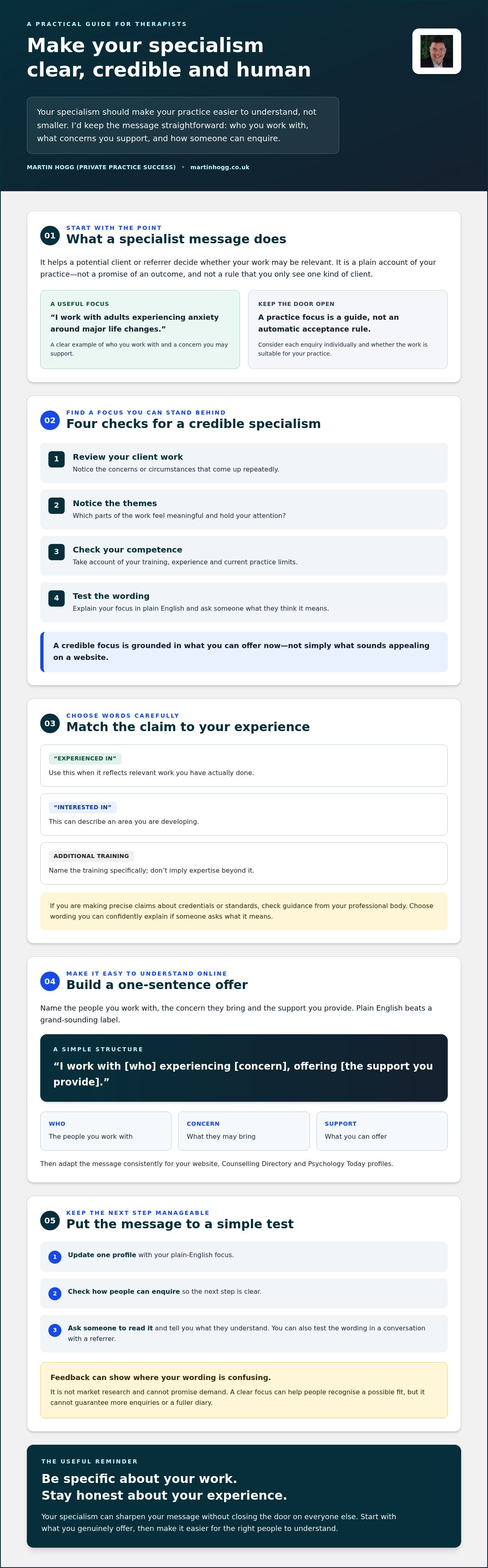
No. A practice focus is a guide, not an automatic acceptance rule. You might say that you work with adults experiencing anxiety around major life changes without claiming you only ever see that group. When someone enquires, consider their circumstances and whether the work is suitable for your practice. Describe your focus accurately, then make each decision individually. Clear positioning can help people recognise a possible fit, but it can’t guarantee more enquiries or a fuller diary.
Specialist, experienced or interested: what can you accurately say?
These words don’t mean the same thing. “Experienced in” should reflect relevant work you’ve actually done. “Interested in” can describe an area you’re developing, while you can name additional training specifically without implying expertise beyond it. Avoid a broad title if your experience doesn’t support it. Check guidance from your professional body before making precise claims about credentials or standards, and choose wording you can explain confidently if someone asks what it means.
How to choose a credible specialism without shrinking your practice
You don’t have to pick a niche from a list and stick with it for life. Treat it as a useful starting point for explaining your work, not a promise to exclude anyone who doesn’t fit a narrow label.
Use this sequence to check whether a focus is both relevant and supportable:
- Review your client work: note the concerns or circumstances that come up repeatedly.
- Notice the themes: identify which parts of the work feel meaningful and hold your attention.
- Check your competence: consider your training, experience and any limits in your current practice.
- Test the wording: explain your focus in plain English and ask someone what they think it means.
A credible focus is grounded in what you can offer now, not just what sounds appealing on a website. The choices involved in choosing a mental health specialty can include a client population, area of practice or approach. Use that as a prompt for reflection, not a menu you have to follow. For more help shaping your focus, see my niche-building guidance.
Which client group or concern could you focus on?
Ask yourself: who do I feel equipped and motivated to work with, and what concerns am I prepared to support? You might be drawn to adults facing a major life change, for example, or people dealing with anger. These are possible directions, not proof of demand or prescriptions for your practice. A credible focus reflects your current competence; an unsupported specialist claim reaches further than your experience.
How can you test your positioning before committing?
Try the same wording on one profile and in conversations with referrers. Ask whether they can tell whom you work with, what you offer and how someone can enquire. If they interpret your wording differently from what you intended, revise it and test again. Informal feedback can reveal confusing language, but it isn’t market research and can’t promise demand. If you’d value peer support while refining your message, the Private Practice Success Membership may be a useful place to continue the thinking.
How to communicate your specialist therapy offer clearly online
Once you’ve chosen a focus, make it easy to spot. Start with a one-sentence offer that names who you work with, the concern they bring and the support you provide. For example: “I work with adults who feel stuck after a major life change, offering counselling to help them make sense of what’s happening and consider their next steps.” Check that each part reflects your actual practice. Don’t let a polished phrase claim more than your training or experience supports.
Use that core message consistently on your website, Counselling Directory and Psychology Today profile. You can adjust the wording to suit each space, but the person reading should still recognise the same therapist and offer. Before publishing, check that the headline, profile text and enquiry instructions agree with one another.
What should a specialist therapist say above the fold?
“Counselling for adults dealing with anxiety during major life changes. I offer online sessions. Get in touch to ask whether my approach may suit you.” This is the kind of clear, above the fold message a visitor can understand without scrolling. A simple Squarespace page could be one way to put it online, but the platform matters less than the message. Keep it human, avoid jargon and generic promises, and check every claim about your professional experience and credentials.
Think of your first website version as a simple starting point: a page that explains your work and shows visitors how to get in touch. You can improve it as you notice what needs clarifying. A basic, accurate page is more useful than polished content that never gets published.
Which small online updates make your offer easier to find?
Check your page title and description tags. They should accurately describe your service and make sense to someone deciding whether to visit. Also check the practical details: does the page name the people you work with, explain how to enquire and make the next step easy to find? Canva can help you create consistent profile visuals, but tidy graphics won’t fix unclear words. Sort the message first, then make the presentation consistent. For wider ideas about channels and practical marketing, read my UK therapist marketing guide.
How to put your specialist message into practice without sounding salesy
Marketing yourself as a specialist therapist doesn’t mean posting constantly or turning every conversation into a pitch. Keep the next step small: update one profile, check what happens when someone wants to enquire, then read your wording again with fresh eyes. Can a visitor quickly tell who you work with, what you offer and how to get in touch?
Make the enquiry route straightforward. A clear email link or a Calendly link may help someone understand what to do next, but it won’t suit every practice or guarantee more bookings. Choose an option you can manage, make sure the instructions work and explain what happens after a person gets in touch.
Don’t wait until every sentence is polished. Rough and ready content beats polished content when it’s accurate, useful and recognisably yours. You can improve it as you learn what needs clarifying.
How can you share useful content while protecting client privacy?
Share general educational themes rather than stories that could identify a client or sound like an implied testimonial. You could explain a common misconception about your area of work, or offer a few questions someone might reflect on. Before using sensitive examples, check the relevant guidance from your professional body. Keep the tone informative, not alarming. Fear and urgency have no place in a trustworthy invitation to enquire.
What is a sensible next step if you want support?
Compare your current profile with the one-sentence offer you’ve developed. Make one change, then ask a reader to explain what they understand from it. If their answer misses your intended focus, clarify the wording. For broader marketing topics, my guide to marketing for therapists may also be useful. The aim isn’t to promise a particular number of clients. It’s to make your practice easier to understand and the next step easier to take.
Take one clear step towards better visibility
Marketing yourself as a specialist therapist doesn’t mean making bigger claims or closing your practice to people who don’t fit a narrow label. It means describing your focus in language that reflects your training and experience, then making that message easy to find across your website and profiles.
You don’t need to overhaul everything today. Choose one profile and check three things: does it say who you work with, explain what support you offer and show how to get in touch? Improve the part that is least clear, then review the wording again. Small, honest improvements are a practical way to work on your visibility.
The Practice Visibility Blueprint provides structured guidance for working on your visibility. The Private Practice Success Membership includes live training and a community of private practice owners.
Your message doesn’t need to be perfect to be useful. Start with what you can say clearly and accurately, then refine it as your practice develops.
Frequently Asked Questions
Can I market myself as a specialist therapist without a formal specialism?
Yes, you can describe a focus in your work without claiming a formal specialist qualification. Be precise about what supports your focus, such as relevant experience, training or a developing professional interest. For example, you might say you have experience supporting adults through bereavement if that accurately reflects your practice. If you’re a BACP member, check its guidance before making specific claims about credentials, accreditation or standards.
Will choosing a therapy niche reduce the number of clients I can work with?
Not necessarily. A niche helps people understand the work you often do, but it doesn’t have to become a rule that excludes everyone else. You can describe a focus, then consider each enquiry on its own merits and decide whether the work is suitable for your practice. Marketing yourself as a specialist therapist can clarify your message, but it can’t guarantee more enquiries or a fuller diary.
How do I describe my specialism on Counselling Directory or Psychology Today?
Use clear, consistent wording about who you work with, the concerns you address and the support you offer. For example: “I work with adults experiencing anxiety during major life changes.” Add relevant training or experience accurately, and make it easy to understand how someone can enquire. Keep the core message consistent across Counselling Directory, Psychology Today and your website, adapting it to fit each profile’s space.
What should a specialist therapist include on their website homepage?
Make the essentials clear near the top of the page: who you work with, what concerns you support and what a visitor can do next. A concise headline, a short explanation of your approach and a clear contact or enquiry route are a practical start. Keep claims accurate and use language your intended clients will understand. A simple one-page site is enough to begin; it needn’t be a grand design project.
How can I market my therapy practice ethically without sounding salesy?
Focus on helping people understand your work, rather than persuading them with pressure or promises. Share useful information in plain language, describe your experience accurately and make the enquiry process clear. Avoid implying guaranteed outcomes or using identifiable client stories as promotional material. If you’re unsure about a claim or example, check relevant professional guidance. A calm, honest explanation gives people room to decide whether your service may suit them.
Disclaimer
The information provided on this blog is for general informational purposes only. It is also not intended to be a substitute for professional medical or mental health advice, diagnosis, or treatment. Reading this content does not create a therapist-client relationship.


