
Networking for Counsellors: A Practical Guide to Building a Referral Base in 2026
What if the most reliable way to fill your diary in 2026 had nothing to do with complex algorithms or expensive social media ads? I know that for many of us, the phrase networking for counsellors feels a bit like being asked to sell double glazing. It’s exhausting to sit in a home office feeling isolated, worrying that reaching out to others might make you seem desperate or pushy. You likely entered this profession to help people, not to spend your afternoons feeling like a salesperson.
I want to show you how to grow your private practice through authentic, professional connections that feel grounded and respectful. You can build a steady stream of word-of-mouth referrals without ever compromising your clinical integrity or your personality. You don't need to be loud to be heard; you just need to be present in the right circles. It is about finding your community rather than hunting for leads.
In this guide, we'll explore exactly where to find the right people in your local area, how to explain your niche with calm confidence, and the practical steps to move from professional loneliness to a supportive network of peers who trust your work.
Key Takeaways
- Shift your perspective from "selling" to building mutually beneficial relationships that feel natural, ethical, and grounded in human connection.
- Identify the three specific tiers of a referral network to ensure you are connecting with the right people who already see your ideal clients.
- Practice a more effective way of networking for counsellors by swapping clinical jargon for clear language that explains how you help people get their lives back on track.
- Stop shouting into the void and learn how to use LinkedIn as a practical, targeted tool for professional connection within the UK market.
- Discover why a structured professional community offers more sustainable practice growth and peer support than ad-hoc networking alone.
What is Networking for Counsellors? (And Why it Matters)
When I talk about networking for counsellors, I'm not talking about standing in a drafty hotel lobby at 7:00 AM with a stack of business cards. That corporate version of Business networking often feels cold, transactional, and entirely out of step with our therapeutic values. For us, networking is simply the process of building mutually beneficial professional relationships. It's about finding people you trust and letting them get to know you too.
Solo private practice can be a lonely road. I've spoken to many practitioners who go through an entire week without a meaningful conversation with a peer. This isolation isn't just a mood killer; it's a business risk. Effective networking for counsellors ensures you are part of a wider professional community. A strong network acts as a clinical and professional safety net. When you have a solid group around you, you have people to turn to when a case feels heavy or when your practice numbers dip. You aren't just an island; you're part of a map.
Overcoming the "Salesy" Stigma
Many therapists I mentor feel a genuine shudder at the thought of "selling" themselves. You might feel like you're compromising your clinical integrity by being too visible. Let's reframe that. You aren't a used car salesperson. You are a professional resource. If a client is struggling with trauma and you're an EMDR specialist, it's your ethical duty to be visible. If they can't find you, they can't get the help they need. Networking is just making sure the right people know you exist so they can point clients in your direction.
The Referral Ecosystem in the UK
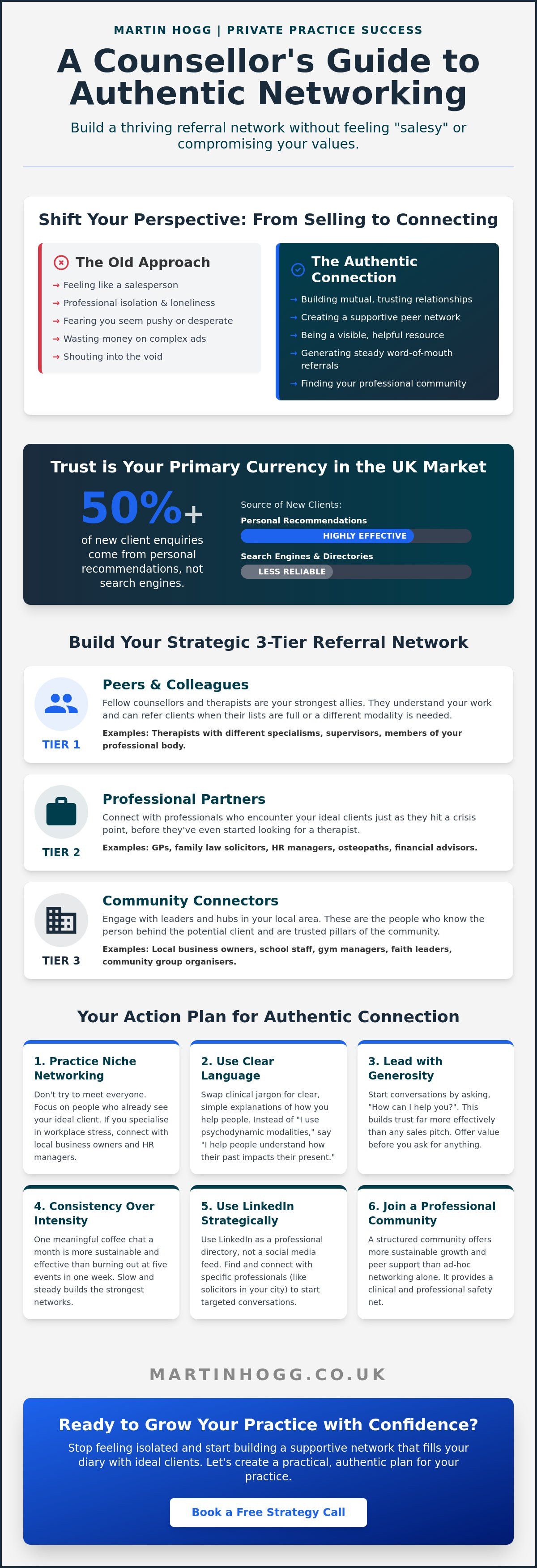
In the UK, trust is our primary currency. While a directory listing might get you an enquiry, a word-of-mouth recommendation from a trusted peer is far more likely to turn into a long-term client. A 2023 survey of private practitioners found that over 50% of new client enquiries came from personal recommendations rather than search engines. Your ecosystem includes more than just other therapists. Think about the professionals your clients already see. GPs, osteopaths, and even family law solicitors often encounter people in distress.
Your best source of referrals is often other counsellors. When a colleague's practice is full, or they encounter a client who isn't a right fit for their modality, you want to be the first person they think of. If you're feeling stuck on where to start building these connections, you can always book a time to chat with me at my calendar. We can look at your specific situation and get your practice back on track.
Building a Strategic Referral Base
Building a sustainable practice isn't about collecting a stack of business cards that eventually gather dust on your desk. It's about cultivating a three-tiered network that supports your work from different angles. First, there are your Peers. These are fellow therapists who might have full waiting lists or work in different modalities. Second are Professional Partners, such as GPs or solicitors, who see people right when a crisis hits. Finally, your Community tier includes local groups, gyms, or faith leaders who know the person behind the potential client.
Effective networking for counsellors relies on what I call niche networking. Instead of trying to meet everyone, you focus on the people who see your ideal client just before they realise they need therapy. If you help parents, you talk to school staff. If you work with workplace stress, you talk to local business owners. You're looking for the natural "entry points" to a client's journey toward help.
Don't let the admin side of this overwhelm you. You don't need a complex CRM system or expensive software. A simple spreadsheet or a dedicated notebook works perfectly to track who you've met and when you last spoke. Set a realistic goal for yourself. Aiming for just one coffee chat per month is far more effective than trying to attend five events in a week and burning out. Consistency beats intensity every time in private practice.
Identifying Key Professional Partners
Think about the journey your client takes before they reach your room. If you specialise in divorce recovery, a family law solicitor is a natural partner. HR managers in companies with over 50 employees often deal with staff burnout and need reliable referral options. When you reach out, lead with a "how can I help you" mindset. Ask them about the challenges their clients face. This approach builds trust faster than any sales pitch. For a broader look at how this fits into your business plan, see this Marketing for Therapists UK guide.
Networking Within Clinical Niches
Becoming the "go-to" person for a specific issue makes you memorable. When I talk about CPD for counsellors UK, I always emphasise that your training should align with your networking efforts. If you are working with men, you might connect with local sports clubs or community groups. Building authority within professional bodies like the BACP or UKCP also helps. It's about being known for one thing done exceptionally well. If you're feeling stuck on how to start these conversations, you can always check my availability for a mentoring session to map out your local strategy.
The Art of the Authentic Conversation
Most of us feel a bit of a squeeze in the chest when we think about "selling" ourselves. But networking for counsellors isn't about being a salesperson; it's about being a resource. When you meet a GP, a lawyer, or another therapist, they aren't looking for a list of your qualifications. They want to know if they can trust you with their clients' well-being. A 2023 report from the BACP indicated that word-of-mouth remains a primary source of referrals for 68% of private practitioners. This means your ability to have a normal, human conversation is your greatest marketing asset.
Crafting Your "Human" Introduction
The "I am an integrative therapist" trap is easy to fall into. It tells people how you work, but it doesn't tell them who you help or what change you facilitate. In a professional setting, clinical jargon often acts as a barrier rather than a bridge. You need a simple, straight-talking sentence that focuses on the client's journey. Instead of describing your modality, describe the relief your clients feel after working with you.
Try these examples on for size:
- "I help people in the West Midlands who feel stuck in their anxiety get back to living a normal, confident life."
- "I work with couples who have stopped talking to each other and want to find a way back to being a team."
- "I support men struggling with workplace stress so they can stay productive without burning out."
These introductions build immediate trust because they are clear. People can instantly visualise who they might refer to you.
Listening as a Networking Skill
You already have the most important tool for networking for counsellors: your ears. Most people at networking events are waiting for their turn to speak. If you use your natural therapeutic skills to focus entirely on the other person, you become the most memorable person in the room. Your goal is to uncover how you can support them first. This shifts the dynamic from a transaction to a partnership.
Ask questions that get to the heart of their professional life. You might ask, "What is the biggest challenge you see your clients facing right now?" or "How do you usually find support for people who need help beyond what you offer?" These questions show you're interested in the community, not just your own diary. If you're feeling stuck on how to position your practice or want to refine your approach, you can book a slot on my calendar to talk it through.
Asking for a referral ethically is simply about being helpful. You can say, "I have some space on Tuesday afternoons for new clients struggling with grief. If you come across someone who needs that specific support, I'd be happy to see if I can help." It's an invitation, not a demand. Finally, always follow up within 48 hours. A short, personal email mentioning something specific from your chat shows you were paying attention. That small act of care is what turns a casual chat into a professional referral base.
Digital Networking: LinkedIn for Therapists
LinkedIn is often the most underutilised tool for UK private practitioners. Many see it as a place for corporate recruitment, but for those of us in the therapy room, it's a bridge to our local professional community. Networking for counsellors on this platform isn't about shouting into the void or posting generic motivational quotes. It's about targeted, professional connection with people who already talk to the clients you want to help.
Digital boundaries are vital when you move your presence online. You don't need to be available 24/7. Treat your LinkedIn presence like your physical practice; have set times when you check in and engage. This keeps your professional presence high without draining the energy you need for your clinical work. It is about being a calm, consistent presence rather than a constant one.
Optimising Your Professional Profile
Your profile should look like a professional practice, not a CV. It's your digital shopfront. Use a clear, warm headshot where you look approachable and grounded, similar to how you would present yourself in a first session. Your headline shouldn't just list your qualifications; it should speak directly to the problem you solve. If you help men in Birmingham recover from addiction, say that clearly. My recent Level 7 training in trauma-informed practice ensures that my approach is grounded in the latest evidence-based safety protocols.
Authentic Engagement Strategies
You don't need to be a content creator to be successful on LinkedIn. Authentic engagement often starts with a simple, thoughtful comment on a post by a local GP or a wellbeing lead at a nearby firm. When you send a connection request, make it personal. Mention a specific piece of work they've done or a local initiative they support. The Value-First rule is simple: offer a resource, a kind word, or a helpful perspective before you ever think about asking for a referral.
I recommend spending just fifteen minutes twice a week on these interactions. This focused approach is far more effective for networking for counsellors than spending hours scrolling through a feed. By showing up as a peer who understands the local mental health climate in the West Midlands, you build trust naturally. People refer to those they know, like, and trust; LinkedIn is simply a tool to start that process.
Joining a Professional Community
Networking for counsellors often feels like a chore when you are trying to do it all alone. You might send a few emails or attend a one-off local event, but without a system, the results usually feel patchy. There is a world of difference between ad-hoc networking and joining a structured membership community. While ad-hoc efforts are often reactive, a community provides a proactive framework that keeps you moving forward even when your energy is low.
When you move from being an isolated therapist to a connected practice owner, your perspective shifts. You stop seeing other counsellors as competition and start seeing them as colleagues who can help you manage the weight of private practice. A 2024 industry survey found that 64% of UK private practitioners cited professional isolation as their biggest hurdle. Peer support groups solve this by providing a space to share resources, discuss ethical dilemmas, and celebrate wins. This collective energy accelerates your growth far quicker than trying to figure out every marketing hurdle in solitude.
To make this work, you need more than just a list of contacts. You need a visibility blueprint. This is a clear, step-by-step plan that guides your efforts so you aren't wasting time on activities that don't bring in referrals. It helps you decide where to show up, what to say, and how to maintain those professional relationships without feeling overwhelmed.
The Private Practice Success Membership
I created the Private Practice Success Membership because I know how lonely this journey can be. It's designed as a safe, supportive space where you can connect with like-minded peers who truly understand the UK mental health landscape. We focus on practical results rather than abstract theories. You get access to structured growth plans and live training sessions that take the guesswork out of finding clients. If you feel stuck, our Practice Visibility Blueprint provides the exact map you need to get your practice back on track.
Next Steps for Your Practice
Building a referral base doesn't happen overnight, but you can take the first step today. Don't worry about being perfect. Just focus on being present. Here is a simple checklist to help you start networking for counsellors this week:
- Identify three local professionals (GPs, HR managers, or other therapists) and send a brief, friendly introductory email.
- Block out one hour in your diary specifically for "connection work" so it doesn't get pushed aside by admin.
- Join a peer group or membership where you can ask questions without judgment.
- Check the Martin Hogg Calendar for upcoming workshops and networking events.
Remember, consistency always beats intensity. You don't need to spend forty hours a week networking. You just need to show up regularly and authentically. By making small, steady connections, you'll find that your referral base grows naturally, leaving you with more time to focus on what you do best: helping your clients.
Moving From Isolation to a Thriving Practice
Building a steady stream of clients doesn't have to feel like an uphill struggle. We've explored how networking for counsellors is really about finding your tribe and having honest conversations rather than "selling" yourself. By focusing on your LinkedIn presence and engaging with local professional groups, you're laying the groundwork for a practice that lasts. It's about moving away from the "lone wolf" mentality and into a space where you feel supported by your peers.
I've helped hundreds of practitioners through my BACP-endorsed workshops and the Practice Visibility Blueprint system. These tools are designed to take the guesswork out of finding your feet in the UK market. You don't have to figure this out on your own. Our UK-based community of therapists is ready to welcome you and share what's working right now in private practice. We focus on practical steps that get your life back on track while you help your clients do the same.
Join the Private Practice Success Membership and start building your network today. You have the skills to change lives; let's make sure the people who need you can actually find you. I'm looking forward to seeing your practice grow.
Frequently Asked Questions
Is networking for counsellors ethical according to professional bodies?
Networking for counsellors is entirely ethical and encouraged by professional bodies like the BACP, provided you maintain strict client confidentiality. The BACP Ethical Framework (2018) emphasizes working in partnership with others to provide the best care for clients. You aren't selling a product; you're building a community of support. As long as you don't share identifying details about your clients during your conversations, you're meeting your professional obligations while growing your practice.
How do I network if I am an introvert or find small talk difficult?
You don't need to be the loudest person in the room to build a strong referral base. Most therapists are natural listeners, which is a superpower when you're trying to connect with others. Focus on one to one coffee meetings rather than large, noisy events. This approach allows you to have deep, meaningful conversations that feel more like a clinical consultation than a sales pitch. It's about quality connections, not how many business cards you hand out.
What is the best way to ask another therapist for referrals?
The best way to ask for referrals is to be incredibly clear about who you help and the results you achieve. Instead of saying you see anyone, tell them you specialise in working with men aged 30 to 50 dealing with work-related burnout. This makes it easy for the other therapist to remember you when they encounter someone outside their own expertise. You could say, "I'm currently taking on new clients for my burnout programme, if you have any enquiries that aren't a fit for you."
Can I network online if I don’t have a website yet?
You can absolutely network online without a website by using a professional LinkedIn profile or a directory listing. In 2024, 75% of professionals research their peers online before making a referral. A well-written profile that highlights your experience in Birmingham or your specific modality acts as a digital business card. It gives colleagues enough confidence to pass your name along while you're still getting your own site ready.
How much time should I spend on networking each week?
I recommend spending between 1 and 2 hours each week on networking for counsellors to see consistent results. This might include one coffee meeting or 20 minutes spent engaging with colleagues on professional forums. Consistency matters more than intensity. If you commit to just 4 hours a month, you'll likely see a steady stream of enquiries within 90 days. This small investment keeps your practice visible without leading to the burnout we often see in overstretched therapists.
What should I do if a referral partner sends me a client who isn’t a good fit?
If a partner sends you a client who isn't a good fit, thank them for the referral and then explain why you're redirecting the person. It's a professional opportunity to refine their understanding of your work. You might say, "Thanks for thinking of me, but I don't work with active addiction cases." By being clear, you help them send better-suited clients next time. It shows you prioritise the client's needs, which actually builds more trust in your relationship.
Should I pay for referral fees or is that unethical in the UK?
You should not pay or receive referral fees in the UK, as it's widely considered unethical by both the BACP and UKCP. These bodies state that referrals must be based on the client's best interests, not financial gain. Financial incentives can cloud your professional judgment and damage the trust between you and the client. Instead, focus on reciprocal referrals where you recommend each other based on clinical expertise and niche specialisms, which costs nothing but your time.


