
Private Practice Success: A Practical Guide to Sustainable Growth for UK Counsellors
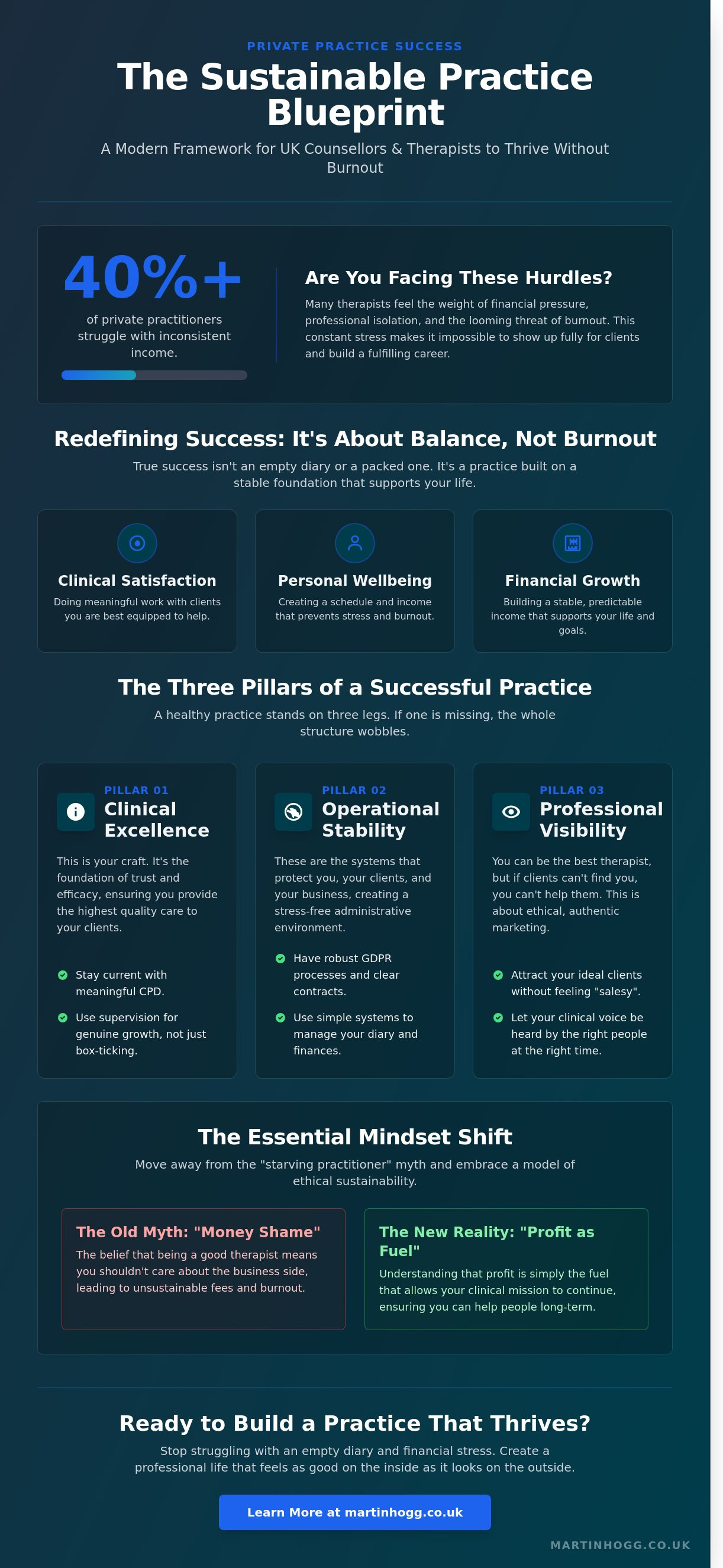
What if the marketing you've been avoiding is actually the most ethical way to reach the people who need you most? A 2023 survey of UK therapists indicated that over 40% of private practitioners struggle with inconsistent income, which often leads to professional isolation and burnout. You want to help people, but you find yourself staring at an empty diary or feeling the weight of financial pressure. Achieving lasting success in your private practice isn't about being "salesy" or corporate. It's about creating a stable foundation so you can show up fully for your clients without the constant shadow of stress.
I know how heavy that burden feels when you're trying to balance deep empathy with the practical need to pay the bills. This practical guide from Martin Hogg (Private Practice Success) offers a grounded framework to help you build a sustainable practice that respects your integrity and your personal wellbeing. We'll look at how to attract a steady stream of ideal clients, manage your operations with confidence, and finally move away from the edge of burnout to get your professional life back on track.
Key Takeaways
- Learn to define your professional goals by balancing clinical satisfaction and personal wellbeing with sustainable financial growth.
- Discover how a clinical-first approach to visibility allows you to attract the right clients ethically, without feeling like you are "selling" your services.
- Understand the practical steps for achieving long-term private practice success by knowing exactly when and how to scale your work in the UK.
- Streamline your daily routine by conducting a simple practice audit to reclaim your time and choosing the right tools to manage your admin.
- Explore how a structured community can help you overcome the isolation of solo work and provide a clear, supportive roadmap for your growth.
Redefining Private Practice Success for the Modern UK Counsellor
For a long time, the idea of success in our profession was tied to a very narrow definition. You were either a busy practitioner with a full diary and no time to breathe, or you were struggling to find enough clients to cover your room hire. I want to suggest a different way of looking at things. True private practice success isn't just about how much money you make or how many hours you spend in the chair. It's about building a life where you can offer high quality clinical work without sacrificing your own wellbeing or financial security.
The world has changed quickly. As we look at the UK market in 2026, we see a landscape where the demand for mental health support is at an all-time high, but the cost of living and the complexity of running a small business have also increased. Relying on word of mouth or a single directory listing isn't enough anymore. We have to move past the "starving practitioner" myth, which suggests that being a good therapist means you shouldn't care about the business side of things. If your practice isn't sustainable, you can't help the people who need you most.
To understand where we fit, it helps to look at the broader context of Counselling in the United Kingdom and how our professional standards have evolved. We are part of a vital workforce, yet many of us feel isolated when it comes to the practicalities of running a business. Being a great clinician is the foundation, but it's only one part of the puzzle.
The Three Pillars of a Successful Practice
I believe that a healthy practice stands on three specific legs. If one is missing, the whole structure starts to wobble. These are:
- Clinical Excellence: This is your craft. It involves staying current with your CPD and ensuring your supervision is a place of genuine growth rather than just a box-ticking exercise.
- Operational Stability: This is the "boring" stuff that keeps you safe. It means having robust GDPR processes, clear contracts, and simple systems to manage your diary and finances.
- Professional Visibility: You might be the best therapist in your town, but if people can't find you, you can't help them. This is about making sure your voice is heard by the right people at the right time.
Balancing Ethics and Profit
Many counsellors feel a sense of "money shame" when they think about profit. I want to reframe that for you. Profit is simply the fuel that allows your clinical mission to continue. When you charge a sustainable fee, you aren't being greedy; you're ensuring that you don't burn out. A tired, stressed therapist who is worried about their own bills cannot provide the same level of presence as one who is well supported.
Achieving private practice success means finding that sweet spot where your ethics and your income align. If you are just starting out, you might find my guide on starting and growing a private practice helpful for setting those initial foundations. It's about creating a professional life that feels as good on the inside as it looks on the outside.
The Visibility Blueprint: A Clinical-First Approach to Attracting Clients
Many therapists feel a natural resistance to marketing. We often worry about sounding pushy or "salesy," but I prefer to look at visibility through an ethical lens. If you have the tools to help someone recover from trauma, anxiety, or addiction, staying hidden isn't just a business mistake; it's a missed opportunity for someone's healing. True private practice success happens when you stop trying to "sell" a service and start showing up as a solution to a specific struggle. This means building a profile that reflects your clinical niche and speaks directly to the internal pain your clients feel every day.
Authenticity is your most powerful tool for building trust before the first session even starts. In the UK, where the NHS is under immense pressure and waiting lists are long, clients are looking for professionals who feel accessible and human. By focusing on your unique clinical expertise, you make it easier for the right people to find you. This isn't about being famous; it's about being visible to the person who needs you most right now. When you speak with calm confidence about what you do, you provide a sense of hope before the client even picks up the phone.
Creating a Website That Works
Your website shouldn't be a digital CV listing every certificate you've earned since 2012. Potential clients don't care about your post-grad diploma as much as they care about whether you understand their sleepless nights. A common mistake is making the site about you rather than the client's journey. To fix this, integrate your clinical voice into every page. Use the same warm, grounded tone you use in the therapy room. Before you launch or redesign, it's worth checking the official government guidance on business plans to ensure your digital strategy aligns with your long-term professional goals. A client-focused resource provides value through helpful articles or guides, making the transition to booking a session feel like a natural next step.
Networking Without the "Cringe"
Networking doesn't have to mean awkward breakfast meetings or handing out business cards to strangers. It's about building genuine referral relationships with GPs, local charities, and other health professionals who are often overwhelmed. I often talk about "Citizen Coaching," which is simply being an active, helpful member of your community. You can share your expertise through local talks or community groups without ever sounding like a salesperson. When you provide value first, people naturally turn to you when they need professional support. If you're unsure how to start these conversations in your local area, you can always book a time to chat about your specific situation. Focusing on these organic connections ensures your practice is built on a foundation of trust and local reliability.
From Solo to Sustainable: Scaling Your Practice with Integrity
There comes a point in every solo journey where the maths simply stops working. You have 168 hours in a week, and if your income is tied solely to the hour you spend in the chair, you hit a ceiling. True private practice success isn't about squeezing in one more client at 8:00 PM on a Thursday. It’s about building something that can grow without taking more of your spirit. Most UK therapists find their natural limit sits around 20 to 25 clinical hours. Beyond that, the quality of care often begins to dip, and your own well-being usually follows suit.
Understanding scaling a therapy practice means looking at your business as a system rather than just a diary. It requires a shift in mindset. You're moving from being the only person doing the work to being the person who ensures the work gets done to a high standard. This transition doesn't happen overnight, but it is the only way to move from a job that owns you to a practice that supports you.
Diversifying Your Income Streams
Trading time for money is a linear path that eventually runs out of road. To create a sustainable future, you need to think laterally. Learning how to start a therapy group allows you to help six or eight people in the same 60-minute window you’d usually help one. This doesn't just increase your income; it builds a community for your clients. You might also look at delivering accredited CPD or workshops for local businesses. If you have a specific niche, such as working with men's mental health, you possess a skill set that other organisations will pay to learn. This shift moves you from being a practitioner to being an authority in your field.
The Associate Model
When your waiting list is consistently six weeks long, it’s time to consider the associate model. This is a significant shift from being a solo practitioner to becoming a practice leader. You’re no longer just responsible for your own clinical work, but for the reputation of your brand. Using a hiring associate therapist private practice checklist helps you find the right people without the guesswork. It’s vital that any associate you bring on board shares your core values. Integrity is everything here. You want to ensure that a client seeing an associate gets the same level of care and respect they would receive from you directly. This is how you increase your impact in your community while protecting your own time and energy.
Practical Steps to Overcome Common Hurdles
Moving from a state of overwhelm to a place of steady growth requires more than just clinical skill. It requires a shift in how you view your business operations. I've seen many talented counsellors stall because they treat their practice like a series of accidents rather than a structured service. To achieve long-term private practice success, you need to address the practical leaks in your daily routine.
- Step 1: Conduct a Practice Audit. Take a hard look at your last 14 days of work. Many practitioners find that up to 10 hours a week are lost to "admin drift," which includes chasing invoices or manual scheduling. Identify exactly where your time is leaking so you can plug the gaps.
- Step 2: Simplify your admin. You don't need to be a tech expert to reclaim your evenings. Using dedicated practice management software uk can automate your billing and intake forms, reducing manual data entry by roughly 60 percent.
- Step 3: Set a realistic visibility schedule. Marketing doesn't have to be a full-time job. Block out two 30-minute windows per week for visibility work. This consistency is far more effective than a monthly five-hour panic session.
- Step 4: Address the imposter syndrome. That quiet voice telling you that you aren't "expert" enough is often just a sign that you care. Remember, your knowledge is the bridge someone else needs to cross their current crisis.
- Step 5: Review your professional growth. Check your calendar for open slots that could be used for networking or training rather than just waiting for the phone to ring.
Managing the "Visibility Fear"
Many therapists feel exposed when they start marketing, almost as if they are breaking a professional code of silence. This anxiety is common, but it's often rooted in a fear of judgment from peers rather than clients. When you feel that tightening in your chest before posting an update, try a simple grounding exercise: plant your feet firmly on the floor and take three slow breaths. Reframe the act of being seen not as "selling," but as an act of service. If a person in distress can't find you, they can't get your help. Your visibility is their lifeline.
Time Management for the Busy Practitioner
The "Batching" method is a lifesaver for the busy counsellor. Instead of answering emails between every session, set a specific hour at the end of the day to handle all correspondence. This protects your clinical headspace and prevents mental fatigue. It's also vital to set firm boundaries. If your working day ends at 6:00 pm, don't respond to non-urgent queries at 9:00 pm. Use automation to handle the boring but necessary tasks, like appointment reminders, so you can focus on the human connection that sits at the heart of private practice success.
If you're ready to stop guessing and start growing, book a time to talk about your practice goals.
How the Private Practice Success Membership Supports Your Journey
Private practice can be a lonely road. I've spoken with hundreds of UK counsellors who feel like they're on an island; trying to manage clinical work while figuring out marketing and taxes entirely on their own. It doesn't have to be that way. This membership provides the structure and professional companionship you need to build a sustainable career. We focus on practical steps that lead to private practice success, helping you move away from the anxiety of an empty diary and toward a stable, rewarding business.
Isolation is often the biggest hurdle for therapists in the UK. When you're working from a home office or a quiet consulting room, it's easy for self-doubt to creep in. Our community changes that dynamic. You'll be surrounded by peers who understand the specific nuances of the British counselling market, from BACP ethical frameworks to the realities of local networking. This shared experience creates a safety net, ensuring you stay motivated even during the quieter months.
What is Inside the Membership?
The membership isn't just a collection of videos; it's a practical toolkit for your daily professional life. You'll get access to the Practice Visibility Blueprint. This is a step-by-step roadmap I've developed over 15 years in the profession. It has helped over 450 therapists move from "word of mouth only" to a consistent stream of enquiries. Inside, you'll find:
- The Practice Visibility Blueprint: A clear growth roadmap that removes the guesswork from your marketing.
- Regular Live Q&A Sessions: Every month, we meet to solve your specific dilemmas, whether it's a technical website issue or a question about fee increases.
- A UK-Tailored Resource Library: Access templates and guides specifically designed for UK regulations, including GDPR-compliant processes and local SEO strategies.
Is This the Right Next Step for You?
Many therapists find themselves stuck in a "survival" loop. They might buy a one-off business course, feel inspired for 48 hours, and then return to old habits because there's no ongoing accountability. This membership offers recurring support that builds momentum over months, not days. It's designed for those ready to transition from just getting by to truly thriving in their own space.
If you're tired of trying to figure everything out by yourself, it's time to try a different approach. Having a coach who knows the UK landscape means you won't waste time on strategies that only work in the US or for large corporations. You can start your private practice success journey today by joining a community that values your clinical expertise as much as your business growth. If you want to see how this fits your current schedule, you can check my availability at https://www.martinhogg.co.uk/calendar to discuss your next steps.
Taking the Next Step Toward Your Sustainable Practice
Building a thriving practice isn't about chasing every marketing trend or losing your clinical identity. It's about creating a balance where your visibility reflects your values and your business supports your life rather than draining it. We've looked at how a clinical-first approach attracts the right clients and why scaling with integrity ensures you don't burn out. Your journey toward private practice success is unique, but you don't have to walk it alone or guess which path to take next.
I've spent over 20 years in clinical and coaching rooms, and I understand the specific hurdles we face in the UK counselling world. My BACP-endorsed workshops and training are built on this real-world experience. They're designed to give you the practical tools you need to thrive as a modern therapist without the overwhelm. You already have the skills to change lives; let's make sure you have the sustainable business to match.
Join the Private Practice Success Membership and start growing your practice today. I look forward to helping you get your work and your life back on track.
Frequently Asked Questions
How long does it typically take to achieve private practice success in the UK?
Most therapists find that it takes between 12 and 18 months to establish a stable, full-time practice. If you follow a clear plan and stay consistent with your marketing, you can often reach a comfortable caseload of 15 clients per week within 9 months. Achieving private practice success isn't an overnight event, but focusing on steady growth helps you build a business that lasts.
Do I need a huge marketing budget to get more counselling clients?
You don't need a large budget to start seeing results. Many practitioners I work with begin with a spend of less than £50 per month, focusing on high-quality directory profiles and local networking. Once your practice grows, reinvesting about 5% of your monthly income into your marketing is a sensible way to keep your diary full without overspending on expensive adverts.
Is it ethical for a counsellor to "market" their services?
It is entirely ethical to let people know how you can help them, provided you follow BACP or UKCP guidelines on honest communication. I see marketing as a way of being of service to those in distress. If a person struggling with trauma cannot find you, they cannot benefit from your expertise. Building private practice success is about making yourself visible to the people who need you most.
What is the most effective way to increase my visibility as a therapist?
Optimising your profile on major directories like Psychology Today or Counselling Directory is the fastest way to be seen. In 2023, these platforms generated over 60% of initial enquiries for independent therapists in the UK. I recommend pairing this with three or four helpful articles on your own website that address specific problems like anxiety or work stress. This builds trust before the first phone call.
How do I know when it is time to scale my practice or hire associates?
You should consider hiring an associate when your waiting list consistently stays longer than 4 weeks. If you're turning away more than 3 enquiries every week because your diary is full, it's a clear sign that the demand for your service is higher than your individual capacity. Moving to an associate model allows you to help more people in your community while protecting your own energy.
Can I achieve private practice success while working part-time?
You can certainly build a thriving practice while working part-time. Approximately 40% of counsellors in the UK manage their private work alongside other jobs or family commitments. The key is to be very disciplined with your available hours. By focusing on high-impact tasks during your admin time, you can maintain a profitable and rewarding practice that fits around your life perfectly.
What clinical skills are currently in high demand for UK private practices?
Specialist skills in neurodiversity-affirming practice and trauma-informed care are currently seeing the highest demand. Recent data shows a 30% increase in searches for UK therapists who specialise in ADHD and autism support. If you have training in these areas, or in practical modalities like EMDR, make sure you highlight this. Clients are increasingly looking for practitioners who can offer specific, results-oriented support for these challenges.


