
Setting Up a Counselling Private Practice in the UK: A Practical Guide for 2026
What if the biggest barrier to your success isn't your clinical skill, but the fear that being "business-minded" somehow makes you less of a healer? It's a common struggle I often observe. As Martin Hogg (Private Practice Success), I understand that many gifted therapists feel like an imposter the moment they have to talk about money or marketing. I also understand that feeling of dread when you first look at a blank GDPR policy or try to figure out your first tax return for HMRC. It's completely normal to feel overwhelmed when you're setting up a counselling private practice in the UK, especially when your training focused on the chair rather than the balance sheet.
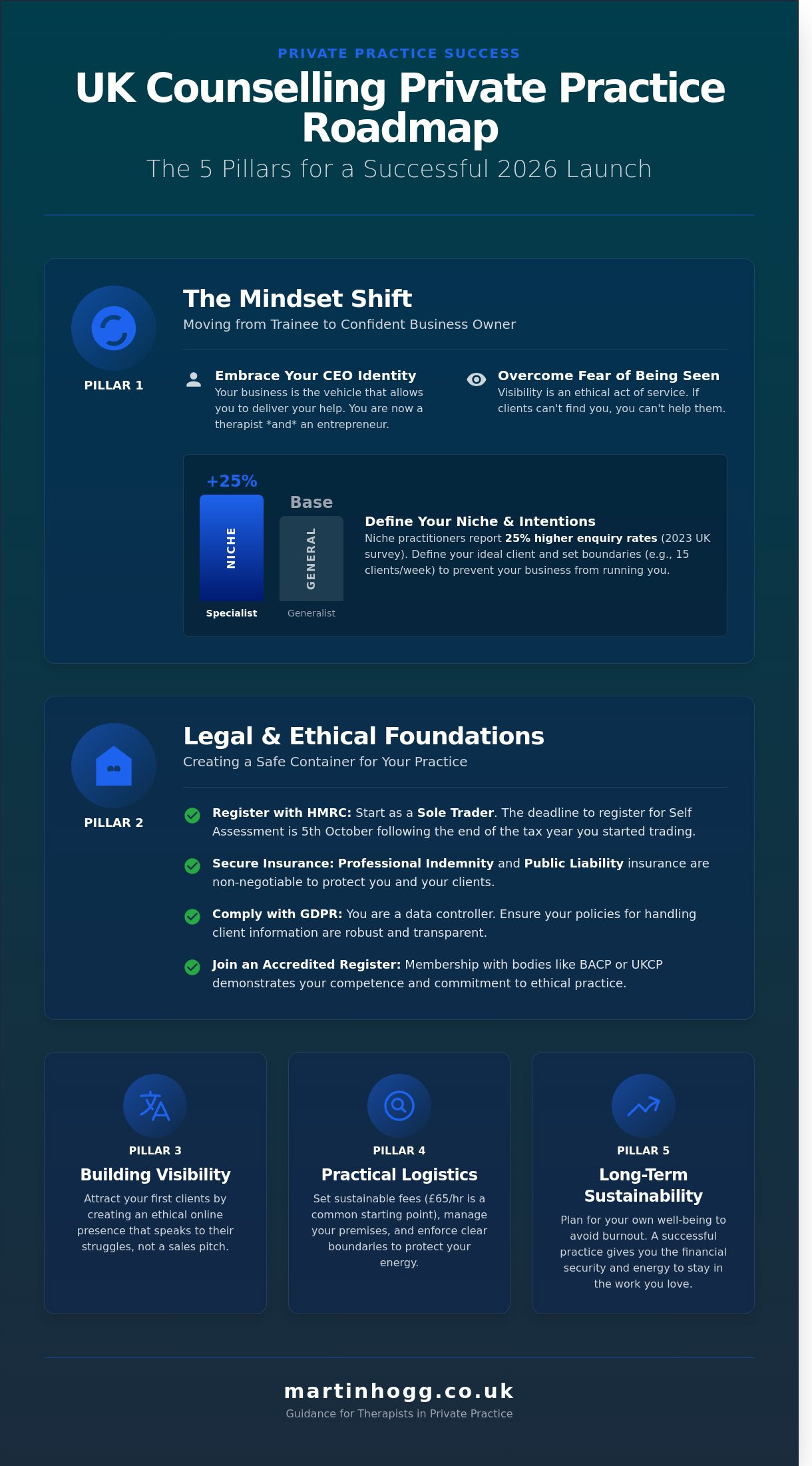
You deserve a practice that supports your life as much as you support your clients. This guide provides a clear, step-by-step roadmap to handle the legal and clinical essentials of starting your own business with total confidence. We'll look at the 5 key pillars you need to get right for a successful launch in 2026. This includes everything from setting a fair fee that reflects your worth to finding your first ten clients using ethical, "non-salesy" methods that actually work in the real world.
Key Takeaways
- Learn how to make the mental shift from trainee to confident business owner and handle the self-doubt that often comes with clinical independence.
- Understand the practical steps for setting up a counselling private practice uk, including how to register with HMRC and secure the right professional insurance.
- Discover how to build an ethical online presence that speaks directly to your clients' struggles and fills your diary without feeling like a "sales pitch."
- Find out how to set sustainable fees and plan for your own well-being, ensuring you have the financial security and energy to stay in the work you love.
The Mindset Shift: Moving from Trainee to Private Practice Owner
Moving from a supervised placement or an agency role into your own space is a significant leap. You're leaving the safety net of a clinical lead and taking on the roles of CEO, marketing manager, and administrator. It's perfectly normal to feel a bit of a wobble during this transition. When you're working for the NHS or a local charity, your primary focus is the 50 minute hour. In your own business, your clinical skills are the foundation, but they're only half the story.Setting up a counselling private practice uk requires you to embrace a "business owner" identity that might feel foreign at first. You aren't just a therapist anymore; you're an entrepreneur. I've seen many gifted practitioners stall because they feel that "business" is a dirty word in a helping profession. This isn't the case. Your business is simply the vehicle that allows you to deliver your help to the people who need it most.
Because UK counselling regulation is currently voluntary through accredited registers, the burden of proving your competence and ethical standing falls on your shoulders. This means your clinical skills must be sharp, but your professional boundaries must be even sharper. Success in private practice isn't just about hitting a £65 hourly rate. It's about building a sustainable life where you can see 15 clients a week without burning out, while still having the energy to be present for your own family.
Overcoming the Fear of Being Seen
Many therapists struggle with the idea of "marketing" because it feels like bragging. I want you to look at it differently. Visibility is an ethical act of service. If a person in your local town is struggling with anxiety and they can't find your website, you can't help them. They might end up with someone less qualified or less suited to their needs.
It's natural to feel anxious about putting your name out there. You might still feel like a student waiting for permission to speak. You don't need a supervisor's nod to be an expert in your own room. Transitioning to an expert mindset means trusting the thousands of hours of training you've already completed. You're a professional with a specific set of tools that can get someone's life back on track.
Setting Your Professional Intentions
You can't be everything to everyone. In a 2023 survey of UK private practitioners, those who identified a specific niche reported 25% higher enquiry rates than generalists. Choosing a niche isn't about excluding people. It's about being the most effective guide for a specific type of struggle, whether that's bereavement, work-related stress, or male-specific mental health.
Your business operations should reflect your personal values. If you value accessibility, you might offer two "low-cost" slots at £30. If you value work-life balance, you might decide never to work past 6:00 PM on a Tuesday. Setting these intentions early prevents the business from running you.
My practice mission for 2026: I will provide a steady, compassionate space for 12 clients per week, helping them reclaim their autonomy while maintaining a profitable business that supports my own well-being.
The Legal and Ethical Foundations for UK Therapists
I remember the mixed emotions of those first few weeks. There is the excitement of finally doing things your way, but it often comes with a heavy dose of "what if I get the paperwork wrong?" Setting up a counselling private practice uk involves a shift in identity. You are moving from being an employee or a student to being a business owner. This transition requires a clear head and a solid legal base so you can focus on what matters most: the person sitting across from you.
You don't need to be a legal expert to get this right. You just need to be methodical. Most therapists I work with find that once these foundations are in place, their anxiety levels drop significantly. It’s about creating a safe container, not just for your clients, but for your professional life too.
HMRC and Financial Responsibility
Most independent practitioners start as sole traders because it is the simplest route. You must register for Self Assessment with HMRC by 5 October following the end of the tax year in which you started trading. If you began seeing private clients in September 2023, for example, your deadline was 5 October 2024. Using the official UK government business setup guide is the best way to ensure you choose the right structure for your specific needs. I suggest opening a separate bank account immediately. It makes tracking tax-deductible expenses like your £1.50 per mile travel costs, room hire, and professional books much easier when January comes around.
Data Protection and GDPR
Data protection is a legal obligation that keeps your client's trust intact. You must register with the Information Commissioner’s Office (ICO) as a data controller. For most of us, this costs £40 per year, or £35 if you set up a direct debit. This isn't optional if you store names or phone numbers on a digital device. You should also move away from standard Gmail or Outlook for client work. Use encrypted services like ProtonMail or dedicated practice management software. Your privacy policy should be a simple, one-page document that tells the client exactly how you store their notes and when you might have to break confidentiality.
Alongside the legalities, your ethical standing is defined by your professional body. Whether you choose the BACP, the National Counselling and Psychotherapy Society (NCPS), or another recognised professional body, their ethical framework is your North Star. Most of these bodies require you to hold Professional Indemnity Insurance. You can usually find comprehensive cover for around £70 to £120 per year. This insurance protects you if a client ever makes a claim against you, providing a safety net that allows you to work with confidence.
Clinical supervision is the final, vital piece of this puzzle. The BACP, for instance, requires a minimum of 1.5 hours of supervision each month for practitioners. I see supervision as a form of professional self-care. It’s the place where you can be vulnerable, offload the weight of a difficult session, and ensure you are providing the best possible service. If you are feeling a bit stuck with these initial steps, I often help therapists organise their practice foundations to move past the initial overwhelm.
Getting these bits and pieces sorted might feel like a distraction from the therapy itself. However, these steps are actually the first act of care you provide. By being legally and ethically sound, you create a professional environment where true healing can happen. Take it one step at a time, and you will find your rhythm sooner than you think.
Building Your Visibility: Attracting Your First Clients Ethically
The hardest part of setting up a counselling private practice uk is often the transition from clinician to business owner. You might feel a bit of "imposter syndrome" when it comes to marketing. That's a normal reaction. I've seen many talented therapists stall because they worry about looking "salesy" or pushy. But if you don't tell people you exist, you can't help them. Marketing, when done right, is just an extension of your care. It's about making sure the person in distress can find the right support at the right time. You aren't selling a product; you're offering a path to recovery.
Crafting a Website That Connects
Your website is your digital front door. By 2026, research suggests over 60% of your potential clients will find you via a mobile device while they are in a state of high anxiety. If your site is slow or hard to read on a phone, they will leave. Most therapists make the mistake of making their "About Me" page a CV. Your clients don't actually care where you went to university as much as they care if you understand their pain. Write to them directly. Use words that mirror their internal struggle. Instead of "I offer integrative therapy," try "I help people who feel trapped by their past to find a way forward."
Ensure your contact buttons are obvious. A "Book a Discovery Call" button should be visible without scrolling. If you need more structured guidance on these logistics, the BACP Private Practice Toolkit offers excellent resources for ensuring your online presence meets professional and ethical standards. This helps you build a foundation of trust before you even speak.
The Ethical Way to Market Your Services
Ethical marketing is about calm authority. You don't need hype, "limited time offers," or clickbait. You need to be a stable, grounded presence. One of the most effective ways to build trust is through education. Use social media to share useful insights or simple grounding techniques. This isn't about selling; it's about demonstrating that you know your stuff. When a person sees you providing value for free, they feel safer booking that first session. They get a sense of your voice and your approach before they ever pick up the phone.
Don't overlook the power of local connections. In my experience, a 15-minute coffee with a local GP or a health professional can lead to more referrals than a month of Facebook ads. People refer to people they trust. If you're looking for more hands-on support with this process, you can find our upcoming training and events designed to help you bridge the gap between clinical skill and business success.
- Directory Profiles: Optimise your Psychology Today or Counselling Directory profiles with a professional, warm headshot. Avoid clinical jargon in your bio that might confuse a person in crisis.
- Local Networking: Reach out to local wellbeing charities or HR departments in small businesses. Being a "local" expert counts for a lot.
- Content Marketing: Write blog posts that answer the specific questions your clients ask in the room. This shows you're a practical, results-oriented practitioner.
Setting up a counselling private practice uk requires patience and a steady hand. You won't have a full diary on day one, and that's okay. Focus on being helpful, being visible, and being yourself. The clients will follow when they see you as a reliable guide who can help them get their life back on track.
Practical Logistics: Fees, Premises, and Boundaries
I know the financial side of therapy can feel uncomfortable. Most of us enter this profession because we care about people, not because we want to spend our weekends looking at spreadsheets. However, if your business isn't sustainable, you won't be in a position to help anyone. When you are setting up a counselling private practice uk, you have to treat your logistics with the same respect you give your clinical work. It is about creating a stable container where both you and your clients can feel secure.
Setting Your Rates for 2026
By 2026, the cost of living and professional overheads mean that charging £40 a session is likely to leave you out of pocket. I suggest researching the specific rates in your town. In Birmingham and the West Midlands, the average session fee currently sits between £50 and £70, while London practitioners often start at £80. You must factor in your "hidden" costs. This includes your monthly supervision, which usually costs between £50 and £80 per hour, your professional indemnity insurance at roughly £80 per year, and your annual ICO registration fee of £40. If you don't build these into your hourly rate, you are effectively paying to work.
Raising fees with existing clients is often a source of anxiety for therapists. I find that being transparent is the best approach. Give your clients at least 60 days' notice of any change. Explain that it's a standard business review to keep the practice running. Most clients understand that your costs, from room rent to heating, go up just like theirs do.
Physical vs. Online Practice
Choosing where to work is a major decision. Renting a dedicated therapy room offers a clear physical boundary between your work and home life. On average, room hire in the UK costs between £10 and £15 per hour. It provides a neutral, professional space that many clients still prefer for deep trauma work. If you choose to work from a home office, safety is your priority. I recommend using a virtual office address for your website and ICO registration so your private home address isn't public. This simple step protects your privacy and maintains professional distance.
For those opting for an online setup, your tech must be seamless. A basic laptop camera isn't always enough. I suggest investing in a 1080p external webcam and a wired ethernet connection to prevent the screen from freezing during emotional moments. Use GDPR-compliant platforms like Zoom for Healthcare or WriteUpp rather than standard Skype. It shows your clients that you take their data and their privacy seriously.
- Cancellation Policy: A 48-hour notice period is the industry standard. This protects your income and encourages client commitment.
- Contact Hours: Be clear about when you check emails. If you don't respond on weekends, state that in your initial contract.
- The Clinical Contract: This is your most important document. It should outline your fees, confidentiality limits, and how you handle social media. A robust contract prevents misunderstandings before they start.
Setting these boundaries isn't about being "cold" or "corporate." It's about being a professional. When your logistics are handled, you can focus entirely on the person sitting across from you. If you want to refine your business approach, book a consultation with me to discuss your specific practice needs.
Sustainability: Avoiding Burnout and Growing Your Practice
You are the most valuable asset in your business. When you are in the process of setting up a counselling private practice uk, it is easy to focus on the logistics of insurance and room hire while forgetting the person who makes the therapy happen. If you don't look after yourself, your practice cannot survive. Being a sole trader means you are the CEO, the practitioner, and the office cleaner all at once. This workload carries a real risk of exhaustion if you don't build sustainability into your foundation from day one.
Financial planning is a vital part of self-care. As a self-employed therapist, you won't receive statutory sick pay or paid annual leave. I suggest you calculate a 15% "wellbeing buffer" into your hourly rate. This extra margin allows you to set aside funds for at least four weeks of holiday and two weeks of emergency sick leave per year. Without this cushion, you might find yourself sitting across from a client when you are physically or mentally unfit to be there, which serves neither of you.
Professional growth shouldn't stop once your website is live. Most UK professional bodies, such as the BACP, require at least 30 hours of Continuing Professional Development (CPD) annually. View this as an investment rather than a chore. Whether it is a weekend workshop on trauma or a course on transactional analysis, keeping your skills sharp prevents the stagnation that often leads to burnout. It reminds you why you started this journey in the first place.
Maintaining Your Wellbeing
Setting a sustainable number of client hours is the first step to longevity. While it is tempting to fill every slot to maximise income, most experienced therapists find that 18 to 22 client hours per week is the limit for maintaining high-quality presence. Beyond this, the risk of compassion fatigue increases significantly. Watch for early warning signs like irritability, sleep disruption, or a sense of dread before certain sessions. These are signals that your nervous system needs a break.
Treat your admin time with the same respect as a client session. I recommend blocking out specific hours in your diary for invoicing, clinical notes, and marketing. If you don't schedule this "business of self-care," it will inevitably bleed into your evenings and weekends, stealing the time you need to recover. A clear boundary between work and home life is essential when the work you do is so emotionally demanding.
Your Path to Long-Term Success
Review your practice every six months to ensure it still aligns with your life goals. Look at your data; check which referral sources are working and whether your current fee covers your increasing costs. Some practitioners eventually find that solo work feels too small. You might decide to move toward a group practice model, where you bring in associates to share the workload and the overheads. This transition often happens once you consistently have a waiting list of five or more people.
Isolation is the silent enemy of the private practitioner. Working alone in a room all day can lead to a narrow perspective and increased stress. You need a tribe. Beyond your mandatory supervision, it is helpful to join a supportive community of peers through the Private Practice Success membership. Connecting with others who understand the specific pressures of setting up a counselling private practice uk provides the emotional scaffolding you need to thrive. You don't have to do this on your own; in fact, your practice will be much stronger if you don't.
Taking Your Next Step Toward Independence
Moving into your own space is about more than just finding a room. It's a fundamental shift from being a trainee to becoming a business owner. You already have the clinical skills; now, you're adding the practical layers of UK legal compliance and ethical marketing. Remember that setting up a counselling private practice uk doesn't have to feel like a leap into the unknown. When you focus on clear boundaries and a sustainable fee structure, you protect both your own energy and your clients' progress.
I've spent over 20 years helping therapists move past the fear of being seen and into a place of steady, quiet confidence. You don't need to be a marketing expert to build a full diary. You just need a practical plan that respects your professional values and the BACP ethical framework. It's about making yourself findable for the people who need you most.
If you're ready to move from planning to action, I'd love to help you get there. My BACP-endorsed workshops offer practical, no-nonsense UK business advice based on two decades of hands-on experience. You can book a place on our next Practice Visibility workshop to start building a practice that truly supports your life. Your future clients are out there waiting for the support only you can provide. Let's get your journey on the right track.
Frequently Asked Questions
Do I need to be fully qualified to start a private practice in the UK?
You should have a minimum of a Level 4 Diploma in Therapeutic Counselling before you consider opening your own doors. While the UK doesn't currently have a legal law protecting the title of "counsellor", professional bodies like the BACP require at least 450 hours of guided learning. Starting before you finish your training makes it impossible to get insurance or join an accredited register. I always suggest waiting until your supervisor confirms you're ready for the responsibility of independent work.
How much does it cost to set up a counselling practice from scratch?
You can expect to spend between £500 and £1,500 to get your practice up and running safely. This budget includes your ICO data protection fee of £40, professional insurance at roughly £80, and basic website hosting for around £150 per year. If you're renting a physical room in a city like Birmingham, you'll likely pay between £10 and £20 per hour for the space. It's a low-cost business compared to most, but these foundation costs are essential for a professional setup.
Is it better to work as a sole trader or a limited company?
Most therapists start as sole traders because it's the simplest way to manage your taxes with HMRC. You'll keep all your profits after tax and only need to complete one Self Assessment tax return each year. If your practice grows and you're consistently earning over £50,000, switching to a limited company might provide some tax advantages. For those just starting out, the extra paperwork and accountancy fees of a company structure often outweigh the small financial gains.
What insurance do I need for a home-based therapy practice?
You must have both Professional Indemnity and Public Liability insurance even if you only see clients online or from a home office. Professional Indemnity covers you if a client claims your work caused them harm; Public Liability is there if someone trips or falls on your property. Most specialist policies for UK practitioners cost between £70 and £90 a year. You should also tell your home insurance provider that you're working from home to ensure your domestic policy remains valid.
How do I handle client payments and invoicing?
I recommend using a digital payment processor like Stripe or SumUp to handle card payments and send automated receipts. While cash is an option, it makes your bookkeeping much harder to manage when tax season arrives. Asking for payment at least 24 hours before the session is a great way to reduce the stress of no-shows. This simple boundary ensures you're paid for your professional time and keeps the actual session focused on the therapeutic work.
Can I run a private practice alongside a part-time job?
Yes, about 70% of therapists in the UK maintain another job while they're setting up a counselling private practice uk. It's a very sensible way to manage your personal finances while you're waiting for your caseload to grow. This "bridge" approach takes the financial pressure off, so you don't feel forced to take on clients who might not be a good fit. You can slowly increase your private hours as your confidence and client numbers build up over time.
What should I include in my client contract?
Your contract needs to clearly state your 24 or 48 hour cancellation policy and your session fees. It's vital to include a section on confidentiality and the specific legal limits to it, such as those mentioned in the Children Act 1989. You must also include a GDPR privacy notice that explains exactly how you'll store and protect their personal data. A clear, written agreement from the very first session builds a sense of safety and professional trust for both you and the client.
How often do I need to see my clinical supervisor?
The BACP requires a minimum of 1.5 hours of supervision every month for anyone in practice. Even if you're just setting up a counselling private practice uk with one or two clients, you still need this regular support to stay ethical and safe. Supervision isn't just a rule to follow; it's your professional safety net. It provides a vital space to process the heavy emotional work we do and ensures you're providing the best possible care for the people who trust you.


