Social Media for UK Therapists: Trust & Visibility Guide

Article by
Martin Hogg
I help Private Practice counsellors in the UK set up and grow an ethical Private Practice they love, work with their ideal clients, and earn the income they deserve. All without guesswork and burnout. I have been a private practice counsellor myself for over 20 years, specialising in anger management. I set up a not-for-profit social enterprise, Citizen Coaching and Counselling, which delivers thousands of counselling sessions a year to adults and young people in Birmingham. I am a registered BACP Counsellor and the author of three books, My Anger Coach, My Anxiety Coach and My Relationship Coach. These are available on Amazon.
What if I told you that building a presence on social media for therapists uk doesn't require you to dance on TikTok or share your breakfast with the world? I know how it feels. You spent years training to be a professional, not a digital content creator. The thought of sounding 'salesy' or accidentally crossing a boundary with the new BACP Ethical Framework 2026 updates is enough to make anyone want to delete their apps and stick to a paper diary.
I'm here to show you how to use these platforms to grow your UK private practice without losing your mind, your time, or your ethical standing. It's entirely possible to be visible without being vulnerable. We will look at how to use Canva for 'rough and ready' content that actually works, why the Skateboard Model is your best friend for profiles, and how to keep those digital boundaries rock solid. By the end, you'll have a practical plan that feels like a digital handshake rather than a performance. This isn't about being an influencer; it's about being a helpful, grounded professional.
Key Takeaways
- Treat your online presence as an ethical digital handshake that introduces the human behind the practice before a client ever makes an enquiry.
- Focus your energy on one platform where your specific niche actually spends time, making social media for therapists uk a manageable part of your working week.
- Adopt a 'rough and ready' content strategy using tools like Canva to share genuine value and practical help without the pressure of being a perfect influencer.
- Stay fully compliant with the BACP Ethical Framework 2026 by setting clear digital boundaries that protect your professional standing and your clients' wellbeing.
The Ethical Digital Handshake: Why Social Media Matters for UK Therapists
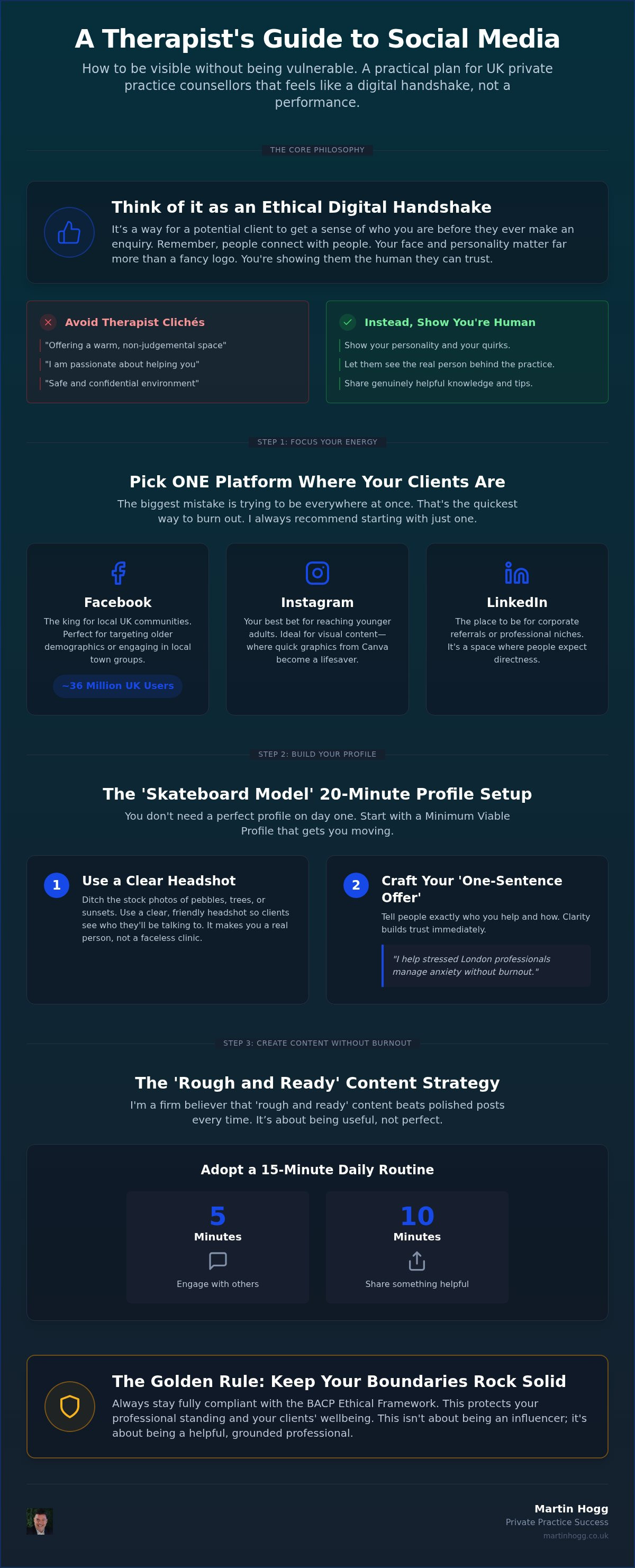
I often hear counsellors say they hate the idea of 'marketing' because it feels cold or corporate. But when we talk about social media for therapists uk, I want you to think of it as a digital handshake. It is simply a way for a potential client to get a sense of who you are before they ever pick up the phone. Most people are terrified of that first session. By showing up as a real human being on their feed, you lower the barrier to entry and settle their nerves.
This is why I champion the 'people connect with people' vibe. Your face matters much more than a fancy logo. Clients aren't looking for a clinical brand; they are looking for a person they can trust. I suggest moving away from the usual therapist clichés that clutter our industry:
- 'Offering a warm, non-judgmental space'
- 'I am passionate about helping you'
- 'Safe and confidential environment'
Everyone says these things. Instead, show your personality and your quirks. This approach works beautifully alongside your Counselling Directory or Psychology Today profile. While those directories prove your professional credentials, your social media proves your human character.
Reframing Marketing as a Service
Sharing your knowledge is a genuine form of service. When you post a tip on grounding techniques or explain how anxiety works, you help someone who might never book a session. This aligns with health communication principles, where clear, accessible information builds public trust. You aren't trying to be an 'influencer' who needs millions of likes. You are a visible professional providing value. If you're stuck on what to say, my Niche Building Secrets helps you speak directly to your ideal clients. Using social media for therapists uk is about being present and helpful, not pushy.
Picking Your Platform: Where UK Clients Actually Look for Help
The biggest mistake I see is therapists trying to be everywhere at once. You don't need a presence on every single app to make social media for therapists uk work for you. In fact, trying to manage five accounts is the quickest way to end up hating your phone. I always recommend starting with just one platform where your specific niche actually hangs out.
Facebook remains the king for local UK communities. With around 36 million users in Britain as of August 2026 (Source: BritClock), it's perfect if you're targeting older demographics or want to engage in local town groups. Instagram is your best bet for younger adults and visual content; it's also where using Canva for quick graphics becomes a lifesaver. If you're focusing on corporate referrals or my 'Working with Men' niche, LinkedIn is the place to be. It's a professional space where people expect directness.
The 'Skateboard Model' for Social Profiles
You don't need a perfect, all-singing profile on day one. I use the 'skateboard model' here. Start with a minimum viable profile that gets you moving. This takes about 20 minutes. First, ditch the stock photos of pebbles, trees, or sunsets. People connect with people. Use a clear, friendly headshot so they can see who they'll be talking to. It makes you look like a real person rather than a faceless clinic.
Next, craft your 'one-sentence offer'. Tell people exactly who you help and how. Instead of a long list of qualifications, try something like: "I help stressed London professionals manage anxiety without burnout." This clarity builds trust immediately. Just remember to keep your profile aligned with the BACP ethical guidelines for social media to ensure you stay professional. If you want more help refining your approach, you might find our Private Practice Success Membership useful for ongoing support.
The 'Rough and Ready' Content Strategy: How to Post Without Burning Out
I am a firm believer that 'rough and ready' content beats polished, clinical looking posts every single time. Why? Because your potential clients aren't looking for a corporate brochure; they want a person they can relate to. If you spend hours obsessing over the perfect font or the right shade of teal, you will never post anything. I use Canva to create simple, helpful graphics in minutes. It is about being useful, not perfect. This approach makes social media for therapists uk feel like a quick task rather than a heavy burden.
To avoid burnout, I suggest a 15 minute daily routine. Spend five minutes engaging with others and ten minutes sharing something helpful. You don't even need new ideas every day. Repurposing is your best friend. Take one blog post you have written and chop it up. A single article about stress can easily become three social media tips, a supportive quote, and a quick 'did you know' post. It's about working smarter, not harder.
What to Actually Post (Without Getting Too Personal)
Stick to educational content that explains common struggles like anxiety or attachment. This shows you know your stuff without you having to share your life story. I also recommend sharing 'behind the scenes' photos of your therapy room. Showing your space 'above the fold' on your profile helps reduce client anxiety because they know exactly where they will be sitting. It builds authority and comfort before the first session. If you are struggling to find your voice, my Niche Building Secrets helps you pin down exactly what your ideal clients need to hear.
Managing Boundaries and BACP Ethical Guidelines Online
I know the BACP Ethical Framework can feel like a scary list of things you aren't allowed to do. However, I prefer to see it as a safety net. With the 2026 update becoming mandatory at midday on 3 November 2026, the rules around digital boundaries are getting stricter. Staying professional doesn't mean you have to be cold. It just means being intentional about how you use social media for therapists uk.
Dual relationships are often the biggest worry. If a current client follows your business page, don't panic. I would suggest having a clear social media policy in your initial contract so they know what to expect. I never follow clients back. If they comment on a post, I might 'like' it to acknowledge them, but I never offer clinical advice in a public space. Keep your personal Facebook for friends and family. Ensure those privacy settings are locked tight. Your practice page is your shop front; your personal profile is your living room. Keep the curtains closed.
I also recommend a 'supervisor check'. Bring your social media presence into your supervision sessions. It is a valid part of your professional work. It deserves the same reflection as your clinical hours to ensure you're staying on the right side of the ethical line.
Handling Trolls and Negative Comments
You might occasionally run into a 'troll' or someone looking for a fight. My advice is simple. Do not engage in long, therapy-speak arguments. It is exhausting and rarely ends well for your reputation. The block button is your friend. Protecting your mental health is a priority. If the digital world starts to feel like too much, have a look at my guide on therapist burnout. It's better to step back for a day than to push through until you're frazzled.
Taking Your First Step Toward Greater Visibility
Mastering social media for therapists uk doesn't have to be a full-time job or an ethical minefield. It is simply about being present and providing a digital handshake to those searching for support. I suggest you focus on one platform, embrace the 'rough and ready' philosophy, and keep your professional boundaries firm. By showing the human behind the practice, you bridge the gap between a directory listing and a first session. This is how you build trust and encourage those vital first enquiries.
I have used these practical, UK-focused strategies to help a community of 100+ UK therapists grow their practices. Through my BACP-endorsed workshops, I have seen how a few small changes can make a massive difference to your confidence. You don't have to do this on your own.
You have the skills to help people change their lives. Now, you just need to let them know you are there. Take it one post at a time and stay grounded. I'm rooting for you.
Frequently Asked Questions
Do I need a separate business account for my therapy social media?
I would always recommend keeping your personal life and your practice entirely separate. You need a dedicated business account to maintain professional boundaries and comply with BACP ethical guidelines. It allows you to use professional features like automated replies and analytics without your family seeing your work posts. This clear divide protects your privacy and ensures your clients see a professional version of you.
What should I do if a client sends me a friend request on Facebook?
I suggest you politely decline the request and address it in your next session. It is best to have a social media policy in your initial contract that explains why you don't connect with clients online. This prevents any awkwardness or dual relationship issues. You aren't being rude; you are protecting the therapeutic space. It's a standard part of managing social media for therapists uk.
How often should a therapist post on social media to see results?
You don't need to post every day to see results. I find that two or three high-quality, helpful posts per week are much more effective than daily filler content. The goal is to stay visible without burning out. If you're consistent, potential clients will see you as a reliable professional. Use a 'rough and ready' approach to keep your marketing tasks manageable.
Is it ethical for a therapist to use Instagram to get clients in the UK?
It is perfectly ethical to use Instagram, provided you follow professional conduct rules. The BACP doesn't forbid social media; they just require you to manage it responsibly. Instagram is a brilliant tool for building trust through educational content and showing your therapy room. As long as you aren't offering clinical advice in the comments or breaking confidentiality, it is a valid way to grow your practice.
What are the best social media tools for UK-based counsellors?
I use Canva for creating graphics and Calendly to handle bookings without the back-and-forth emails. For your core visibility, I still recommend maintaining strong profiles on the Counselling Directory or Psychology Today alongside your social media. These tools help you present a professional image while keeping your admin tasks manageable. If you want a structured plan, the Practice Visibility Blueprint covers how to integrate these tools effectively.
Disclaimer
The information provided on this blog is for general informational purposes only. It is also not intended to be a substitute for professional medical or mental health advice, diagnosis, or treatment. Reading this content does not create a therapist-client relationship.


