Staying Motivated in Private Practice: A Practical Guide for UK Counsellors
It is 3:00 PM on a Tuesday, and you are sitting in your consulting room, staring at a gap in your diary that should have been filled weeks ago. The silence feels heavy, doesn't it? You started this journey because you care deeply about helping people, but the daily reality of working alone can often lead to a sense of isolation and the nagging worry of a patchy income.
I know how draining it is to balance heavy clinical work with the pressure of running a business. Many therapists find that staying motivated in private practice is actually the most difficult part of the job, particularly when you feel like you are shouting into a void to find new clients. It is common to feel a bit of guilt about marketing your services or to feel overwhelmed by the technical side of things.
The good news is that you do not have to stay stuck in this cycle of burnout. This guide will show you how to move past the isolation to build a resilient, thriving practice. We will explore practical ways to secure a steady stream of clients, connect with a supportive community, and create a clear system for managing your business without the emotional fatigue.
Key Takeaways
- Understand why the "loneliness of the long-distance therapist" drains your energy and how to balance clinical work with the practical side of running a business.
- Discover why staying motivated in private practice is much easier when you replace inconsistent willpower with a predictable visibility system.
- Learn how to use the "small wins" strategy to overcome the business paralysis that often follows a period of emotional fatigue or a patchy diary.
- Explore how joining a professional community can help you move past the isolation of working alone and provide the support needed to grow.
- Find out how a structured approach to your professional development can reignite your clinical passion and help you build a more resilient practice.
Why Motivation Often Wanes in Solo Private Practice
Working as a solo therapist in the UK is often described as the "loneliness of the long-distance therapist." Unlike working in an NHS trust or a large charity, you don't have a staff room to pop into for a quick brew and a chat. This isolation can slowly chip away at your drive. When you're the only person responsible for your clinical work, your admin, and your marketing, the weight of those roles can feel quite heavy. Staying motivated in private practice becomes a real challenge when you don't have a team to bounce ideas off or share the successes of a breakthrough session.
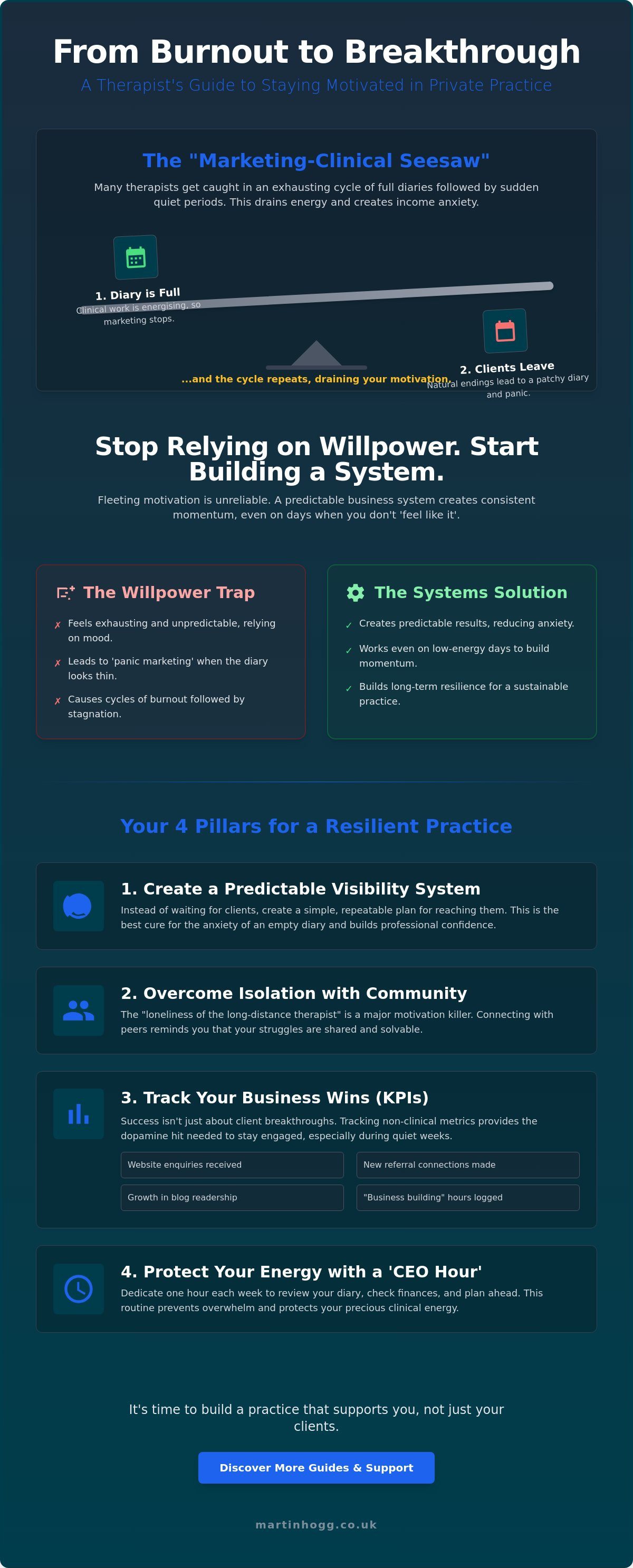
Many practitioners struggle with what I call the "Marketing-Clinical Seesaw." When your diary is full, you're focused and energised by the clinical work. However, because you're busy, you often stop marketing. When those clients naturally reach the end of their journey, you're suddenly left with a patchy diary and a sense of panic. This cycle is exhausting. Understanding established theories of work motivation helps us see that we need more than just willpower to keep going; we need a sense of competence and a connection to our peers.
The Myth of the "Natural" Business Owner
It's a common belief among counsellors that we're somehow "bad" at business by nature. We worry that "selling" therapy feels unethical or that perfectionism might lead us to get it wrong. In reality, business is just a set of skills you haven't been taught yet. Waiting for the "perfect time" to start your visibility work usually just leads to stagnation and a dip in your professional confidence.
Recognising the Signs of Practice Fatigue
You'll need to know the difference between a temporary dip in energy and genuine therapist burnout. If you find yourself feeling apathetic about your business tasks, it might not be laziness. Often, imposter syndrome is the real culprit. It makes us feel that if we don't take action, we can't fail. Staying motivated in private practice requires you to address these root causes rather than just beating yourself up for a lack of "get up and go."
Shifting Your Perspective: Motivation as a Business System
Many therapists wait for a spark of inspiration to strike before they tackle their marketing or admin tasks. However, relying on willpower is a recipe for exhaustion. Building a sustainable counselling private practice UK requires reliable systems rather than fleeting feelings. Think of these systems as the tracks that your practice runs on. When the tracks are laid properly, the train moves forward without you having to push it every single day.
A predictable "Visibility System" is often the best cure for the anxiety that drains your energy. When you have a clear plan for reaching new clients, the fear of an empty diary begins to fade. This professional guide to staying motivated explains that burnout often stems from a lack of structure. By separating your "Therapist Self" from your "Business Owner Self," you give yourself permission to be practical and strategic about your work. It's much easier to keep staying motivated in private practice when you aren't constantly reinventing the wheel.
Isolation is another major motivation killer. Connecting with others helps you realise that your struggles are shared and solvable. If you're feeling the weight of solo work, joining a community of supportive practitioners can provide the professional momentum you need to keep moving forward.
Success Metrics Beyond the Clinical Room
We often measure our success solely by client breakthroughs, but business wins matter too. Tracking non-clinical Key Performance Indicators (KPIs) provides the dopamine hit needed to stay engaged during quiet weeks. Consider monitoring these metrics:
- Total website enquiries received each month.
- New connections made with local referral partners or organisations.
- Growth in your email list or blog readership.
- Hours dedicated to "business building" rather than just "business doing."
The Role of Routine in Preventing Overwhelm
Setting aside a dedicated "CEO Hour" once a week is far more effective than a monthly session of panic-driven admin. Use this time to review your diary, check your finances, and plan your visibility tasks for the week ahead. By using your calendar to protect your clinical energy, you ensure that you have enough in the tank for your clients while still growing your business. Routine creates a sense of safety, which is essential for staying motivated in private practice over the long haul.
Practical Strategies to Reclaim Your Professional Momentum
When you feel stuck, the idea of "growing your practice" can feel like trying to climb a mountain in the fog. The best way to clear that mist is to stop looking at the summit and start looking at your feet. I often recommend "The Power of Three" to help with staying motivated in private practice. Instead of a daunting to-do list, pick just three small tasks each day that move the needle. This might be replying to one enquiry, updating a single page on your website, or reaching out to a local GP surgery. These small wins create the momentum you need to push through business paralysis.
Sometimes, a lack of drive is a sign that your clinical work has become stagnant. Re-investing in your skills is a fantastic way to spark new energy. Whether it is exploring the 13 new BACP accreditation routes introduced in February 2026 or attending a niche workshop, learning keeps you engaged. Taking part in CPD for counsellors UK allows you to bring fresh perspectives to your clients while reminding you why you chose this profession in the first place.
Audit Your Current Practice Environment
Take a moment to look at your workspace. Is your physical room or your digital filing system draining your energy? If your admin feels like a constant "slog," it is time to simplify. Moving to a digital system for your notes and invoices can save hours of frustration. Since the implementation of Making Tax Digital in April 2026, having a clear digital record is no longer just a "nice to have" for many of us; it is a practical necessity that can reduce your weekly stress levels.
Connecting with Peers and Mentors
Isolation is the enemy of progress. Talking to people who truly understand the unique pressures of the UK therapy market is the best antidote to low motivation. It is also helpful to recognise the difference between clinical supervision, which focuses on your clients, and business coaching, which focuses on you and your practice. If you are ready to stop working in a vacuum, you can find the community and structure you have been missing in our Private Practice Success Membership.
Building a Sustainable Future with the Practice Visibility Blueprint
We have explored the "loneliness of the long-distance therapist" and the importance of replacing fleeting willpower with reliable systems. However, even the best systems require a map to follow. This is where the Practice Visibility Blueprint comes in. It provides a structured path to growth, ensuring you aren't constantly wondering what your next move should be. Decision fatigue is one of the biggest hurdles to staying motivated in private practice. When you have a clear roadmap, that mental fog lifts, and you can focus on the clinical work you love.
Having a plan allows you to move from being a reactive business owner to a proactive one. Instead of waiting for the phone to ring, you can take small, intentional steps that build your reputation and your diary. Staying motivated in private practice becomes much easier when you can see exactly where you are on your journey and what the next milestone looks like.
Why a Roadmap Beats Random Acts of Marketing
Many practitioners fall into the trap of the "scattergun approach." You might try a bit of social media one week and then a directory listing the next, without a cohesive plan. This often feels pushy, inconsistent, and ultimately exhausting. A focused, ethical visibility plan helps you get counselling clients UK wide by building genuine trust rather than using "salesy" tactics. The Blueprint ensures your efforts are concentrated where they actually work, protecting your precious clinical energy.
Your Invitation to Join Us
Isolation remains the biggest threat to your professional momentum. Even the best map is hard to follow if you are walking the path alone. This is why the Private Practice Success Membership is so vital. It provides the community element that solo practitioners often miss. Having a group of peers who understand the UK market means you always have a place to celebrate wins or troubleshoot challenges.
If you are ready to move past the burnout and build a practice that feels resilient and vibrant, I invite you to take that next step. You can find out more about how we support therapists on our About the Membership page. You don't have to do this alone.
Taking the Next Step Towards a Resilient Practice
The journey of a private practitioner doesn't have to be a lonely trek through the fog. We have explored how shifting your perspective from fleeting willpower to reliable business systems can protect you from the burnout cycle. By focusing on small wins and a clear visibility roadmap, you can reclaim your professional momentum and find the joy in your work again. It is about creating a structure that holds you up when your energy feels low.
Ultimately, staying motivated in private practice is about connection. When you step out of isolation and into a space where other UK therapists share your challenges, the weight of the business side becomes much lighter. You deserve a practice that supports you as much as you support your clients. A steady diary and a sense of professional belonging are not just dreams; they are achievable with the right tools.
If you are ready for a clearer path and a supportive group of peers, I'd love to welcome you. As an experienced UK therapist and BACP-endorsed workshop provider, I have designed a space specifically for practitioners like you. Join the Private Practice Success Membership and find your community today. You have the skills to help your clients; now it is time to give your practice the foundation it needs to thrive.
Frequently Asked Questions
Is it normal to feel unmotivated in my private practice?
Yes, it is entirely normal and something almost every therapist experiences at some point. The isolation of working alone without a team often leads to a natural dip in energy. Staying motivated in private practice is a skill that needs to be nurtured, just like your clinical competence. It doesn't mean you're a bad counsellor; it just means you're a human being running a business without the support of a staff room.
How can I balance marketing my practice with a heavy clinical load?
You can achieve this balance by protecting your time with a dedicated weekly routine rather than marketing in a panic. Instead of it being a constant background worry, schedule your visibility tasks as non-clinical appointments in your diary. This prevents the emotional fatigue of your sessions from bleeding into your business tasks. Having a clear system means you spend less time wondering what to do and more time actually doing it.
What should I do if my diary is empty and I feel like giving up?
When your diary feels patchy, it's easy to spiral into self-doubt and perfectionism. Start by focusing on three small, manageable tasks each day to regain a sense of control over your professional momentum. This might be updating a single directory profile or reaching out to a local professional contact for a brew. Connecting with a community of peers is also vital, as they provide the perspective needed to see that this is a hurdle, not a permanent end.
Does professional development (CPD) help with business motivation?
Re-investing in your clinical passion often acts as a powerful spark for your business motivation. When you attend specialised workshops or take on a new course, you aren't just gaining hours; you're building a unique niche. This makes staying motivated in private practice much easier because your marketing starts to feel more like an authentic invitation to help. You'll find that being excited about your clinical skills naturally translates into a more vibrant practice.
How do I know if I need a business coach for my therapy practice?
You might benefit from a coach if you find yourself stuck in a cycle of overwhelm or if your practice growth has plateaued. While supervision focuses on the safety and wellbeing of your clients, a coach focuses on the health and direction of your business. If you're struggling with the technical side of visibility or feel unsure about how to reach your ideal clients, a practical guide can help you move forward with much more confidence.

Article by
Martin Hogg
I help Private Practice counsellors in the UK set up and grow an ethical Private Practice they love, work with their ideal clients, and earn the income they deserve. All without guesswork and burnout. I have been a private practice counsellor myself for over 20 years, specialising in anger management. I set up a not-for-profit social enterprise, Citizen Coaching and Counselling, which delivers thousands of counselling sessions a year to adults and young people in Birmingham. I am a registered BACP Counsellor and the author of three books, My Anger Coach, My Anxiety Coach and My Relationship Coach. These are available on Amazon.
Disclaimer
The information provided on this blog is for general informational purposes only and is not intended to be a substitute for professional medical or mental health advice, diagnosis, or treatment. Reading this content does not create a therapist-client relationship.


