
Therapist Insurance UK: A Practical Guide to Protecting Your Private Practice
Last Tuesday, a therapist I know sat down with a cup of tea only to find an email from a former client’s solicitor waiting in her inbox. It's the moment every practitioner dreads, and in that split second, the quality of your therapist insurance uk policy is the only thing that matters. I've seen this happen to good people in my own practice circles here in Birmingham. You probably started your private practice to help people, not to get lost in the fine print of legal documents. I know how overwhelming it feels to stare at a policy document and wonder if you're actually covered for a BACP complaint or a slip in your consulting room. It's completely normal to feel a bit of anxiety about getting this right.
I want to take that weight off your shoulders. This guide is a straightforward, human-led look at protecting your practice so you can get back to the work that truly counts. I'll show you exactly what you need to meet professional standards without the headache of technical jargon. We're going to break down the real differences between professional indemnity and public liability, ensuring you have total clarity and a policy that lets you focus on your clients with genuine peace of mind.
Key Takeaways
Understand why insurance is far more than a professional box-ticking exercise, acting as a vital safety net that allows you to focus fully on your clients.
Get to grips with the core differences between professional indemnity and public liability, ensuring both your clinical advice and your physical workspace are protected.
Learn why specialist therapist insurance uk providers offer better protection than general brokers and why the specific wording of your policy is more important than the price.
Discover how to protect your reputation with run-off cover and find out how your insurer can support you through difficult professional body disciplinary processes.
See how being fully insured can boost your professional confidence and serve as a practical tool for building trust with new clients as you grow your practice.
Table of Contents
Why Therapist Insurance is Essential for Your Professional Peace of Mind
Breaking Down the Cover: Professional Indemnity, Public Liability, and Beyond
Choosing the Right Insurance Provider: What to Look for and What to Avoid
Handling the Unexpected: Run-off Cover, Disciplinary Hearings, and Making a Claim
Integrating Professional Safety into Your Practice Growth Strategy
Why Therapist Insurance is Essential for Your Professional Peace of Mind
When you start your journey as a counsellor, your focus is naturally on the client sitting across from you. You want to help people get their lives back on track, and that's exactly where your energy should be. However, running a private practice involves more than just clinical skill. Obtaining therapist insurance uk isn't just about ticking a box to satisfy your supervisor or a professional body. It's about building a foundation that lets you work without a constant weight on your shoulders. Think of it as your ultimate safety net.
In our field, "Therapist Insurance" is rarely just one thing. It's a bundle of protections, usually combining public liability with Professional Liability Insurance, specifically tailored for psychological work. This professional safety allows you to take on more complex cases. When you aren't gripped by the fear of "what if," you can be more present and courageous in your sessions. There's a direct link between ethical practice and robust financial protection. You can't truly support a client if your own livelihood is vulnerable to a single, unexpected legal cost.
The Reality of Risk in UK Private Practice
Even the most careful, empathetic therapists face risks. We work in a space of high emotion where misinterpretations happen. A client might take a comment out of context or a boundary dispute could arise from a simple administrative error. These aren't always signs of "bad" therapy; they are often the "human" side of professional life. Insurance is vital for handling complaints made to professional bodies like the BACP. It provides the expert legal guidance you need to respond calmly. Having this cover doesn't mean you're expecting to fail. It means you're professional enough to know that everyone deserves a second chance if a mistake occurs.
Meeting Your Professional Body Requirements
If you're a member of the BACP, UKCP, or the National Counselling Society (NCS), insurance isn't optional. These organisations state that you must have "adequate" cover, but they often leave the definition of that word up to you. What's adequate for a student therapist isn't the same for someone using EMDR or working with high-risk trauma. You must ensure your policy covers your specific modality and the volume of clients you see. Keeping your policy up to date ensures you stay in good standing with your accrediting body. If you're feeling overwhelmed by the logistics of your practice, you can always book a session with me to discuss the practical side of being a "citizen coach" and getting your business basics right.
Breaking Down the Cover: Professional Indemnity, Public Liability, and Beyond
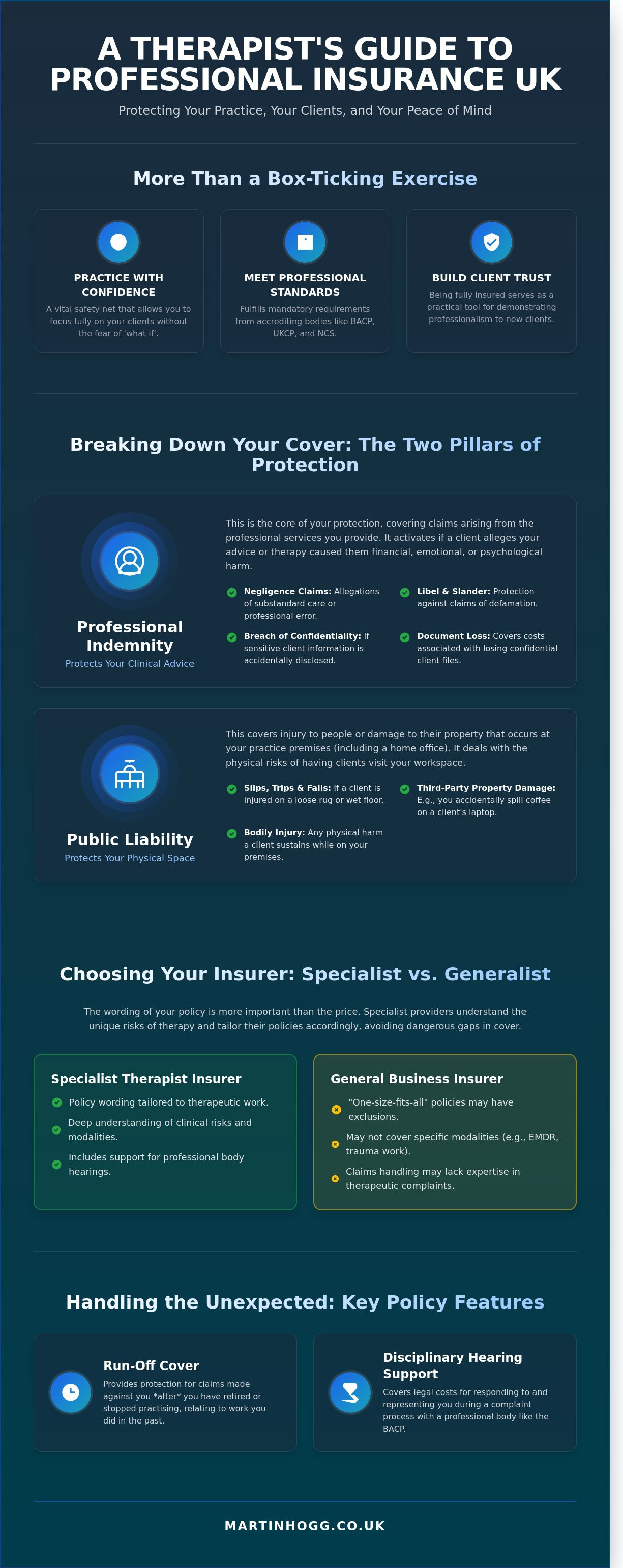
Choosing the right therapist insurance uk isn't just about ticking a box for your professional body. It's about sleeping better at night. Professional Indemnity is the foundation of your protection. It steps in if a client feels your advice caused them harm or if they claim you were negligent. For many of us, this is the most critical part of our cover. If you are registered with certain bodies, you'll find that meeting professional indemnity requirements is a mandatory part of your practice. It ensures you have the financial backing to handle legal costs and potential settlements.
Don't forget the "hidden" extras that many policies include, such as cover for libel, slander, and the physical loss of confidential documents. These might seem like small details until a briefcase is stolen or a social media post is misinterpreted. A "one-size-fits-all" policy often leaves gaps, especially if you work in specialised clinical areas like trauma or addiction, where the risks can be more complex.
Professional Indemnity vs. Public Liability
Think of Professional Indemnity as cover for what comes out of your mouth or your clinical decisions. Public Liability is about the physical space around you. If a client trips on a loose thread in your rug or slips on a wet floor in your hallway, Public Liability covers the medical or legal costs. Even if you work entirely online, you still face risks. You might accidentally send a confidential email to the wrong person or face a claim for libel if a comment is misinterpreted. Having both types of cover ensures you aren't left vulnerable to the unexpected.
Product Liability and Cyber Insurance
Our work often evolves beyond the therapy room. Perhaps you've started selling therapy journals or weighted blankets to help your clients between sessions. If a product you sell is faulty and causes an injury, Product Liability is your safety net. Similarly, we all store more digital data than we used to. With the rise of GDPR, a data breach isn't just a technical headache; it's a financial and reputational risk. Cyber insurance helps you manage the fallout if your digital notes are compromised. According to recent industry reports, the average cost of a data breach for a small business can reach thousands of pounds, making this cover more than just a luxury.
Setting up a private practice can feel like a lot to take on at once. If you feel overwhelmed by the technicalities of therapist insurance uk or other business foundations, you can always book a quick chat with me to discuss how to get your practice on the right track.
Choosing the Right Insurance Provider: What to Look for and What to Avoid
It's natural to look at the bottom line when you're managing your own practice. However, the cheapest therapist insurance uk policy isn't always the safest choice for your peace of mind. I've seen many practitioners focus solely on the annual premium, only to find that the "wording" of the policy leaves them exposed when they need help the most. The wording is the legal heart of your cover; it defines exactly what is protected and what is excluded.
I generally advise staying away from general small business brokers. They might be excellent at insuring a local coffee shop or a construction firm, but they often lack a deep understanding of the therapeutic relationship. Specialist therapist insurers are a better fit because they understand clinical grey areas. They know that a claim against a counsellor isn't just about financial loss; it's often about professional reputation and ethical boundaries. Using a specialist ensures that if a claim arises, you're speaking to people who understand your world.
One critical detail to check is your "Legal Expenses" limit. A professional conduct hearing can be a long, drawn-out process. According to industry data from 2023, legal fees for a complex disciplinary hearing can easily exceed £30,000. If your policy limit is too low, you could be left to fund a significant portion of your defence yourself. You also need to confirm your "Retroactive Cover." This is vital because it protects you for sessions you've already held in the past. If a client from three years ago raises a concern today, your current policy must be worded to cover that historical work.
Key Questions to Ask an Insurer Before You Buy
Does this policy cover me for online work with clients residing outside the UK? Many therapists now work via Zoom, but some policies exclude certain jurisdictions like the USA or Canada due to different legal systems.
Is there an excess to pay, and how does it apply? You might find a policy with a £0 excess, while others might require you to pay the first £250 or £500 of any claim.
Will you provide a specialist solicitor? You don't want a general lawyer. You need someone who is familiar with how professional bodies operate. Meeting the BACP insurance requirements is about more than just ticking a box; it's about ensuring your legal support understands the ethical framework of our profession.
Comparing UK Providers: Howden, Protectivity, and Specialist Schemes
Providers such as Howden, Towergate, Holistic, Oxygen, and Protectivity are well-known in our community for offering schemes tailored specifically for therapists. These "generously worded" policies are designed to avoid the technical loopholes that general insurers might use to reject a claim. While a generic provider might offer a quote that is £20 cheaper, that saving disappears quickly if they refuse to cover a claim involving a specific modality like EMDR or CBT. I've found that sticking with providers recommended by professional bodies offers a level of security that "off-the-shelf" business insurance simply can't match. If you're feeling overwhelmed by these choices and want to discuss how to structure your practice safely, you can book a time to talk at https://www.martinhogg.co.uk/calendar.
Handling the Unexpected: Run-off Cover, Disciplinary Hearings, and Making a Claim
Running a private practice is deeply rewarding, but it brings responsibilities that don't just vanish when you close your office door for the final time. We often think of insurance as something for the here and now. However, in the world of therapy, the past can sometimes catch up with the present. Protecting your reputation and your peace of mind requires looking ahead to the moments you hope will never happen.
The Importance of Run-off Cover
Claims in our profession don't always happen immediately. A client might reflect on their sessions and decide to raise a concern years after the work has ended. This is where run-off cover becomes essential. It acts as a safety net for when you are no longer actively seeing clients. Whether you are taking maternity leave, a career break, or entering a well-earned retirement, this cover ensures you aren't left vulnerable to historical claims. Most UK therapists need run-off cover for at least 6 years to ensure they remain fully protected against late-arising allegations.
Legal Defence and Disciplinary Support
Facing a complaint from a professional body like the BACP is an incredibly draining experience. It hits your confidence and can make you question your identity as a helper. When looking at therapist insurance uk, it's vital to check the level of support provided for disciplinary hearings. Your insurer should provide a legal buffer, standing between you and the stress of the process. This support often extends to:
Representation at coroners' inquests if a client passes away.
Expert legal advice to help you draft responses to formal complaints.
Financial cover for legal fees which can otherwise be ruinous.
Having an expert in your corner reduces the emotional toll of professional scrutiny. It allows you to focus on your wellbeing while they handle the technicalities of your defence.
Notifying Your Insurer
If you suspect a situation might escalate, don't wait for a formal solicitor's letter to arrive. Early notification is your best friend in protecting your career. If a client becomes unusually hostile or mentions legal action, tell your provider immediately. Choosing the right therapist insurance uk means having a provider that encourages this proactive approach. The process is usually straightforward:
Contact your insurer’s helpline as soon as a potential issue arises.
Provide a clear, factual account of the sessions and the specific concern.
Keep your original notes safe and do not alter them.
Follow the guidance of your case manager before responding to the client.
This early step often prevents a small misunderstanding from turning into a major claim. It ensures you have professional guidance from the very start, keeping your practice and your future on track.
If you feel overwhelmed by the administrative side of your practice or need help finding your feet, I am here to help. You can book a session to discuss your professional journey on my coaching calendar.
Integrating Professional Safety into Your Practice Growth Strategy
Insurance shouldn't be viewed as just another monthly direct debit or a box to tick for your professional body. It's actually a fundamental part of your mindset. When you're starting and growing a private practice, your internal state directly impacts your external success. If you feel unprotected, that subtle anxiety can leak into your clinical work and your business decisions. Having the right therapist insurance uk in place provides a psychological safety net. It allows you to operate from a place of abundance and security rather than fear.
Think of your insurance as a quiet partner in the room. It's there to handle the "what ifs" so you don't have to. This financial resilience is vital when scaling a therapy practice. As you take on more clients or move into group work, your exposure naturally increases. A solid policy ensures that a single complicated claim doesn't wipe out years of hard work and dedication. It's a practical act of self-care that protects your livelihood and your family's future.
Confidence and Visibility
There's a direct link between knowing you're protected and your willingness to be seen. Many counsellors struggle with imposter syndrome, especially when they first start charging for their expertise. Ensuring your business foundations are solid helps quiet that inner critic. When you know your therapist insurance uk is active and comprehensive, you can "put yourself out there" with genuine authority. You aren't hiding; you're standing on firm ground. This security allows you to stop worrying about litigation and focus entirely on the clinical work you love. It transforms your practice from a fragile setup into a robust professional service.
You can also use your professional status as a powerful marketing tool. In a crowded market, trust is the most valuable currency. Mentioning that you're fully insured on your website or in your introductory pack isn't just a formality. It signals to potential clients that you're a responsible professional who takes their safety seriously. It builds immediate rapport before they've even booked their first session.
Next Steps for Your Practice
Growth is a journey, and your protection needs to keep pace. I recommend reviewing your policy every twelve months as part of a general practice health check. Your needs today might be very different from your needs a year from now, especially if you've added new specialisms or changed how you deliver sessions. To stay ahead of these changes, consider the following actions:
Set a calendar reminder for one month before your renewal to compare current market rates.
Check the Martin Hogg training calendar for upcoming workshops on practice management and ethical business growth.
Update your insurance provider immediately if you begin working with clients in different jurisdictions or change your primary therapeutic modality.
Taking these steps ensures you're never caught off guard. You've worked hard to get where you are. By securing the right support and protection, you can move forward with the calm confidence that your practice, and your clients, are in safe hands.
Building Your Practice on Solid Ground
Running a private practice is rewarding, but the responsibilities can feel heavy. Securing the right therapist insurance uk isn't just about satisfying a professional requirement. It's about creating a safety net so you can focus on your clients without nagging worries. By getting your professional indemnity and public liability cover in order, you're protecting your livelihood and your reputation.
I've spent over 20 years in the UK therapy sector and founded this social enterprise to help counsellors find their feet. As a BACP-endorsed workshop provider, I've seen that the most successful practices are built on professional safety and practical logic. You don't have to figure out these business hurdles alone. When you have the right protections in place, you can stop feeling overwhelmed by the logistics. It's time to focus on the work you love and get your practice moving forward with confidence.
Frequently Asked Questions
Is therapist insurance a legal requirement in the UK?
Professional indemnity insurance isn't a legal requirement in the UK in the same way car insurance is, but it's a mandatory condition of membership for professional bodies like the BACP or UKCP. Without it, you can't join these registers or maintain your accreditation. It's the safety net that protects both you and your clients if a session doesn't go as planned.
How much does therapist insurance typically cost per year?
You can usually expect to pay between £50 and £120 per year for basic therapist insurance uk coverage. This price often includes professional indemnity, public liability, and products liability. Costs vary based on the level of cover you choose and whether you add extras like legal expenses or cyber insurance. It's a small price for the peace of mind it brings to your daily practice.
Do I need insurance if I am only seeing clients for free or as a student?
You still need insurance even if you're working for free or completing your clinical hours as a student. Risk doesn't disappear because money isn't changing hands; a client can still lodge a complaint or claim against you. Most insurers offer discounted student policies that provide full protection for around £20 to £40 annually, ensuring you're covered from your very first session.
Does my insurance cover me for working with clients in the USA or Canada?
Most standard UK policies specifically exclude the USA and Canada due to their different legal systems and higher litigation costs. If you want to see clients in those territories, you'll need a specialist extension which can significantly increase your premium. Always check your policy wording before booking an online session with someone based in North America to ensure you aren't working uninsured.
What is the difference between "claims-made" and "claims-occurring" policies?
A claims-made policy covers you for claims reported while the policy is active, whereas claims-occurring covers you for incidents that happened during the policy period, regardless of when they're reported. Most therapist insurance uk policies are claims-made. This means if you retire or stop practising, you'll need run-off cover to stay protected against any late-surfacing complaints from your past work.
Can I get insurance if I work from a home office?
You can definitely get insurance for a home office, but you must ensure it includes public liability cover. This protects you if a client trips over a rug or sustains an injury while on your premises. You should also inform your home buildings and contents insurer that you're running a business from home, as failing to do so might void your domestic policy.
Do I need separate insurance for each different type of therapy I offer?
You don't usually need separate policies for each modality, provided you list every therapy you practise on your certificate. Most insurers allow you to add multiple approaches like CBT, EMDR, or person-centred therapy under one umbrella at no extra cost. Just make sure your training in each area meets the insurer's requirements, as they won't cover modalities where you lack a recognised qualification.
What should I do if a client threatens to sue me?
Contact your insurance provider immediately if a client threatens legal action or makes a formal complaint. Don't try to handle it yourself and avoid admitting any liability or offering a settlement before speaking to your insurer's legal team. They'll guide you through the process, help you draft responses, and provide the professional support needed to resolve the situation calmly and correctly.


