
UK Therapist Business Plan: A Practical Guide

Article by
Martin Hogg
I help Private Practice counsellors in the UK set up and grow an ethical Private Practice they love, work with their ideal clients, and earn the income they deserve. All without guesswork and burnout. I have been a private practice counsellor myself for over 20 years, specialising in anger management. I set up a not-for-profit social enterprise, Citizen Coaching and Counselling, which delivers thousands of counselling sessions a year to adults and young people in Birmingham. I am a registered BACP Counsellor and the author of three books, My Anger Coach, My Anxiety Coach and My Relationship Coach. These are available on Amazon.
What if your counselling practice business plan could help you find the right clients without making you feel like a salesperson? It’s understandable to have questions about money, visibility and getting the marketing right. You want to support people, not spend your week fiddling with a website or trying to sound impressive.
Treat your plan as a practical guide to a sustainable practice, not a corporate document destined to gather dust. This article shows you how to map out the next 12 months, make thoughtful decisions about your niche and fees, and improve your chances of attracting clients who are a good fit.
We’ll look at the essentials: who you want to work with, where people can find you, including directories such as Counselling Directory, and what your website needs to say. I’ll also explain the Skateboard Model: start with a simple, useful website, then improve it as you learn what works. You don’t need a grand launch. Useful content that is published is more valuable than polished content that never goes live.
Key Takeaways
- Use your counselling practice business plan as a practical map for visibility and sustainability, rather than a corporate document you’ll never look at again.
- Shape a one-sentence offer around the people you’re equipped to help, so your website and directory profiles speak clearly to potential clients.
- Make your online presence easier to understand with relevant page titles and descriptions, and clear information near the top of your website.
- Review what your practice earns against the time and costs involved, including preparation, CPD and supervision, before deciding whether your fees are sustainable.
Why Your Counselling Practice Needs a Map (Not a Corporate Manifesto)
You don’t need a 40-page business plan to run a good therapy practice. You need a clear way to make decisions that supports your work and helps you avoid burnout. Without a plan, it’s easy to rely on word of mouth and worry when enquiries slow down. That feast-and-famine cycle can leave you reacting to quiet weeks instead of building steadier foundations.
A counselling practice business plan is a working map for practitioner sustainability. It sets out where you want your practice to go and the practical steps that could help you get there. If you’re new to the idea, Wikipedia’s overview of what a business plan is offers a general starting point. Your plan can be much simpler than a corporate template. It should reflect your priorities, capacity and professional values.
Moving Beyond the ‘Salesperson’ Stigma
If marketing makes you uncomfortable, you’re not alone. But telling people clearly who you work with and how to contact you isn’t the same as pressuring them to book. Use your plan to identify the clients you’re best equipped to help, then make it easier for those people to find accurate, relevant information about your practice.
Keep your visibility honest and consistent with the BACP Ethical Framework. Avoid promising outcomes or trying to persuade someone who isn’t sure. You’re helping people find you, not pushing them through a sales funnel. Clear language about your focus can help. If you’re still working out your niche, my guide to niche building for counsellors may help you put that focus into words.
Start small. Write down the kind of work you want more of, what a sustainable workload looks like for you, and one visibility task you can realistically maintain. Your plan isn’t a test of ambition. It’s a way to keep your practice and wellbeing in view.
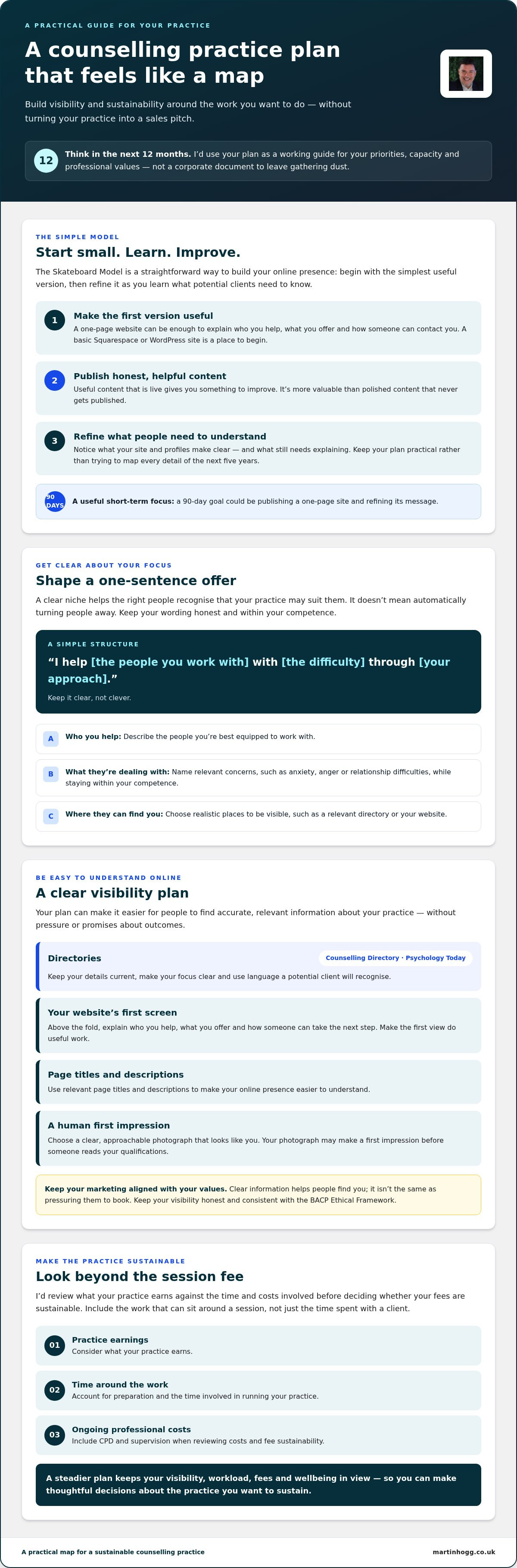
Building Your One-Sentence Offer and the 'Skateboard' Business Plan
A useful counselling practice business plan starts with focus, not a five-year forecast you’ll avoid opening. I use the Skateboard Model: build the simplest version of your online presence that helps the right people understand what you offer and how to contact you. A one-page site can be enough to start. Improve it as you learn what potential clients need to know.
The official government guidance on business plans offers a broader structure. For a working plan, keep the essentials close to your day-to-day practice:
- Who you help: Describe the people you’re best equipped to work with, and consider where they might look for support.
- What they’re dealing with: Name relevant concerns, such as anxiety, anger or relationship difficulties, while staying within your competence.
- Your one-sentence offer: Try: “I help [the people you work with] with [the difficulty] through [your approach].” Keep it clear, not clever.
- Where they can find you: Choose realistic places to be visible, such as a relevant directory or your website.
- Your above-the-fold message: Make the first screen explain who you help, what you offer and how to take the next step.
Being a generalist can make it harder for a potential client to recognise that your practice may suit them. A clear niche doesn’t mean automatically turning people away. It gives your message a focus. For more help shaping yours, read my guide to niche building for counsellors.
Start simple, then learn
Build a basic Squarespace or WordPress site and publish useful, honest content. A straightforward page that is live gives you something to improve. Set a 90-day goal, perhaps publishing a one-page site and refining its message, rather than trying to map every detail of the next five years. If you’d value ongoing ideas and support for your practice, explore the Private Practice Success Membership.
The Visibility Blueprint: How UK Clients Actually Find You
A counselling practice business plan needs a simple visibility plan: where people can find you, what they’ll see and how they can make contact. Directories such as Counselling Directory and Psychology Today can be useful places to start. Don’t create a profile and forget it. Keep your details current, make your focus clear, and write in language a potential client will recognise.
Make your profile feel human
Your photograph may make a first impression before someone reads your qualifications. Choose a clear, approachable image that looks like you. Your training and professional memberships matter, but your biography should also help readers understand whether you work with concerns such as anxiety, anger or relationship difficulties. Explain plainly who you help and what someone can expect when making an initial enquiry. If you use Calendly, it may make arranging a first contact simpler and reduce email exchanges.
Keep the website basics simple
Think about the words someone might type into Google to find the kind of support you offer. Use relevant terms naturally in your page title and description. These short details help describe your page in search results. On your homepage, make the first screen do the basics quickly: say who you help, how you work and how to get in touch.
You don’t need a stream of glossy social posts. Use Canva to make a simple graphic or turn a useful thought into a short, readable post. Focus on publishing something helpful rather than waiting for it to feel perfect. For more practical ideas, see the Counsellor Efficiency Bundle.
Financial Sustainability and the Business of 'You'
A counselling practice business plan needs to account for the work clients don’t see. Your session fee has to support more than the time spent in the room. To understand your “true hourly rate”, compare your practice income with costs such as room hire, insurance and professional fees. Then consider all the hours you put in, including sessions, preparation, administration, CPD and supervision.
This gives you a clearer basis for reviewing your fees than simply copying what another therapist charges. Consider your experience, the costs of running your practice and the time involved in delivering your work. Explain your fees calmly and clearly. A fee reflects the professional service you provide; it doesn’t guarantee a particular outcome for a client.
Make the practical side easier
Choose practice management tools that fit the way you work, rather than collecting software for its own sake. Calendly may help organise appointment requests, while a separate system may suit your record-keeping or payments. Check that any tool meets your needs before adopting it. Clear communication also helps: explain your fee, payment arrangements and cancellation terms before work begins. This can make conversations about money more straightforward.
Keep the human element. A straightforward message that answers an enquiry in your own voice will usually feel more personal than a string of automated replies. People connect with people.
Review the plan, then decide what’s next
Review your plan every three months. Look at income, costs, workload and where enquiries are coming from. If you’re considering moving from solo practice to a larger practice, decide what “scaling” means for you first. It might mean changing your capacity or systems, not simply adding more appointments. Make one realistic adjustment at a time, then review what happens.
If you’d like support with the visibility and business side of private practice, explore the Private Practice Success Membership.
Give Your Practice a Clear Next Step
A counselling practice business plan doesn’t need to be grand or complicated. It needs to help you make steady decisions about who you work with, how people find you and what makes your practice sustainable. A clear offer, a simple online presence and an honest look at the time and costs behind your work give you a practical place to start.
You don’t have to get every detail right before taking action. Choose one useful step, then review what you learn and adjust your plan. That’s how a business map stays connected to the practice you’re actually building.
The Private Practice Success Membership offers support with the visibility and business side of private practice, through practical resources, live training and a community of fellow practice owners.
Frequently Asked Questions
Do I really need a formal business plan for a solo counselling practice?
No, you don’t need a lengthy corporate document to plan a solo practice. A short working plan can help you decide who you want to work with, how potential clients will find you, what your practice needs to earn and what actions to take next. Keep it somewhere useful and review it as your circumstances change. The point is to make decisions easier, not create more paperwork.
How much should I budget for marketing my therapy practice in the UK?
There isn’t one right figure. Start by listing the marketing costs you’re considering, such as a website, directory profiles or design tools. Decide what you can afford without relying on immediate client bookings. You could begin with a simple website and one or two relevant directories, then review whether they’re helping people find you before adjusting your spending. Track enquiries and costs rather than guessing what’s working.
What is the best way to get my first 10 counselling clients?
There’s no guaranteed route to your first 10 clients, so focus on making it straightforward for suitable people to find and understand your service. Write a clear profile for a relevant directory, explain who you work with on your website, and let appropriate professional contacts know about your practice. Respond to enquiries clearly and promptly. Keep track of where each enquiry comes from so you can build on what proves useful.
Should I include a niche in my therapy business plan or stay general?
I’d include a niche while leaving room for your practice to develop. A clear focus helps potential clients recognise that your experience may fit their concerns. For example, you might describe supporting adults experiencing anxiety, if that reflects your competence and the work you want to offer. You don’t have to turn away every enquiry outside that focus. Start with the clients you’re best equipped to help.
How do I set my fees as a private practice counsellor?
Set fees by looking at your experience, the work you offer, your running costs and the time spent outside sessions on preparation, administration, CPD and supervision. Consider what income your practice needs to support a sustainable workload, then explain your fee and payment arrangements clearly before beginning work. You don’t need to copy another counsellor’s price. Review your figures as your costs, experience or practice plans change.
If you’re ready to work on your practice visibility, explore the Private Practice Success Membership.
Disclaimer
The information provided on this blog is for general informational purposes only. It is also not intended to be a substitute for professional medical or mental health advice, diagnosis, or treatment. Reading this content does not create a therapist-client relationship.


