
Ways to market an EMDR practice through referrals, SEO and local media

Article by
Martin Hogg
I help Private Practice counsellors in the UK set up and grow an ethical Private Practice they love, work with their ideal clients, and earn the income they deserve. All without guesswork and burnout. I have been a private practice counsellor myself for over 20 years, specialising in anger management. I set up a not-for-profit social enterprise, Citizen Coaching and Counselling, which delivers thousands of counselling sessions a year to adults and young people in Birmingham. I am a registered BACP Counsellor and the author of three books, My Anger Coach, My Anxiety Coach and My Relationship Coach. These are available on Amazon.
Referrals, a clear website and local visibility are the practical foundations of marketing an EMDR practice. The answer to how to market an EMDR practice is to explain who you help, make your training and credentials clear, and build relationships with people who may refer clients. You can do that whether or not you hold certification, as long as you describe your qualifications accurately.
Putting yourself in front of potential clients can feel uncomfortable, especially when you would rather focus on the work than promote it. You do not need to become a full-time marketer or produce glossy content. You do need to make it easy for people and referrers to understand what you offer and how to take the next step.
This guide covers practical ways to build referral relationships, improve your website and local SEO, and raise awareness through local media. It also offers guidance on describing EMDR clearly and confidently, without overstating your experience or making marketing feel like a hard sell.
Key Takeaways
- Describe your EMDR training and experience clearly, so potential clients can understand your approach and qualifications.
- Build genuine referral relationships by explaining who you support and keeping in touch with professional contacts.
- Make your website easy to understand, with a clear offer and local information that helps people find and contact you.
- Use local publications and podcasts to share practical, accessible information about EMDR and raise awareness in your community.
1. Marketing EMDR services with or without certification
A practical answer to how to market an EMDR practice in the UK is to explain your training, approach and intended clients clearly. Use a dedicated service page, accurate directory profiles and direct conversations with potential referrers. Describe your experience plainly, whether or not you hold certification. A specialist focus can help you explain your work and set fees that reflect your expertise, but do not imply that a particular method guarantees higher income.
Use the exact title of your EMDR training and any certification you hold. Name the organisation that awarded the credential, and distinguish completed training from certification or accreditation. If you are still training, say so clearly and describe your current scope of practice. Consistent wording across your website and directory profiles helps prospective clients understand your qualifications before they enquire.
Give EMDR its own page on your website. Explain who you work with, what sessions involve, your relevant training and how to enquire. Clarify whether EMDR is part of ongoing therapy or a focused block of sessions so people can make an informed choice. Put a concise description of your service and the next step near the top of the page. An online booking tool can make arranging an enquiry straightforward.
If your website collects personal information, UK practices must comply with GDPR, according to the Information Commissioner’s Office. Explain in plain language what information you collect and why. Keep the enquiry form focused on what you need to respond, rather than asking someone to share sensitive details before an initial conversation.
Track page visits, enquiries and how people found you to assess your marketing. Google Search Console can show which searches bring visitors to your EMDR page. An enquiry log can help distinguish contacts from search, directories or referrals. Review the pattern regularly and improve the pages or channels bringing suitable enquiries. This gives you a practical basis for deciding where to spend your marketing time.
2. Referral partnerships and relationship marketing
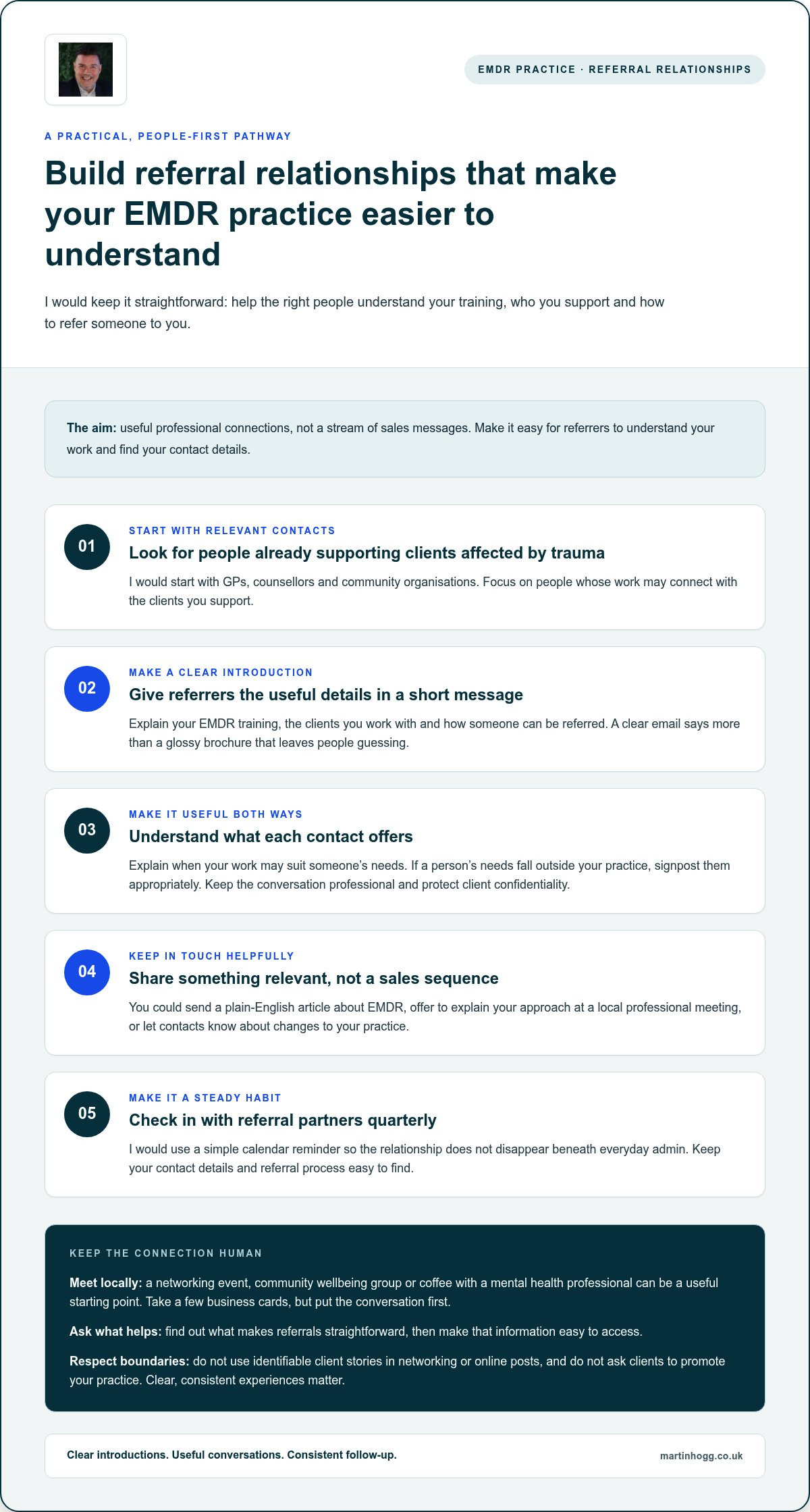
Start with people who support clients affected by trauma, such as GPs, counsellors and community organisations. Send a short introduction explaining your EMDR training, the clients you work with and how to refer someone to you. A clear email is more useful than a glossy brochure that says little about your practice.
Make the relationship useful in both directions. Learn what each contact offers and explain when your work may suit someone’s needs. For example, a counsellor might refer a client seeking trauma-focused support, while you can signpost someone whose needs fall outside your practice. Keep conversations professional and protect client confidentiality.
Follow up with a helpful update, not a stream of sales messages. Share a plain-English article about EMDR, offer to explain your approach at a local professional meeting, or send a brief note about changes to your practice. Then check in with referral partners quarterly. A simple calendar reminder keeps the relationship from disappearing beneath everyday admin.
Low-budget marketing can centre on relationships. Attend a networking event, contribute to a community wellbeing group or arrange a coffee with a mental health professional. Take a few business cards, but focus on a useful conversation rather than selling. Ask what makes referrals straightforward, then make your contact details and referral process easy to find.
Word of mouth grows through clear, consistent experiences, not by asking clients to promote you. Explain your EMDR approach in accessible language and make it easy for people to share your website with someone who may benefit. Avoid discussing identifiable client stories in networking or online posts. If you want ongoing peer discussion about practice-building, explore peer support for private practice marketing.
3. Website content, blogging, SEO, email and social media
Build your website one step at a time: start with a clear page, then add to it as you learn what visitors need. A website platform such as Squarespace can help you make simple edits yourself. Give your EMDR service a dedicated page, with title and description tags that accurately reflect its content. A blog can answer practical questions, such as how someone might prepare for an initial conversation about EMDR.
Choose article topics based on questions people actually ask you. A short explanation of EMDR terminology, for example, can make a useful blog post and give you something to share elsewhere. Link related articles to the relevant service page so readers can move naturally from learning about the approach to understanding your work.
Email can extend the usefulness of your writing beyond your website. Invite interested readers to sign up for a short newsletter, then send a helpful note regularly. Share a new article, explain a term or point readers towards a relevant professional resource. Keep each message focused and make opting out straightforward.
Use social media to share clear, helpful information, not to provide therapy in public. A graphic explaining an EMDR term or a brief post linking to an article gives people something practical to take away. Keep replies general, and move personal or clinical questions away from public comments.
Choose a couple of platforms you can maintain consistently, rather than opening accounts everywhere. Before posting, consider whether the content respects professional boundaries and represents your work accurately. Avoid discussing client situations, even with details changed. Useful, straightforward content is more valuable than polished content that never gets posted, so choose a manageable rhythm and keep sharing.
4. Contributing to local publications and podcasts
Local newspapers, community magazines and podcasts can introduce your EMDR work to people nearby. Look for outlets covering health, family life or community wellbeing. Read recent articles or listen to an episode first, then suggest a topic that fits their audience. A useful contribution builds visibility by informing people, not simply announcing your services.
Make your pitch specific. Offer a practical angle, such as explaining what someone can expect from an EMDR appointment or how to find a suitably trained therapist. Keep the email brief: introduce yourself, outline the topic, and explain why it matters to local readers. Add a short biography describing your qualifications accurately, plus your website address.
Before a podcast recording, prepare a few clear talking points. Translate clinical terms into everyday language and use a general example rather than a client story. You might explain how someone can prepare questions for a first appointment. That is more useful than a technical lecture and easier for listeners to remember.
Agree the subject and format with the editor or host before contributing. Check how they will describe your role and credentials, and correct any wording that could suggest certification you do not hold. Avoid promising particular results from EMDR. A careful, honest explanation helps people make informed choices without feeling sold to.
After publication, share the article or episode through your website, newsletter or professional social media account. Thank the editor, keep a copy and note which topics prompt relevant enquiries. If a podcast invites you back, suggest a fresh angle rather than repeating your first interview. Small, steady contributions can build recognition over time.
Martin Hogg Private Practice Success: Practice Visibility Blueprint
If you have worked through these ideas and want clearer direction, the Practice Visibility Blueprint is a practical next step when learning how to market an emdr practice. It can help when you are unsure which marketing task to tackle first or how to make your EMDR practice easier to find and understand.
Start by choosing one practical priority, such as refining your EMDR service page or clarifying your referral message. A focused plan can turn broad intentions into manageable actions without adding a sprawling to-do list to your week. You can then decide what fits your practice and work at a manageable pace.
If you’d like support with practice visibility, visit martinhogg.co.uk.
Give your next step room to grow
You do not need to overhaul your marketing all at once. Choose one useful action, then give it enough attention to learn from the response. A steady, thoughtful approach can help you build a practice that reflects the work you want to do.
Learning how to market an EMDR practice also means deciding where you would value support. Martin Hogg’s Private Practice Success offers the Practice Visibility Blueprint and Private Practice Success Membership for practice development, as well as Anger Management CPD for Professionals. Each has a different focus, so consider what would help you move forward.
To explore support with practice development, visit the Private Practice Success community.
Small, considered steps count. Keep building visibility in a way that reflects you and your work.
Frequently Asked Questions
What UK professional standards and advertising rules apply to marketing EMDR therapy?
Keep your marketing accurate, clear and respectful of client privacy. Describe your service without overstating what EMDR can do, and avoid language that could pressure someone seeking support. If you belong to a professional body such as the BACP, consult its current ethical guidance when preparing promotional material. For website data collection, the Information Commissioner’s Office says UK practices must comply with GDPR.
How should EMDR practitioners describe their qualifications and accreditation in marketing?
Use the precise name of your training, qualification or accreditation, and identify the organisation that awarded it. Keep terms such as “trained”, “certified” and “accredited” distinct, as they do not mean the same thing. For example, name the EMDR training you completed rather than implying a broader credential. Review your directory profiles and website together so they describe your status consistently.
Which online marketing channels work best for UK therapy practices, such as Google Business Profile and directories?
The most useful channels depend on where your intended clients look and how much time you can give each one. A Google Business Profile, your own website and listings on Counselling Directory or Psychology Today can help people find information about your practice. Try a manageable combination, then record which channel brings suitable enquiries. This gives you a better basis for prioritising than likes or page views alone.
How much does marketing an EMDR practice in the UK cost?
There is no fixed cost for marketing an EMDR practice. Spending depends on choices such as maintaining a website, paying for directory listings, commissioning design work or using paid advertising. You can start by investing time rather than a large budget: update your profile, write a useful page and build referral relationships. If you pay for a channel, track relevant enquiries to assess its value.
How can an EMDR practice improve local SEO and appear in searches near me?
Keep your practice details consistent across your website and Google Business Profile, including your name, contact information and location details. Use a dedicated EMDR page with natural wording that reflects the area you serve, rather than repeating location terms unnaturally. Search Console can show which searches bring visitors. Review those terms and refine page titles or content to match genuine enquiries.
How can therapists market EMDR ethically without making unsupported claims or guaranteeing outcomes?
Explain what your EMDR service involves, who it may suit and what your role is, without promising a particular result or timeframe. Avoid phrases such as “works for everyone” or “guaranteed recovery”. A responsible description sets out your approach and invites prospective clients to discuss whether it fits their needs. Use general examples, never identifiable client stories, unless you have appropriate permission.
Disclaimer
The information provided on this blog is for general informational purposes only. It is also not intended to be a substitute for professional medical or mental health advice, diagnosis, or treatment. Reading this content does not create a therapist-client relationship.


